
 menu icon in the top, right corner of the screen.
 icon above to close this box.
 icon at the bottom of the screen below the browser—if you don't see it, swipe up to unhide it.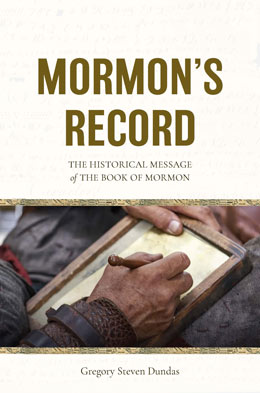
Foreword
Some readers push back when they are reminded that Mormon was the author of the Book of Mormon (aside from the small plates and the material his son Moroni added). Part of the struggle with that concept is the English word abridgment, which we find on the book’s title page. An abridgment is usually a condensed version of a single work, like a condensed dictionary or a condensed edition of a novel. Mormon’s record, in contrast, is the abridgment not of a book but of a whole national history, the thousand-year history of his people. Drawing on earlier records compiled on the large plates of Nephi, which by Mormon’s time were likely a very large stack of plates, Mormon wrote a book. The source material for his book was the writing on the earlier plates—a treasury of historical narratives and other writings. From those, and through the inspiration of the Holy Spirit, he authored the Book of Mormon. It is named after him because he wrote it; it is in his words. Like any other author, he’s the only speaker in the book, except when he’s quoting others.
It is solely from Mormon’s record that we have knowledge of Abinadi, Alma, Helaman, Samuel, and other great people and events in the history of Lehi’s descendants. He included their words and stories in his record, but the commentary he added was not from the perspectives of those earlier people but from his own later vantage point. Coming at the end of the story, and having the entire course of the Lehite family’s experience before him, Mormon was in a unique position to understand the story in ways they could not. Thus Mormon’s vision of history runs through his book, and his vision of that history is the one we are blessed to know.
Gregory Dundas has a PhD in Greek and Roman history from UCLA and a juris doctorate from the University of Michigan. In his study of historical sources from the classical world and the ancient Near East, he has researched ancient historians and has explored the perspectives and biases from which they wrote. Now in Mormon’s Record he brings that exploration to the work of the prophet Mormon. He demonstrates throughout this book that Mormon’s writing fits well among the writings of his ancient historian peers.
Dundas shows that in contrast to how most people today perceive reality, authors in ancient societies typically wrote from the point of view that the deity was at work in human events. Thus recordkeeping and history writing were crafts that revealed the nature of the god (or gods) and placed human behavior in the context of divine purposes. The Old Testament, more than the record of any other ancient society, shows Israel’s God to have had a grand design that extended over centuries. At its core was a covenant that Yahweh made with Israel’s ancestors, a covenant that was the inheritance of later generations. Mormon doesn’t just recount events. Like other ancient historians, he places special emphasis on the causes of those events. Thus he pays little attention to times of happiness (we know what it’s like to be happy) but pays much attention to times of dissension and warfare (we need to be reminded how we can end up ruining our lives). The Book of Mormon is, as Dundas reminds us, “a book about failures,” the repeated failures of people to live in ways that would ultimately bring meaning and satisfaction to their lives.
The good news in all this is that Mormon had us and our happiness in mind when he wrote. He didn’t want us, including the modern descendants of his own people, to fall prey to the failures he witnessed in his family’s story. Whether we deserve it or not, he was not without hope about us, as can be seen in the frequent sermonizing in which he says, in effect, “Don’t be like the people in this book!”
As for that grand design, Jesus Christ is the key to ancient Israel’s covenant and to all our well-being. Mormon knew this, and he made sure we would understand it by including in his record the magnificent Christian teachings of King Benjamin, Alma, Amulek, and others. Indeed we are blessed that Mormon’s book contains “a record of a fallen people,” and we are also blessed that it contains “the fulness of the gospel of Jesus Christ” (Doctrine and Covenants 20:9).
Kent P. Jackson
