
 menu icon in the top, right corner of the screen.
 icon above to close this box.
 icon at the bottom of the screen below the browser—if you don't see it, swipe up to unhide it.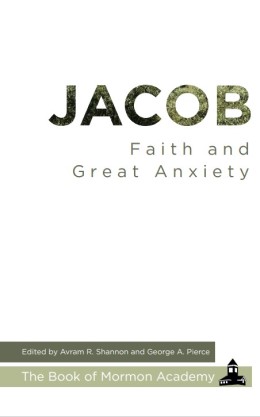
Introduction
Avram R. Shannon and George A. Pierce
This volume represents the most recent effort by members of Brigham Young University’s Book of Mormon Academy (often abbreviated BOMA), an academic research group devoted to promoting scholarship and teaching on the Book of Mormon, which was founded in 2013 by the leadership of BYU’s Department of Ancient Scripture. BOMA first published Abinadi: He Came Among them in Disguise in 2018[1] as the beginning of a new series of volumes on the Book of Mormon. Since then, volumes in the series have been released at a rapid pace, showing the rich potential in Book of Mormon studies. This present volume is the fifth in the series. Some of the previous volumes from the Book of Mormon Academy have looked at a theme or text in the Book of Mormon, such as the Jaredite records or the relationship between the Bible and the Book of Mormon. Other publications have examined the ministry and teachings of a specific individual, such as Abinadi or Samuel the Lamanite. The present volume is in continuity with those previous studies as the various members of the Book of Mormon Academy examine Jacob, the son of Lehi and brother of Nephi.
Although Jacob is sometimes eclipsed by the shadow of his brother Nephi, his writings represent a significant contribution to the doctrinal makeup of the Book of Mormon. In fact, two of the Book of Mormon chapters most cited in general conference are either addressed to Jacob (2 Nephi 2) or written by him (2 Nephi 9).[2] In spite of being what Grant Hardy calls “an interesting figure but not a major narrator,”[3] Jacob looms larger in the Book of Mormon than his page count might otherwise indicate. The authors in this present volume have dedicated their work to looking at the ways in which Jacob is an “interesting figure” and how he and the writings by him can help us better understand the Book of Mormon record, both in its ancient context and in its application for readers today.
Although members of the Book of Mormon Academy are united in our interest in the Book of Mormon, BOMA does not mandate a single way of looking at the text of the Book of Mormon. The Book of Mormon is a complex work that yields miraculous results to a wide variety of approaches, and members of the Book of Mormon Academy bring to bear a broad expertise and diversity of reading strategies to the Book of Mormon. This means that readers of this book will not see one single, unified perspective on Jacob. Our authors sometimes disagree with each other, but this disagreement only serves to show the richness of Jacob as a writer and a servant of God.
The book begins with three studies on the distinctiveness of Jacob in the Book of Mormon. John Hilton III looks at how Jacob’s writing and style present a unique voice in the Book of Mormon, with several words and phrases being singular to Jacob. Then Ryan Sharp examines the unique doctrinal contributions of Jacob’s teachings. Finally, Daniel Becerra explores how Jacob understands demons and devils—a topic which Jacob deals with more than any of the other writers in the Book of Mormon. Becerra shows how Jacob is both in continuity with and building from ancient ideas of demons and devils, developing a distinctive Book of Mormon demonology.
In harmony with Becerra’s paper, our authors next look at specific Old Testament valences in Jacob’s writings and teachings. Nicholas Frederick specifically addresses various ways in which Jacob draws on Old Testament ideas and concepts broadly. His work is followed by papers by Joseph Spencer and Avram Shannon on specific connections with Old Testament prophets. Spencer argues that although Jacob inherits his brother Nephi’s work with Isaiah, there are aspects of Isaiah’s writings and the social world of the ancient kingdom of Judah that Jacob tries gently to correct. Shannon suggests that there is value in comparing and contrasting Jacob with the prophet Ezekiel, as they were both priestly and prophetic figures working out what it meant to be Israel when the people no longer lived in the land of Israel.
The next section of the book contains studies that explore distinctive theological aspects of Jacob’s thought and writings. Daniel Belnap looks at Jacob’s teachings on “plainness,” connecting this concept to Nephi’s and Jacob’s specific teachings about the relationship between their inherited Israelite religion and their distinctive worship of Jesus Christ. Following this, Jared Ludlow explores the multivalent ways in which Jacob understands the concept of “flesh” in his discourse.
This is followed by a pair of studies by Jan Martin and Kerry Hull that tackle the important work of looking at ancient notions of prejudice and provide answers to the occasional charge that Jacob’s writings are “racist.” Martin explores the notion of filthiness, suggesting that filthy here is a moral state that has nothing to do with skin color. Hull looks at the imagery of robes in antiquity, suggesting that this is the primary image behind images of white and dark in the Book of Mormon.
The final study is by Jared Halverson, who interprets Jacob’s expressions of anxiety and deep feeling in an effort to help members of The Church of Jesus Christ of Latter-day Saints deal with their own feelings of anxiety or struggle.
We would like to thank all those who have helped this volume to its completion. We would especially like to thank the staff of the Religious Studies Center at Brigham Young University, who shepherded this book in its journey toward publication. Of especial help were Devan Jensen and Leigh Ann Copas, the RSC’s executive editor and publications coordinator, respectively. We also thank Alaina Dunn and Annalyn Sorensen, who oversaw the editing for the project, and Carmen Durland Cole, who provided the cover and interior design for the volume. We would like to thank the anonymous readers and reviewers who helped our authors produce the best work they could. Finally, this volume would not be possible without the continued support for the Book of Mormon Academy at the college and department level. This support is well exemplified in Dean Scott Esplin and Shon D. Hopkin, chair for the Department of Ancient Scripture. We are most thankful, of course, for Jacob himself, who gave our authors such rich material to work with.
Avram R. Shannon
George A. Pierce, editors
Notes
[1] Shon D. Hopkin, ed., Abinadi: He Came Among Them in Disguise (Provo, UT: Religious Studies Center, Brigham Young University; Salt Lake City: Deseret Book, 2018).
[2] To be more specific, 2 Nephi 2 is the single most cited chapter from the Book of Mormon, with 495 citations. Second Nephi 9 is cited 277 times, making it the third most cited chapter in 2 Nephi and the tenth most cited overall. See the Scripture Citation Index, https://
[3] Grant Hardy, Understanding the Book of Mormon: A Reader’s Guide (New York: Oxford University Press, 2010), 89.
