
 menu icon in the top, right corner of the screen.
 icon above to close this box.
 icon at the bottom of the screen below the browser—if you don't see it, swipe up to unhide it.
"Filthy This Day before God"
Jacob's Use of Filthy and Filthiness in His Nephite Sermons
Jan J. Martin
Jan J. Martin, "'Filthy This Day before God': Jacob's Use of Filthy and Filthiness in His Nephite Sermons," in Jacob: Faith and Great Anxiety, ed. Avram R. Shannon and George A. Pierce (Provo, UT: Religious Studies Center, Brigham Young University; Salt Lake City: Deseret Book), 191–216.
Jan J. Martin is an associate professor of ancient scripture at Brigham Young University.
The prophet Jacob, the second author in the Book of Mormon and the younger brother of the first author, Nephi, was a gifted man. His teachings, recorded on the small plates of Nephi, essentially consist of two sermons (2 Nephi 6–10; Jacob 2–3) and a treatise (Jacob 4–6).[1] Though they are not extensive, Jacob’s writings reveal a spiritual, intellectual, faithful, diligent, well-judging seer who also possessed unique literary abilities.[2] Like Nephi, Jacob spoke both plainly (see Jacob 2:11; 4:13–14) and boldly (see Jacob 2:7), though he occasionally expressed greater reluctance than Nephi about doing so (vv. 7–10, 23). Despite his diffidence, Jacob’s writings are full of vibrant, rich descriptions that are powerfully candid, such as the “awful monster” that is death and hell (2 Nephi 9:10), the “piercing eye of the Almighty God” (Jacob 2:10), and hearts “pierced with deep wounds” (Jacob 2:35). These examples and many more reveal his wonderfully moving and masterful command of language and imagery.[3]
However, in the midst of his many beautifully artistic phrases lurks the equally potent but less palatable adjective filthy and its noun filthiness. These words can mean “dirty; foul; unclean; nasty” or “polluted; defiled by sinful practices; morally impure.”[4] Interestingly, Jacob is responsible for one-third of the thirty-four instances[5] of filthy/
Animosity between the Nephites and the Lamanites
According to one scholar, Jacob[9] was “a child of a house divided.”[10] From the day he was born as the fifth son to Lehi and Sariah in the Arabian desert after the couple fled from Jerusalem with their older children (ca. 600 BC) to the day he stood before the Nephites at a temple in the promised land as a priest (ca. 544 BC), Jacob suffered “afflictions and much sorrow” because of sibling rivalry and contention (2 Nephi 2:1).[11] The principal antagonists were two of his older brothers: Laman, who was the eldest son, and Nephi, who was the fourth son (see 1 Nephi 2:5). Though there were secondary issues, the principal bone of contention between Laman and Nephi was primogeniture. As the firstborn son, Laman claimed the right to lead the family after Lehi died (see 1 Nephi 16:37–38; 2 Nephi 5:3), while Nephi insisted that the Lord had chosen him to be Lehi’s successor (see 1 Nephi 2:22; 3:29; 2 Nephi 5:19). Probably due to Lehi’s presence as the undisputed head of the family, the power struggle between the two brothers largely simmered under the surface throughout the family’s journey to the promised land,[12] though there were some unforgettably dramatic incidents where the tension exploded into serious life-threatening altercations (see 1 Nephi 3:26–28; 7:6–19; 17:48–55; 18:9–20). Because Lehi died shortly after arriving in the promised land, the question of succession quickly came to a tumultuous climax that resulted in a complete breach between Nephi and Laman and those who supported their differing leadership claims (see 2 Nephi 4:13–14; 5:1–5).[13] After they separated, the brothers established their own colonies in independent locations. The people of Nephi, later known as Nephites (see Jacob 1:13–14), settled in a place they called Nephi, where they observed “to keep the judgments, and the statutes, and the commandments of the Lord in all things, according to the law of Moses” (2 Nephi 5:8–10). The people of Laman, later known as Lamanites (see Jacob 1:13–14), initially remained “in the land of their first inheritance” (Mosiah 10:13) with their own set of laws, the details of which are only hinted at in the Book of Mormon but will be discussed more fully below.
After establishing his own colony where his people “lived after the manner of happiness” (2 Nephi 5:27), Nephi records that the Lord commanded him to “make other plates” upon which he was to write “that which [was] pleasing unto God” (vv. 5:30, 32). One author has argued that the second set of plates was designed to provide “a political tract or a ‘lineage history’ documenting the legitimacy of Nephi’s rule and religious teachings.”[14] The historical narrative on the small plates contradicted the Lamanites’ claim that Nephi had wrongfully “taken the ruling” of the family “out of their hands” and “robbed them” of the brass plates (Mosiah 10:15–16). The brass plates were an important item for a number of reasons (see 1 Nephi 4:14–16; Mosiah 1:3–5; Alma 37:8–10), but because they contained the genealogy of Lehi’s forebearers going back to Joseph of Egypt (see 1 Nephi 5:14), they provided both Laman and Nephi with the essential proof that kings of antiquity needed to establish their genealogical right to rule through legitimate descent.[15] When Nephi took the recorded genealogy away with him, along with the sword of Laban and the Liahona, which were two other important symbols of Old World kingship, he made a distinctly aggressive political move,[16] one that presumably left Laman with no traditionally convincing way to justify his position as a ruler of his own colony or for his descendants to do so after him. Moreover, because the brass plates contained a record of the law of Moses, they would have been very helpful to new leaders like Nephi and Laman with the practicalities of setting up fledgling governments, organizing communities,[17] and maintaining religious belief.[18] Nephi seems to have used the brass plates to great effect (see 2 Nephi 5:10, 12, 16, 18, 26–27), and his success may have exacerbated the “wronged” and “wrathful” feelings the Lamanites already held towards Nephi because of what they felt to be his unlawful usurpation of authority and his underhanded theft of the plates (see Mosiah 10:15–16).[19]
Therefore, according to Nephite records, the Lamanites deliberately taught their children to perpetually hate, murder, rob, and destroy the Nephites (see Mosiah 10:17). These behaviors would go on to foster continually contentious feelings between the two communities, feelings that would make stereotyping and the use of unflattering descriptions of each other likely. The Book of Mormon candidly records instances where some of the Nephites expressed stereotypically unfavorable opinions of the Lamanites (see Alma 26:23–24) and where some of the Lamanites expressed stereotypically unfavorable opinions of the Nephites in return (see Alma 20:8–13). However, as we shall see below, Jacob’s application of filthy/
Filthy in Jacob’s First Recorded Sermon
Shortly before he died, Lehi prophesied that Jacob, his “firstborn” in the days of his “tribulations in the wilderness” (2 Nephi 2:1),[20] would spend his future life “in the service” of God (v. 3). This prophecy came to fruition in Jacob’s mid-twenties.[21] After Nephi and his followers established themselves as a separate colony (see 2 Nephi 5:6–9), Nephi appears to have served as both the spiritual and secular leader of the community (see 2 Nephi 5:10–18).[22] He consecrated Jacob to be both a priest[23] and teacher to the Nephites (see v. 26), presumably to work in the temple that Nephi built (see v. 16),[24] and to serve as a second special witness of the truth.[25] As a priest under the law of Moses, which the Nephites strictly practiced until the coming of Christ (see 1 Nephi 4:15; 5:10; Jarom 1:5; Alma 30:3; 3 Nephi 9:17, 19), Jacob was a mediator between the Nephites and God. As such, he officially represented the people in worship and in sacrifice and taught them the law (see Numbers 18:1–5; Deuteronomy 33:10; Leviticus 10:11, 17; 2 Nephi 9:44; Jacob 1:19).[26] Sometime after his consecration, Jacob delivered his first recorded sermon to the Nephites (see 2 Nephi 6–10), a composition that one scholar has described as “one of the most powerful passages of scripture in the Book of Mormon.”[27] By the time Jacob gave this discourse, Lehi’s family had been driven out of Jerusalem, their ancestral promised land (see 1 Nephi 1:20; 1 Nephi 2:1–4), and Nephi’s followers had been driven out of the land of their first inheritance in the New World (see 2 Nephi 5:1–7). These two traumatic expulsions may have caused the Nephites to feel “cut off and isolated from God’s promises because they lacked a permanent land of inheritance.”[28] As directed by his brother Nephi (see 2 Nephi 6:4), Jacob sought to address this important concern in his first sermon. “The discourse was so long that it took Jacob two days to deliver it,”[29] but Nephi valued his younger brother’s words so much that he recorded some of Jacob’s teachings on the small plates. As we will see, Jacob utilizes filthy three times during his discourse.
Beginning with an explication of what we would call Isaiah chapters 49 through 52, Jacob expertly discusses the scattering and gathering of Israel (see 2 Nephi 6:5–2 Nephi 8) to show that even though the descendants of Lehi and the followers of Nephi have been driven out of their lands of inheritance, the covenantal promises that God made with the house of Israel remain viable for the Nephites (see 2 Nephi 9:1–3). Jacob hoped that the certainty of the Lord’s covenants and promises would encourage the Nephites to raise their heads and rejoice (see v. 3). He then masterfully switches to the Fall of Adam and Eve and explains how “the great Creator’s” infinite atoning sacrifice overcomes the physical and spiritual deaths brought about by the Fall (vv. 4–14). Jacob teaches that because of the Atonement, all humankind will be resurrected and will “appear before the judgment seat of the Holy One of Israel” to be “judged according to the holy judgment of God” (v. 15). But he also makes it clear that the Resurrection is more than a reunification of the spirit and the body into an immortal, incorruptible state. Jacob explains that in the Resurrection, the spirit and the body will be “restored to itself again” (v. 13), meaning that “they who are righteous shall be righteous still, and they who are filthy shall be filthy still” (v. 16).[30] Those who are righteous will “have a perfect knowledge of [their] enjoyment, and [their] righteousness, being clothed with purity,” while those who are filthy will have “a perfect knowledge of all [their] guilt, and [their] uncleanness, and [their] nakedness” (v. 14). To avoid any misinterpretation of what he means by righteous, Jacob helpfully identifies the righteous as “the saints of the Holy One of Israel, they who have believed in [him], they who have endured the crosses of the world, and despised the shame of it” (v. 18) and they who “love the truth” (v. 40). He also adds that those who want to be “saved in the kingdom of God” must “repent and be baptized in his name, having perfect faith in the Holy One of Israel” (v. 23).
The filthy, on the other hand, are “the devil and his angels” (2 Nephi 9:16), though this explanation is not as straightforward as Jacob’s previous identification of the righteous.[31] In English, the “word angel derives from the Greek aggelos, which means ‘messenger.’”[32] Aggelos is based on the root verb aggello, which means “to tell, to inform.”[33] In Hebrew, which is one of the languages mentioned in the Book of Mormon (see 1 Nephi 1:2; Mormon 9:32–34), the word for angel is mal’ach, meaning “one who is sent forth, usually with a message.”[34] Because “the Greek aggelos and the Hebrew mal’ach make no distinction between heavenly or earthly messengers,”[35] and because “the bulk of [2 Nephi] 9 is concerned with the personal worthiness of the Nephites”[36] and what will happen to them at judgment day if they do not repent (see 2 Nephi 9:45–46), Jacob seems to be utilizing angels in its broadest sense to include those mortals who “yield[ed] to the enticings” of the devil and became carnally minded, willfully transgressing the laws of God, pridefully setting aside his counsel, foolishly wasting the days of their mortal probation, and tragically dying in their sins (see vv. 27–39). Thus in Jacob’s first sermon, filthy is a term that represents a spiritual condition brought about by the violation of God’s laws. Jacob appears to share this understanding with his older brother Nephi, who also utilized filthy and filthiness to describe a spiritual condition and who may have influenced Jacob’s understanding and use of those same terms.
Remarkably, it is an angel who first utilizes filthy in the Book of Mormon, as he responds to a young Nephi’s sincere desire to “see, and hear, and know” for himself (1 Nephi 10:17) the things his father Lehi had experienced in a dream that is commonly known today as the vision of the tree of life (see 1 Nephi 8). Lehi’s dream seems to be “an allegory of the spiritual history of God’s children on earth,”[37] the central feature being the tree of life, which is a representation of “the love of God” (1 Nephi 11:21–22), and the central question being whether or not God’s children will partake of the fullness of that love and remain committed to him (see 1 Nephi 8:11–33). As the angel guides Nephi to behold and interpret the different symbolic elements his father saw, such as the iron rod, the straight and narrow path, and the great and spacious building, he says, “Behold the fountain of filthy water . . . ; yea, even the river of which [Lehi] spake; and the depths thereof are the depths of hell” (1 Nephi 12:16).[38] Though it isn’t immediately clear how the angel understands filthy, his subsequent explanation that the depths of the filthy river are the “depths of hell” suggests that filthy represents a condition that comes from disobedience to God’s laws, since it is “sins and iniquities” that cause one to experience “the pains of hell” (Alma 36:13; see also Jacob 3:11). Later, when Nephi discusses the dream with Laman and Lemuel and answers their question about the meaning of the “river of water” (1 Nephi 15:26), Nephi confidently declares that the “water which [their] father saw was filthiness” (v. 27). He goes further, calling it “an awful gulf, which separated the wicked from the tree of life, and also from the saints of God” (v. 28) and “a representation of that awful hell, which the angel said unto me was prepared for the wicked” (v. 29). Thus, for Nephi the terms filthy and filthiness describe the spiritual condition of those who “have sought to do wickedly in the days of [their] probation” (1 Nephi 10:21), who die “in their wickedness” (1 Nephi 15:33), and who are “found unclean before the judgment-seat of God” (1 Nephi 10:21)—ideas that are identical to those Jacob shared in his first sermon. As we move into an examination of Jacob’s second sermon, we will see that he maintains this spiritual understanding of filthy over time.[39]
Filthy in Jacob’s Second Recorded Sermon
Shortly before his death, Nephi divided the community’s leadership responsibilities, conferring the civic government upon one man (who became known as “second Nephi”; see Jacob 1:9, 11) and the church government upon another, seemingly Jacob (see Jacob 1:18; 2:2–4), though the small plates are not explicit.[40] Thus Jacob delivered his second recorded sermon (Jacob 2–3) to the Nephites at the temple as a fifty-year-old priest.[41] In his second sermon Jacob utilizes filthy twice and filthiness five times, applying the terms to the Nephites in three instances and to the Lamanites in four. A cursory examination of the second sermon shows that all of Jacob’s applications of filthy/
Because Jacob’s first application of filthy is to his own people rather than to the Lamanites, and because he doesn’t apply filthy to the Nephites until after a thorough discussion of their many violations of God’s laws, filthy cannot rightly be interpreted as a reference to a physical state or to a racially inherited condition. For Jacob, filthy refers to a spiritual condition generated by disobedience, a meaning he further confirms by reminding the Nephites that repentance, an agency-driven return to God’s laws that involves a willing change of heart and behavior (see Jacob 6:5–6), is the appropriate remedy for their filthy state (see Jacob 3:3). Jacob’s second application of filthy follows quickly on the heels of the first, and it too conveys a spiritual condition, but this time Jacob applies the term to emphasize differences between the Nephites and the Lamanites.
Jacob boldly prophesies of the consequences that will come to the Nephites if they remain in their filthy state: “Except ye repent the land is cursed for your sakes; and the Lamanites, which are not filthy like unto you, nevertheless they are cursed with a sore cursing, shall scourge you even unto destruction” (Jacob 3:3). Jacob further warns that the Lamanites will completely “possess the land” of Nephite inheritance even as the Lord leads the righteous among the Nephites elsewhere (v. 4). In this prophecy, Jacob’s second use of filthy does two important things. First, it confirms his previous claim that the Nephites are filthy; and second, it introduces primacy in commandment-keeping and gradation in culpability as it compliments the Lamanites for not being “filthy” in the same way as the Nephites. Even though the Lamanites are under their own divine condemnation, described by Jacob as “a sore cursing,”[44] the prophet feels that they are “more righteous” than the Nephites for three reasons: first, “they have not forgotten the commandment . . . that they should have one wife, and concubines they should have none” (Jacob 3:5); second, they have remembered that “there should not be whoredoms committed among them” (v. 5); and third, “their husbands love their wives, and their wives love their husbands; and their husbands and their wives love their children” (v. 7). In other words, no matter what other divine laws the Lamanites may be violating and no matter what other divine laws the Nephites may be keeping, respecting and protecting the divinely ordained monogamous family structure (see v. 27), the precious relationships between a husband, a wife, and their children (see Jacob 2:31–32, 35; 3:7), and the sacred powers of procreation (see Jacob 2:28) take divine precedence.[45] For their willful violation of these sacred laws, laws that Lehi had taught them previously (see v. 34), the Nephites are guilty of “greater iniquities than the Lamanites” (v. 35; see also Jacob 3:3–4) and are under “great condemnation” (Jacob 2:34).[46] The family-centered Lamanites, on the other hand, are entitled to the Lord’s patience, mercy, and help (see Jacob 3:6), three important blessings that the Nephites are risking principally with their violations of the laws of monogamy and chastity (see Jacob 2:25–29; 3:3–4). This is a weighty comparison, one in which Jacob consistently indicates that filthy is a spiritual condition created by violations of God’s laws. Jacob uses this comparison to elevate the Lamanites to a better spiritual condition than the Nephites.[47] As Jacob continues his comparison of the Nephites and Lamanites, he begins utilizing filthiness rather than filthy. In English, the adjective filthy is nominalized into the noun filthiness by adding the suffix -ness. Because this type of grammatical change does not alter the meaning of filthy, Jacob’s use of filthiness remains constant: it is a spiritual condition created by violations of God’s laws.
Filthiness in Jacob’s Second Recorded Sermon
Unlike Jacob’s first two applications of filthy, which were to the Nephites, Jacob’s first and second applications of filthiness are to the Lamanites. Jacob continues his second discourse by describing the inner Nephite landscape of prejudice against the Lamanites: “Behold, the Lamanites your brethren, whom ye hate because of their filthiness [a spiritual condition brought about by violations of God’s laws]” (Jacob 3:5). A few verses later, Jacob commands the Nephites to stop acting on their hateful feelings. They are to cease reviling “against [the Lamanites] because of their filthiness [a spiritual condition brought about by violations of God’s laws]” (v. 9). Hate[48] and revile[49] are strong emotional words that carry several meanings. However, for the purposes of remaining focused on understanding filthiness, I will argue that the presence of hate and revile, however they are defined, show that the Nephites were decidedly interested in (and perhaps even overly occupied with) observing, discussing, and reacting to Lamanite disobedience to God’s laws. A law-oriented perspective is hardly surprising given the repeated admissions throughout the Book of Mormon that the Nephite community strictly observed the law of Moses (see 2 Nephi 5:10; Jarom 1:5; Alma 30:3), but such an intense Nephite concern about Lamanite disobedience is intriguing and raises an important question: which laws did the Nephites believe that the Lamanites were violating?
Jacob has already indicated that the Lamanites were obeying some critically important divine laws, but he gives very little detail about Lamanite violations of divine law other than his mention of their “unbelief” and “hatred” towards the Nephites (Jacob 3:7). To appreciate Jacob’s comparison of Lamanite and Nephite filthiness more fully, additional information is needed. Because the Book of Mormon is a record largely focused upon the Nephite community, it is not as explicit about Lamanite departures from the laws of God as it is about Nephite departures, but there are a handful of helpful hints scattered throughout the text that facilitate greater understanding of Lamanite behavior and Nephite objections to it. I have chosen to concentrate on four Nephite portrayals of the Lamanites that are recorded on the small plates because together they are comprehensive and because later Nephite descriptions of the Lamanites largely repeat concepts from these earlier accounts.[50] Even though these early descriptions have been interpreted by some modern readers as evidence of Nephite denigration of the Lamanites for what appears to be a different, more primitive lifestyle,[51] a closer look at the descriptions will show that they are better understood as the Nephite recordkeepers’ way of indicating which divine laws the Lamanites were violating and the process by which the violations developed.
Table 1. Nephite portrayals of Lamanite behavior with key descriptive words
| Verse | Key Descriptors |
2 Nephi 5:24 And because of their cursing which was upon them they did become an idle people, full of mischief and subtlety, and did seek in the wilderness for beasts of prey. | Idle Full of mischief and subtlety Seek for beasts of prey |
Jacob 7:24 And it came to pass that many means were devised to reclaim and restore the Lamanites to the knowledge of the truth; but it all was vain, for they delighted in wars and bloodshed, and they had an eternal hatred against us, their brethren. And they sought by the power of their arms to destroy us continually. | Delighted in wars and bloodshed Eternal hatred [for Nephites] Sought to destroy [Nephites] |
Enos 1:20 But our labors were vain; their hatred was fixed, and they were led by their evil nature that they became wild, and ferocious, and a blood-thirsty people, full of idolatry and filthiness; feeding upon beasts of prey; dwelling in tents, and wandering about in the wilderness with a short skin girdle about their loins and their heads shaven; and their skill was in the bow, and in the cimeter, and the ax. And many of them did eat nothing save it was raw meat; and they were continually seeking to destroy us. | Hatred [towards Nephites] Evil nature Wild, ferocious, bloodthirsty Full of idolatry and filthiness Feeding upon beasts of prey Wandering about in the wilderness Skill in bow, cimeter, ax Ingesting raw meat Continually seeking to destroy [Nephites] |
Jarom 1:6 And they were scattered upon much of the face of the land, and the Lamanites also. And they were exceedingly more numerous than were they of the Nephites; and they loved murder and would drink the blood of beasts. | Loved murder Drank the blood of beasts |
The first column in table 1 displays each of the Lamanite descriptions in their entirety. Column 2 identifies the specific words and phrases the Nephite authors applied to the Lamanites. As the words and phrases are highlighted and studied in close proximity it becomes evident that Nephite authors are accentuating Lamanite attitudes towards animal and human life. For instance, 2 Nephi 5:24 mentions Lamanites seeking for “beasts of prey.” Enos 1:20 talks about Lamanites “feeding upon beasts of prey,” “wandering about in the wilderness” with the “bow, . . . the cimeter, and the ax,” hunting and eating “raw meat.”[52] Jarom 1:6 describes the Lamanites as drinking “the blood of beasts.” These accounts unmistakably and repeatedly refer to animals and to what the Lamanites are doing with them. Similarly, Jacob 7:24 depicts the Lamanites as delighting “in wars and bloodshed,” nursing an “eternal hatred” for the Nephites, and continually seeking “to destroy” them by physical prowess. Enos 1:20 describes hate-filled, “wild,” “ferocious,” “blood-thirsty” Lamanites who are “continually seeking to destroy” the Nephites. Jarom 1:6 adds that the Lamanites love “murder.” These phrases emphasize both a lack of self-control and a lack of respect for human life. When taken together, the Nephite recordkeepers’ portrayals seem to be much more concerned about Lamanite attitudes towards animal and human life than anything else,[53] attitudes that the dietary laws of Moses were specifically designed to confront, correct, and sanctify. Thus the Nephite descriptions of the Lamanites may not reflect feelings of Nephite superiority or prejudice but rather show their sincere desire to carefully illustrate what happened to the Lamanites as they abandoned living according to the law of Moses. Jacob especially recognized that part of his role as priest and teacher was to teach “the consequences of sin” (2 Nephi 9:48; see also Jacob 3:12) so that people could wisely avoid them (see Jacob 6:12).
 Figure 1. A visual representation of the pattern presented in 2 Nephi 5:24.
Scholars have shown that the dietary laws of Moses were much more than hygienic necessities or safeguards to prevent Israel from adopting the idolatrous practices of their neighbors. They were principally designed by God to tame the killer instinct that lurks in human nature, an instinct that craves and pursues power and may, in the process of attaining power, selfishly and indiscriminately tamper with, and even take, animal and human life.[54] The killer instinct may have been what Enos was referring to when he described the Lamanites as having an “evil nature” (Enos 1:20). When the Mosaic dietary laws were kept with the right spirit,[55] they subjugated the killer instinct while inculcating a deep, ethical reverence for both animal and human life by restricting which animals could be used for food (see Leviticus 11:1–8, 13–20, 27); requiring humane slaughtering practices (see Leviticus 17:1–10; Deuteronomy 12:21);[56] and prohibiting human ingestion of blood, which was the symbolic representative of life, so that it could be consciously and respectfully consecrated back to God, the giver of life (see Leviticus 3:17, 7:26–27; 17:10–14). Jacob Milgrom notes that the ultimate reason for the dietary laws, a reason that is stated with greater frequency in the dietary laws themselves than anywhere else in the law of Moses, was to sanctify the people and make them holy (see Leviticus 11:44–45). He explains, “only through a daily regimen of disciplines which remind man that life is sacred can man aspire to a way of life fully informed by other ethical virtues. The dietary laws are rungs on the ladder of holiness, leading to a life of pure thought and deed, characteristic of the nature of God.”[57]
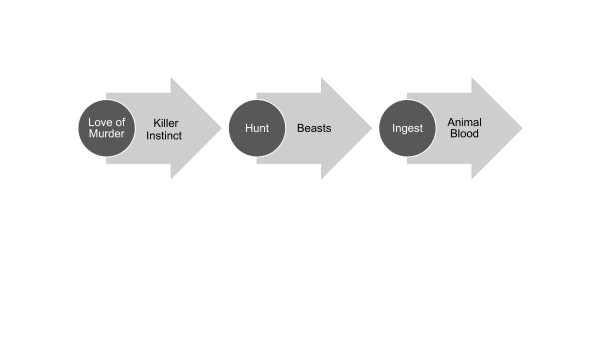 Figure 2. A visual representation of the pattern presented in Jacob 7:24.
That the Nephite recordkeepers had the dietary laws of Moses in mind as they described the Lamanites seems evident, not only because of their repeated emphasis on Lamanite attitudes and behavior towards animal and human life but also because each of their descriptions contains a progressive pattern showing how a lack of respect for life ultimately manifests itself in the treatment of animals and humans. For example, Nephi records that the Lamanites became “an idle people, full of mischief and subtlety” who sought “in the wilderness for beasts of prey” (2 Nephi 5:24; see fig. 1).[58] This seemingly random collection of ideas could be Nephi’s attempt to illustrate his belief that regularly hunting wild animals without also applying the best practices outlined in the law of Moses (see Leviticus 17:13; Deuteronomy 12:21–24), potentially even seeking to kill carnivorous predators, helped the Lamanites become comfortable with taking life. In Nephi’s interpretation, the Lamanites’ mischievous and subtle killer instinct, their appetite for animal flesh, was no longer being disciplined and subdued by diligent, sincere, daily obedience to the dietary laws of Moses.[59] A dutiful and industrious Nephi, ever attentive to the laws of God, may have identified the Lamanites’ neglectful abandonment of the dietary laws of Moses, laws that required significant daily effort, with the term idle.[60]
Figure 3. A visual representation of the pattern presented in Enos 1:20.
Similarly, Jacob writes that the reason the Lamanites were continually seeking “to destroy” the Nephites, an activity that shows no respect for human life, was because they “delighted in wars and bloodshed” and “had an eternal hatred” towards the Nephites (Jacob 7:24). In other words, inward feelings (hatred) created outward priorities (wars and bloodshed) indicative of a highly developed, undisciplined killer instinct that then led to continually seeking Nephite destruction (see fig. 2).
Figure 4. A visual representation of the pattern presented in Jarom 1:6.
Enos explains that the fixed hatred the Lamanites harbored towards the Nephites nourished their killer instinct, what he calls “their evil nature,” which fostered wildness, ferociousness, bloodthirstiness, and a desire to devote a lot of time, talent, and energy to hunting—an activity which ultimately ended in Lamanite willingness to feed “upon beasts of prey” and to regularly ingest “raw meat” (v. 20; see fig. 3).[61]
Jarom too suggests that the Lamanite killer instinct, described by him as a love of murder, facilitated the Lamanites’ enjoyment of hunting, an enjoyment which eventually caused them to violate the Mosaic law’s fundamental prohibition against drinking blood (see Jarom 1:6; see fig. 4).[62]
Conclusion
With this increased understanding of where the Lamanites may have been going wrong in reference to divine law, we can more fully appreciate Jacob’s comparison of Nephite and Lamanite filthiness. On the one hand, the spiritually advantaged, covenant-making, theologically educated Nephites are struggling with pride (see Jacob 2:13–16); economic prejudice and persecution (see vv. 13, 17–21); whoredoms (see vv. 23–28); and the deliberate demolition of the divinely ordained family structure and its accompanying relationships (see vv. 30–35). On the other hand, the spiritually disadvantaged, covenant-deprived, theologically uneducated Lamanites are struggling with unbelief; with a tendency to hold and perpetuate generational grudges (see Jacob 3:7); and with an abandonment of the law of Moses, including its dietary guidance, resulting in a profound lack of respect for animal and human life. Within this candidly powerful juxtaposition, Jacob asks the Nephites to think about their future judgment day and where they will stand “in the sight of [their] great Creator” compared to the Lamanites (v. 7). Jacob insists that without Nephite repentance, judgment day may not be what some of the Nephites are expecting (see v. 8).[63]
As Jacob brings his second sermon to a close, he applies filthiness twice more, once to each colony, in an attempt to help the Nephites apply the Lord’s command to stop looking down upon the Lamanites for their disobedience. Rather than focusing on the Lamanites’ filthiness, or on their violations of God’s laws, Jacob instructs the Nephites to “remember [their] own filthiness,” a practice that would simultaneously invite humility and repulse oppressive self-righteousness (Jacob 3:7). And rather than being intolerant of or impatient with the Lamanites’ violations of divine law, Jacob admonishes the Nephites to “remember that [the Lamanites’] filthiness [spiritual uncleanness] came because of their fathers” (v. 9). This important exercise would restore sobering perspective about the origins of the Lamanites’ unbelief, hatred (see 2 Nephi 4:3–6), inferior theological education (see Mosiah 1:5), and subsequent abandonment of the dietary laws of Moses. It is with these past tragedies and deficiencies in mind that Jacob makes his final application of filthiness. He admonishes the Nephites to simultaneously learn from Lamanite history and look to their own future by remembering their own children and how they “have grieved their hearts because of the example that [they] have set before them” (Jacob 3:10), an example that Jacob earlier declared to be a “bad” one (Jacob 2:35). Jacob then warns that because of their unresolved “filthiness” the Nephites may, just like Laman and Lemuel before them (see 2 Nephi 4:6), bring their own children “unto destruction” and, like them, be held partially accountable for their children’s “sins . . . at the last day” (Jacob 3:10).
Jacob concludes by pleading with the Nephites to “hearken unto [his] words”; to “arouse the faculties of [their] souls”; to “shake” and “awake” themselves “from the slumber of death”; and to “loose [themselves] from the pains of hell” so that they “may not become angels to the devil” (Jacob 3:11), which would be an ominous outcome indeed. The phrase “angels to the devil” masterfully recalls Jacob’s first recorded sermon to the Nephites where he taught that without the “infinite atonement,” the spirits of all humankind, who had been separated from their physical bodies at death, would have “become devils, angels to a devil, to be shut out from the presence of God, and to remain with the father of lies, in misery” (2 Nephi 9:7, 9). He also taught that the filthy who would stand before God at the judgment day were “the devil and his angels” (v. 16), a group that included those unto whom God gave his laws and commandments in mortality and who willfully transgressed them, dying in their sins (see vv. 27, 39). In other words, if the Nephites were not attentive to their own precarious spiritual condition, they could end up in this very group at judgment day.
Through his masterful command of language and imagery, and through his equally commanding understanding of the plan of salvation, we have seen how the prophet Jacob consistently utilized filthy and filthiness to refer to a spiritual condition created by unresolved violations of God’s laws and how he did not use the terms pejoratively in either of his sermons. We have also seen how Jacob recognized that both the Lamanites and the Nephites were filthy because they were each, in their different ways, violating the laws of God as given to Lehi and as outlined in the law of Moses. However, this articulate spiritual leader also knew that because the Nephites had greater access to theological instruction than the Lamanites, their filthiness was more egregious than Lamanite filthiness, an important fact that caused him to boldly call his own people to sincere and humble repentance.
Notes
[1] See John A. Tvedtnes, “The Influence of Lehi’s Admonitions on the Teachings of His Son Jacob,” Journal of Book of Mormon Studies 3, no. 2 (1994): 34.
[2] See Robert J. Matthews, “Jacob: Prophet, Theologian, Historian,” in A Book of Mormon Treasury: Gospel Insights from General Authorities and Religious Educators (Provo, UT: Religious Studies Center, Brigham Young University; Salt Lake City: Deseret Book, 2003), 173.
[3] Matthews has also noted Jacob’s descriptive talent; see “Jacob: Prophet, Theologian, Historian,” 173.
[4] Noah Webster, American Dictionary of the English Language (1828), s. v. “filthy,” https://
[5] An angel is the first individual to utilize filthy in the Book of Mormon (see 1 Nephi 12:16).
[6] Nephi applies filthy to people four times (see 1 Nephi 12:23; 1 Nephi 15:33–34) and associates it with the kingdom of God twice (see 1 Nephi 15:33–34). He applies filthiness to water twice (see 1 Nephi 15:27), to works once (see 1 Nephi 15:33), and to a place once (see 1 Nephi 15:34).
[7] Sharon J. Harris has insisted that “the word filthiness offers a window into one way that the Nephites developed a bias against the Lamanites” and that it “seems to have taken on racial connotations.” Harris, Enos, Jarom, Omni: A Brief Theological Introduction (Provo, UT: Neal A. Maxwell Institute for Religious Scholarship, Brigham Young University, 2020), 51, 56. Similarly, David M. Belnap has argued that “Nephite prejudice is manifest in the uncomplimentary descriptions of Lamanites” and has included Jacob 3:3, 5, 8–9 as part of the uncomplimentary language. David Belnap, “The Inclusive, Anti-Discrimination Message of the Book of Mormon,” Interpreter 42 (2021): 220. Thomas Murphy has included filthy in his list of pejorative terms in the Book of Mormon. See Murphy, “Laban’s Ghost: On Writing and Transgression,” Dialogue 30, no. 2 (1997): 117. Daniel L. Belnap argues that Jacob’s reference to the darkness of Lamanite skin, along with the use of the word filthiness, suggests that the Nephites were “exhibiting racist prejudices against the Lamanites.” Daniel Belnap, “‘And it Came to Pass . . .’: The Sociopolitical Events in the Book of Mormon Leading to the Eighteenth Year of the Reign of the Judges,” Journal of Book of Mormon Studies 23 (2014): 132.
[8] Harris has published the most recent treatment of Jacob’s use of filthy/
[9] Scholars believe that Lehi named his son Jacob after the Old Testament patriarch Jacob. See Matthews, “Jacob: Prophet, Theologian, Historian”; and S. Kent Brown, “What Is Isaiah Doing in First Nephi? Or, How Did Lehi’s Family Fare So Far from Home?” in From Jerusalem to Zarahemla: Literary and Historical Studies of the Book of Mormon (Provo, UT: Religious Studies Center, Brigham Young University, 1998), 16.
[10] John S. Tanner, “Literary Reflections on Jacob and His Descendants,” in The Book of Mormon: Jacob through Words of Mormon, To Learn with Joy, ed. Monte S. Nyman and Charles D. Tate Jr. (Provo, UT: Religious Studies Center, 1990), 264.
[11] Deidre Nicole Green argues that Jacob felt physically unsafe with his family. See Green, Jacob: A Brief Theological Introduction (Provo, UT: Neal A. Maxwell Institute for Religious Scholarship, Brigham Young University, 2020), 11.
[12] The brothers did have productive conversations over the course of their journey and settlement in the promised land (see 1 Nephi 3:15–23; 7:20–22; 15:1–16:5; 19:22–24) and they were able to work successfully together many times (see 1 Nephi 7:1–5; 18:1–6).
[13] “When Lehi died, Nephi must have known that the long-forestalled crisis was now inevitable—and in the New World there were no larger institutions nor higher authorities to protect Nephi and his family from his brothers’ barbarism.” Tanner, “Literary Reflections on Jacob,” 254.
[14] Noel B. Reynolds, “The Political Dimension in Nephi’s Small Plates,” BYU Studies Quarterly 27, no. 4 (Fall 1987): 15.
[15] Gordon C. Thomasson has shown that the Nephite national treasure, consisting of the records, the sword of Laban, and the Liahona, were important symbols of legitimate power and rule. See Thomasson, “Mosiah: The Complex Symbolism and Symbolic Complex of Kingship in the Book of Mormon,” Journal of Book of Mormon Studies 2, no. 1 (1993): 26. Brett L. Holbrook has focused specifically on the symbolism of the sword of Laban. See Holbrook, “The Sword of Laban as a Symbol of Divine Authority and Kingship,” Journal of Book of Mormon Studies 2, no. 1 (1993): 39–72.
[16] See Thomasson, “Complex Symbolism,” 25–32; and Holbrook, “The Sword,” 41–45.
[17] John W. Welch has pointed out that “the law of Moses did more than regulate the priestly ordinances or ritual aspects of ancient Israel. It embraced both religious and secular, cultic and civil law.” Welch, “Lehi’s Last Will and Testament: A Legal Approach,” in The Book of Mormon: Second Nephi, The Doctrinal Structure, ed. Monte S. Nyman and Charles D. Tate Jr. (Provo, UT: Religious Studies Center, Brigham Young University, 1989), 63.
[18] The brass plates may have been equally valuable to Laman for establishing and maintaining his version of the Israelite faith. Grant Hardy has noted that Laman and Lemuel seemed to accept “scriptural interpretations that were defensible, conservative, and held by the majority of the religious establishment of the time,” making them “orthodox, observant” Israelites. Hardy, Understanding the Book of Mormon: A Reader’s Guide (New York: Oxford University Press, 2010), 39.
[19] Neal Rappleye argues that Laman and Lemuel may have believed in specific Deuteronomic ideologies that conflicted with Lehi and Nephi’s beliefs. See Rappleye, “The Deuteronomist Reforms and Lehi’s Family Dynamics: A Social Context for the Rebellions of Laman and Lemuel,” Interpreter 16 (2015): 98–99.
[20] John A. Tvedtnes believes that Lehi used the phrase “first-born in the wilderness” to imply that he considered Jacob as a replacement for his rebellious eldest son Laman. See Tvedtnes, “My First-Born in the Wilderness,” Journal of Book of Mormon Studies 3, no. 1 (1994): 207.
[21] C. Terry Warner, “Jacob,” Ensign, October 1976, 25–30.
[22] Avram R. Shannon argues that the Nephite king was “a sacred person” who, from Nephi1 to Alma1, “was at the head of the Nephite priestly organization.” Shannon, “After Whose Order? Kingship and Priesthood in the Book of Mormon,” BYU Studies Quarterly 60, no. 4 (2021): 82, 90–91.
[23] Because Lehi was not a member of the tribe of Levi, the tribe for whom the Aaronic Priesthood was reserved under the law of Moses (see Exodus 28:1–4; 29:1–46; Doctrine and Covenants 84:18, 26–27), it appears that the Nephites officiated as priests through the authority of the Melchizedek Priesthood. Jacob’s reference to God’s “holy order” may be a shortened version of the original name of the Melchizedek Priesthood, which was “the Holy Priesthood, after the Order of the Son of God” (Doctrine and Covenants 107:3). Shannon suggests that “the Nephites may have functioned in the priestly order that modern Latter-day Saints call the Melchizedek Priesthood” but believes “it cannot be shown from the Book of Mormon” because the record “presents priesthood through a lens of ancient temples and kingship.” Shannon, “After Whose Order?,” 91. For a thorough explanation of how the Nephites were able to offer legitimate animal sacrifices away from Jerusalem, see David R. Seely, “Lehi’s Altar and Sacrifice in the Wilderness,” Journal of Book of Mormon Studies 10, no. 1 (2001): 62–69.
[24] David E. Bokovoy also notices that Jacob’s consecration as priest is mentioned in the same literary unit that describes the temple that Nephi built. See Bokovoy, “Ancient Temple Imagery in the Sermons of Jacob,” in Temple Insights: Proceedings of the Interpreter Matthew B. Brown Memorial Conference, ed. William J. Hamblin and David Rolph Seely (Orem, UT: Interpreter Foundation; Salt Lake City: Eborn Books, 2014), 171–86.
[25] See Warner, “Jacob,” 25–30. Jacob “beheld” Israel’s Redeemer as a youth, and this is what makes him a special witness on par with Nephi (2 Nephi 2:4).
[26] Shannon explains that “Jacob and Joseph would have been responsible for the various offerings required under the law of Moses.” Shannon, “After Whose Order?,” 82. See also Bible Dictionary, “Priests,” https://
[27] Daniel Belnap, “‘I Will Contend with Them That Contendeth with Thee’: The Divine Warrior in Jacob’s Speech of 2 Nephi 6–10,” Journal of Book of Mormon Studies 17, no. 1 (2008): 21.
[28] Daniel Belnap, “‘I Will Contend,’” 21.
[29] Matthews, “Jacob: Prophet, Theologian, Historian,” 181.
[30] Elder Milton R. Hunter, then a member of the first quorum of the Seventy, further explains this principle:
The fact that we die doesn’t change us one iota. You and I are dual personages, possessing a spirit body which dwells in a physical body. Death is the separation of that spiritual body from the physical body. All of our good deeds, our bad deeds; the knowledge we have attained; our habits, our evil and good inclinations, are resident in the spirit. The spirit personage contains the personality, or, in other words, the spirit is the real individual. Having an understanding of this doctrine, therefore, we know that when we die we take with us to the other world exactly what we have made of ourselves while living in mortality. Hunter, “Immortality and Eternal Life,” in Conference Report, April 1949, 68.
Dallin H. Oaks taught, “The principle of restoration also means that persons who are not righteous in mortal life will not rise up righteous in the resurrection.” Oaks, “Resurrection,” Ensign, May 2000, 16.
[31] Larry E. Dahl interprets “the devil and his angels” strictly as Satan and those spirits who followed him in premortality. See Dahl, “The Concept of Hell,” in Book of Mormon Treasury, 262–79.
[32] Taylor Halverson, “The Path of Angels: A Biblical Pattern for the Role of Angels in Physical Salvation,” in The Gospel of Jesus Christ in the Old Testament, The 38th Annual BYU Sidney B. Sperry Symposium (Provo, UT: Religious Studies Center, Brigham Young University, 2009), 153. In a similar vein, Elder Holland said, “We are reminded that not all angels are from the other side of the veil. Some of them we walk with and talk with—here, now, every day.” Holland, “The Ministry of Angels,” Ensign or Liahona, November 2008, 30.
[33] The Cambridge Greek Lexicon (Cambridge, UK: Cambridge University Press, 2021), s. v. “aggelos.”
[34] The Brown-Driver-Briggs Hebrew and English Lexicon, 9th ed. (Peabody, MA: Hendrickson, 2005), s. v. “mal’ach.”
[35] Halverson, “Path of Angels,” 153.
[36] Daniel Belnap, “‘I Will Contend,’” 33.
[37] Sarah Jane Weaver, “A Shared Vision: Lehi’s Dream of the Tree of Life,” Church News, February 3, 1995, https://
[38] For a discussion of the meaning of hell in the Book of Mormon, see Dahl, “Concept of Hell.”
[39] Harris acknowledges that Nephi understands filthiness to be a state of being that excludes individuals from the kingdom of God, but misses the fact that Jacob has the same understanding as Nephi. See Harris, Enos, Jarom, Omni, 51–55.
[40] John S. Tanner has argued that Jacob “exercised dominant priestly authority, equivalent to that of presiding high priest.” Tanner, “Literary Reflections on Jacob,” 256. (The specific duties of the high priest under the law of Moses are outlined in Exodus 28:6–42; 29:6; 39:27–29; Leviticus 6:19–23; 21:10.) Shannon believes differently, arguing that “the Book of Mormon conception of priesthood is based on Judahite notions of kingly priesthood and ideas firmly rooted in the biblical law of Moses and the Sinai Covenant” and that reading the Book of Mormon “against Latter-day Saint ecclesiology and priesthood” can lead to “a misreading of what is going on within the thought-world presented by the Book of Mormon.” Shannon, “After Whose Order?,” 75–76.
[41] See Warner, “Jacob,” 26; and Monte S. Nyman, These Records Are True: A Teaching Commentary on Jacob through Mosiah, vol. 2 (Orem, UT: Granite Publishing, 2003), 16.
[42] Nephi says that he built the temple “after the manner of the temple of Solomon” (2 Nephi 5:16). Monte Nyman postulates that Jacob’s sermon was given on the temple grounds, not in the temple itself, since Nephite wives and children were present and they would not have been allowed inside the temple. See Nyman, These Records Are True, 18, 21.
[43] David Bokovoy notes that Jacob quotes temple-related verses from the Old Testament in his second sermon, especially from the Psalms. See Bokovoy, “Ancient Temple Imagery,” in Temple Insights, 171–86.
[44] Jacob’s description of the “sore cursing” matches Nephi’s earlier reference to “a sore cursing” in 2 Nephi 5:21. I have argued that the “sore cursing” is a reference to the consequences attached to breaking the Lehitic covenant that are clearly outlined in 2 Nephi 1:7, 10–12, 18. See Jan J. Martin, “The Prophet Nephi and the Covenantal Nature of Cut Off, Cursed, Skin of Blackness, and Loathsome,” in They Shall Grow Together: The Bible in the Book of Mormon, ed. Charles Swift and Nicholas J. Frederick(Provo, UT: Religious Studies Center, Brigham Young University, 2022), 112.
[45] The Family Proclamation is a modern-day confirmation that God cares very much about family structure, family relationships, and the sacred powers of procreation. See “The Family, A Proclamation to the World,” ChurchofJesusChrist.org. For a study of the positive treatment of Nephite women in the Book of Mormon under the law of Moses, see Carol Pratt Bradley, “Women, the Book of Mormon, and the Law of Moses,” Studia Antiqua 3, no. 2 (2003): 125–71. For a less positive perspective on the treatment of Nephite women in the Book of Mormon, see Joseph Spencer, “Women and Nephite Men: Lessons from the Book of Alma,” in Give Ear to My Words: Text and Context of Alma 36–42, ed. Kerry M. Hull, Nicholas J. Frederick, and Hank R. Smith (Provo, UT: Religious Studies Center, Brigham Young University, 2019), 235–53.
[46] John W. Welch argues that Jacob’s second sermon was designed “to remind the Nephites of covenants they had previously made to eschew adultery and to consecrate the riches of the promised land back to the Lord of that land,” and that violating these covenants made the Nephites “worse off than the Lamanites.” Welch, “The Temple in the Book of Mormon,” in Temples of the Ancient World: Ritual and Symbolism, ed. Donald W. Parry (Salt Lake City: Deseret Book; Provo, UT: FARMS, 1994), 338.
[47] Green believes that “Jacob uses divine inspiration to instruct his people to look to the archetypal other in order to learn how to live.” Green, Jacob, 44.
[48] Webster’s 1828 dictionary generally defines hate as meaning “to dislike greatly; to have a great aversion to” but gives a scriptural definition as “to love less.” Webster, American Dictionary, s. v. “hate,” https://
[49] Webster’s 1828 dictionary defines revile as meaning “to reproach; to treat with opprobrious and contemptuous language.” Webster, American Dictionary, s. v. “revile,” https://
[50] Later descriptions of the Lamanites—either those taken directly from Zeniff’s record or those interjected by Mormon as he abridged the large plates of Nephi—maintain the same two concerns about the Lamanites’ lack of respect for animal and human life (see Mosiah 9:12; 10:11–17; 24:4–7; Alma 17:14–15, 18:7; 25:1–2, 26:24, 47:36; Mormon 4:14; Moroni 9:8). Lamanite anger, theft of property, and desire to enslave and destroy the Nephites are consistent themes, as are idolatry and indolence. These last two themes can both be references to the abandonment of the dietary laws of Moses, since the worship of idols often involved eating unclean animals that were sacrificed to idols and since indolence could mean a failure to participate in the daily exertions necessary for clean food preparation. For more on this topic, see Jacob Milgrom, “The Biblical Diet Laws as an Ethical System,” in Studies in Cultic Theology and Terminology (Leiden: Brill, 1983), 105, 111–113. Brant A. Gardner has similar ideas about idolatry; see Gardner, Second Witness: Analytical and Contextual Commentary on the Book of Mormon, Volume 3: Enos through Mosiah (Salt Lake City: Greg Kofford Books, 2007), 15–19.
[51] See, for example, Harris, Enos, Jarom, Omni, 42; David Belnap, “Inclusive, Anti-Discrimination Message,” 218; and Gardner, Second Witness, 3:15–19.
[52] Enos also mentions “idolatry and filthiness.” Idolatry may refer to the dietary laws of Moses as explained in note 40. Filthiness may be a reference to Lamanite disobedience to the dietary laws of Moses, but it may also be referring to violations of God’s laws in general. Both Nephi and Jacob consistently use filthy/
[53] Gardner argues that the Nephite descriptions of the Lamanites deliberately contrast the differing cultures of each community and that the Nephites felt their culture was superior. See Gardner, Second Witness, 3:15–19.
[54] See Milgrom, “Biblical Diet Laws,” 104–18.
[55] Edward J. Brandt explains, “The law of Moses could not influence a person’s life unless that person had some measure and portion of the Spirit of the Lord in his or her life. The lack of that spiritual influence caused great difficulties in ancient Israel. They lost the spirit of the law, which is why the law turned into such a burden.” Brandt, “The Law of Moses and the Law of Christ,” in Sperry Symposium Classics: The Old Testament,ed. Paul Y. Hoskisson (Provo, UT: Religious Studies Center, Brigham Young University; Salt Lake City: Deseret Book, 2005), 133.
[56] See Milgrom, “Biblical Diet Laws,” 104.
[57] Milgrom, 111.
[58] It is not clear what “beasts of prey” means. Milgrom explains that within the dietary laws of Moses, “the choice of animal food is severely limited. Considering the variety of fauna that roam the earth, it is startling to realize how few, comparatively, are for man’s table, and that these are of the domesticated-herbivorous species only.” He also states that “only domesticated animals, and not beasts of prey, are acceptable upon the Temple altar.” Milgrom, “Biblical Diet Laws,” 104. Though Gardner does not provide a source or other rationale for his conclusions, he argues that “beasts of prey” should be understood as hunting wild animals rather than keeping domesticated animals. See Gardner, Second Witness, 3:16. In the Webster’s 1828 dictionary, “prey” is defined as “spoil; booty; plunder; goods taken by force from an enemy in war. . . . That which is seized or may be seized by violence to be devoured.” Additionally, in the same definition, an “animal or beast of prey is a carnivorous animal; one that feeds on the flesh of other animals.” Webster, American Dictionary, s. v. “prey,” https://
[59] Nephi and his brothers regularly hunted wild animals for food during their journey from Jerusalem to Bountiful (see 1 Nephi 16:14–18, 31–32). They also obtained the brass plates from Laban so they could “keep the commandments of the Lord according to the law of Moses” (1 Nephi 4:15), so it is presumed that the brothers followed the law’s humane hunting practices over the course of their journey through the wilderness and that Laman and Lemuel’s departure from those practices happened after the brothers separated (see 2 Nephi 5:5–10).
[60] A more specific meaning for idle than “lazy” seems likely because, given other detailed descriptions of Lamanite civilization contained in the Book of Mormon, the Lamanites must have had a work ethic. J. Christopher Conkling has noted that the Lamanites “had highways, transportation, government, religious buildings, [and] planned cities.” Conkling, “Alma’s Enemies: The Case of the Lamanites, Amlicites, and Mysterious Amalekites,” Journal of Book of Mormon Studies 14, no. 1 (2005): 115.
[61] Gardner believes that wild, ferocious, and bloodthirsty are value judgments that are designed to contrast the “uncivilized Lamanites with the civilized Nephites,” who are not just “enemies but opposites.” He also says it is “questionable whether the Lamanites actually ate raw meat,” though he gives no justification for this claim. Gardner, Second Witness, 3:16. Ralph Gower explains that “meat was normally boiled as part of a stew because this naturally followed the draining of blood that was required” in the dietary law, but “meat could be roasted” over an open fire to remove the blood. Gower, The New Manners & Customs of Bible Times (Chicago: Moody, 1987), 52. For more details on the process of “koshering,” or preparing meat, see Rela Mintz Geffen, “Dietary Laws,” Encyclopedia Judaica, Encyclopedia.com, https://
[62] Milgrom explains, “Man has no right to put an animal to death except by God’s sanction. Hence, he must eschew the blood, drain it, and return it, as it were, to the Creator.” Milgrom, “Biblical Diet Laws,” 106.
[63] I have argued that the Lamanite skin of blackness is a self-inflicted tattoo that physically represents the Lamanites’ desire to be a separate people, a people outside the Lehitic covenant who do not belong to Jehovah. See Martin, “Covenantal Nature of Cut Off,” 119–25. If my interpretation is correct, the Nephites came to interpret nontattooed skin, what they called “white” skin, as an indication of Jehovah’s ownership. Thus Jacob’s reference to the Lamanites having “whiter” skin than the Nephites is not a racial reference but a covenantal reference, because it suggests that the tattooed Lamanites were closer to being accepted as Jehovah’s people than the untattooed Nephites were unless the Nephites repented.
