
 menu icon in the top, right corner of the screen.
 icon above to close this box.
 icon at the bottom of the screen below the browser—if you don't see it, swipe up to unhide it.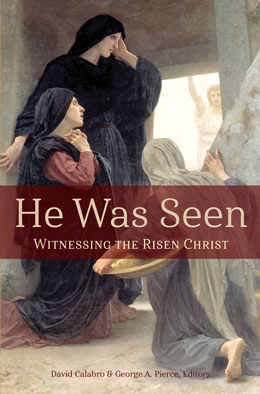
Introduction
The ancient law of witnesses set forth in Deuteronomy and often repeated in scripture states that judgment is established by “the mouth of two witnesses, or three witnesses” (Deuteronomy 17:6).[1] This principle applies not only to the establishment of guilt but also to the confirmation of spiritual truth, the ultimate witness being that of the “three that bear record in heaven, the Father, the Word, and the Holy Ghost: and these three are one” (1 John 5:7).[2] Moreover, the testimonies of prophets and saints, both ancient and modern, form a “cloud of witnesses” that can strengthen us to “run with patience the race that is set before us” (Hebrews 12:1).
For many people in our day, the testimony of witnesses has been replaced by a bombardment of “strong opinions, biased reporting, and incomplete data,” ever growing in quantity such that “our need to recognize truth has never been more important!”[3] The ancient method of establishing truth by witnesses is intensely personal. It involves being attuned to the things of the Spirit and being prepared to trust.
The essays in this volume celebrate the events of Easter morning by examining the testimony of witnesses of the resurrected Christ, including those found in ancient scripture and those of our own dispensation.
In the first essay, Elder Richard G. Hinckley adds his testimony like a continuing link to a chain of other modern witnesses, going back ultimately to the witness of the Holy Ghost. In many ways, some of them subtle, Elder Hinckley’s message shows how modern witnesses carry a consistent voice across generations.
In the second essay, Gaye Strathearn similarly takes us from her experience at the Garden Tomb to the women who first saw the resurrected Lord two thousand years ago. Her close portrayal of these women helps us more clearly hear their witnessing voice through the Gospel accounts.
Mark D. Ellison gives us an up-close view of an ivory panel that is “one of the earliest surviving depictions of Easter morning in visual art.” He explores the interplay between image, Gospel text, and viewer, drawing us in to see Christ through the eyes of our ancient Christian forebears.
In the fourth essay, Lincoln H. Blumell and Spencer Kraus focus on what the testimony of witnesses concerning the Resurrection can mean for us. As we hope for the day when we will rise with immortal bodies and be brought to stand spotless before God, we prefigure those glorious experiences by standing as servants and standing with faith amid our afflictions.
In the fifth essay, Krystal V. L. Pierce marks the distinction between merely seeing Christ, recognizing him for who he is, and coming to really know him. Her observations help us understand the transformation that early witnesses of the Easter event experienced and that we too can experience as modern disciples of Christ.
Andrew C. Skinner concludes the volume with a careful catalogue of witnesses of the resurrected Lord across time and space, including many that may have escaped the notice of casual readers. His essay includes insights on the relationship between resurrection, redemption, and restoration.
The six contributions to this volume show by example how diverse voices can unite in proclaiming the living Christ with learning and devotion. Read them as essays not only to edify but also to emulate. We the editors add our witness: Christ is risen!
David Calabro
George A. Pierce
Notes
We express our gratitude to the many people who helped with the 2023 and 2024 BYU Easter Conferences and whose creative talents went into the production of this volume, including administrative assistant Traci Wright, senior graphic designer Carmen Durland Cole, executive editor Devan Jensen, and publications coordinator Leigh Ann Copas.
[1] See also Deuteronomy 19:15; Matthew 18:16; Doctrine and Covenants 128:3.
[2] Compare John 17:18; 2 Corinthians 13:1; 3 Nephi 11:31–41; Ether 5:4; Doctrine and Covenants 6:28.
[3] John C. Pingree Jr., “Eternal Truth,” in general conference, October 2023.
