
 menu icon in the top, right corner of the screen.
 icon above to close this box.
 icon at the bottom of the screen below the browser—if you don't see it, swipe up to unhide it.
Looking Back
Daniel Becerra, Amy Easton-Flake, Nicholas J. Frederick, and Joseph M. Spencer, "Looking Back," in Book of Mormon Studies: An Introduction and Guide (Provo, UT: Religious Studies Center, Brigham Young University; Salt Lake City: Deseret Book), 11‒30.
When and how did the field of Book of Mormon studies begin? Was there a specific moment when it decisively started or an identifiable event that inaugurated it? When did it begin to differentiate itself from devotional reflection on the text? Is there a story to be told about the field’s history, about changing trends or periods in which specific kinds of research prevailed? These aren’t idle questions. As is so often the case for scholarly disciplines, knowing the backstory behind today’s field of Book of Mormon studies is immensely helpful. It clarifies the stakes of current controversies within the field, and it explains why it’s easier to find scholarship on certain issues and harder to find scholarship on others. It’s also—at least, for those of us working in the field—simply interesting in its own right.
“Looking at the Book of Mormon in terms of its early uses and reception, it becomes clear that this American scripture has exerted influence within the church and reaction outside the church not primarily by virtue of its substance, but rather its manner of appearing, not on the merits of what it says, but what it enacts.” —Terryl Givens, By the Hand of Mormon: The American Scripture That Launched a New World Religion
How did things look for the Book of Mormon right at the start of the Restoration? Well, scholars have long claimed that Latter-day Saints didn’t pay much attention to the Book of Mormon before the twentieth century. And it’s certainly true that early Church-published periodicals and recorded sermons from Church leaders quoted from the Bible more often than from the Book of Mormon. Called on to speak or write for the public, one naturally turns to the familiar, and the Bible was more familiar to the first generation or two of Saints than the Book of Mormon was. More recent scholarship, however, has labored to show that the earliest Saints valued the Book of Mormon in their personal devotional worship. Members of the Church read the book carefully, letting it shape their religious and social worlds.[1] Thus, for individuals engaged with the Book of Mormon, the first decades of the Church’s history were mostly a period of growing familiarity—gained through devoted study and practical-minded reading. It naturally took a generation or two for the book to become a regular resource for scholarly study. But by the end of the nineteenth century, the Book of Mormon was ready to serve as the object of intellectual analysis.
It’s probably wrong to describe anything before the 1940s as making up a field—even a nascent or fledgling field—of Book of Mormon studies, but there were early stirrings of great importance late in the nineteenth century. Orson Pratt, an Apostle and a self-taught intellectual, led the way. Not only did Pratt make the Book of Mormon a consistent focus in his ministry but he also made lasting efforts to draw the Saints toward serious study of the book. Most important among these efforts was his work on the 1879 edition of the Book of Mormon. For the first half century of the Church’s history, the Book of Mormon had in certain ways been printed like a novel—with long chapters and (in most editions) unnumbered paragraphs. There were no verses, no footnotes, no Bible-like double columns. As Pratt worked on the new edition—he’d already produced groundbreaking new editions of the Doctrine and Covenants in 1876 and the Pearl of Great Price in 1878—he transformed the Book of Mormon text into a resource for study. He broke up longer chapters from earlier editions (creating the chapter divisions familiar to Latter-day Saints today), divided the text into numbered verses (the same used in the Church today), and filled the bottom of each page with notes for study (replaced with fresh notes in later editions). Pratt thus created a more citable, more researchable version of the Book of Mormon.
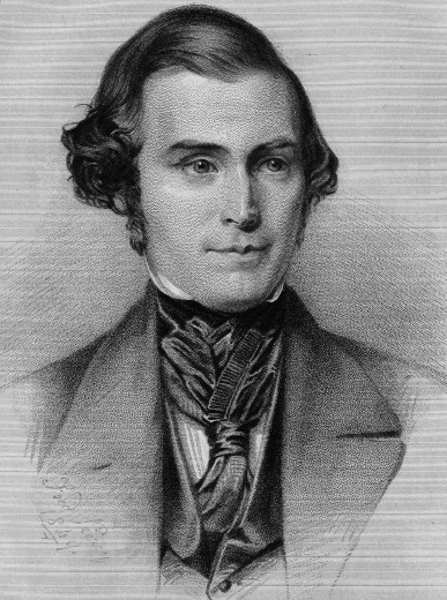 Orson Pratt. Courtesy of Wikimedia Commons.
 George Reynolds. Courtesy of Intellectual Reserve, Inc.
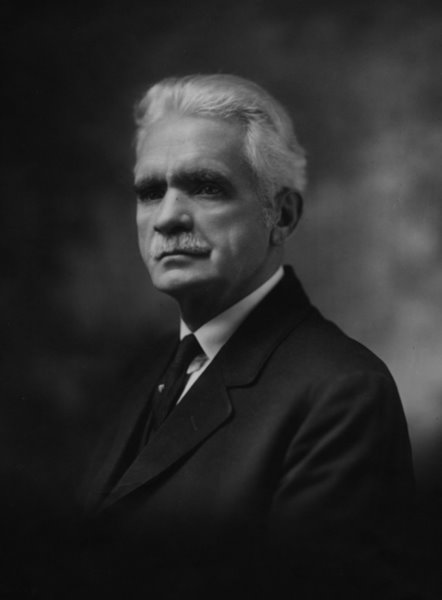 B. H. Roberts. Courtesy of Intellectual Reserve, Inc.


 Top to bottom: Hugh Nibley, M. Wells Jakeman, and Sidney Sperry. Photos courtesy of Neal A. Maxwell Institute for Religious Scholarship and Religious Studies Center, Brigham Young University.
The new edition of the Book of Mormon opened a space for Latter-day Saints to pursue scholarly writing on the scripture. Arguably the first individual to do so was George Reynolds. Enabled by Pratt’s 1879 edition, Reynolds wrote a substantial book-length study, The Story of the Book of Mormon, and produced both A Dictionary of the Book of Mormon and A Complete Concordance of the Book of Mormon. In these works, Reynolds attempted to sort the Book of Mormon’s words and names and stories for the first time. When Reynolds died in 1909, he did so watching a new generation of readers of the Book of Mormon come into their own, building on his and Pratt’s work. Work on the Book of Mormon in the first decades of the twentieth century, however, had a broader focus than Reynolds’s work. Some defended the Book of Mormon’s claims to inspiration and ancient historicity, such as B. H. Roberts in his three-volume New Witnesses for God and Janne M. Sjödahl in his Introduction to the Study of the Book of Mormon. Others laid the foundations for literary and theological work on the Book of Mormon, such as Roy A. West in An Introduction to the Book of Mormon: A Religious-Literary Study and William E. Berrett and Milton R. Hunter in A Guide to the Study of the Book of Mormon.
This same period—and the 1920s in particular—witnessed some quiet challenges for the Book of Mormon that would eventually prove deeply important. The 1920s opened with yet another new official edition of the Book of Mormon, this one the product of Elder James E. Talmage’s careful work. About the time it appeared, however, a member of the Church sent to Elder Talmage a letter with a series of difficult questions about the Book of Mormon’s relationship to the archaeological record. Elder Talmage assigned B. H. Roberts to work up answers to the questions, but Roberts found himself baffled and concerned by the questions rather than confidently prepared to answer them. Roberts in fact produced hundreds of pages of private notes carefully investigating the questions but came to no comforting conclusions. Roberts ultimately seemed content to let the questions be, perhaps hoping that they might remain obscure and therefore not trouble others. But the same kinds of criticisms came to public prominence in the mid-1940s when Fawn McKay Brodie published her still-popular book No Man Knows My History: The Life of Joseph Smith. Brodie’s book was an investigative journalistic biography of Joseph Smith that presented the Book of Mormon as the product of the Prophet’s synthetic genius. In making difficult questions about the Book of Mormon a matter for public conversation rather than for private reflection, though, Brodie arguably provided the much-needed spur to create a serious (if nonetheless small) field of Book of Mormon scholarship.
More or less at the very moment that Brodie’s book appeared, the first generation of university-trained scholars who could bring their skills and expertise to the study of the Book of Mormon also came on the scene. In 1946, M. Wells Jakeman, a Berkeley-trained Mesoamerican archaeologist, joined the faculty at Brigham Young University (BYU) and began to publish professionally about Book of Mormon archaeology. By the end of the decade, Jakeman was leading university-sponsored digs in Central America—in search of Book of Mormon lands while also aiming to contribute to the field of Mesoamerican anthropology. Also in 1946, hard on the heels of publishing a direct rebuttal to Brodie’s book, Hugh Nibley joined the faculty at BYU and was soon hard at work on a long string of publications connecting the Book of Mormon to the world of the ancient Near East. Nibley was also trained at the University of California at Berkeley, and his specialization in ancient Old World civilizations would prove particularly influential in the ensuing years. Further, Sidney Sperry, with a doctorate in biblical literature from the University of Chicago and a position at BYU (acquired much earlier, in 1932), began writing consistently on the Book of Mormon. Sperry would give his attention in particularly acute ways to what he called “the problems of the Book of Mormon”—largely issues surrounding the Book of Mormon’s relationship to the Bible.[2]
These three figures—Jakeman, Nibley, and Sperry—effectively founded Book of Mormon studies as an academic (rather than an aspiringly academic) discipline. They largely limited their intentions to intellectually defending the Book of Mormon against its critics, but they brought real training to the task and saw things in the text that previous generations of readers hadn’t. Bluntly put, they provided the first genuinely scholarly readings of the book, bringing a new sophistication and discipline to its study. Jakeman’s contribution would prove to lie principally in producing a worthy successor for himself, someone who could further his own work while putting it on a much more solid methodological foundation. Jakeman was prone to claim more than the data allowed, quick to find evidence but slow to bring a necessary critical eye to his findings. Sperry’s contribution was more direct than Jakeman’s—his four major books on the Book of Mormon were collectively groundbreaking—and yet his influence would prove unfortunately fleeting, his writings underappreciated after his passing. Despite people’s occasional attempts at recovering his insights, Sperry’s work is largely regarded today as a relic of a past era of Book of Mormon scholarship. Nibley’s work on the Book of Mormon, in contrast with his two colleagues, would acquire striking longevity. All of Nibley’s major works on the Book of Mormon remain available in print today and continue to shape the field well into the twenty-first century. By the end of the twentieth century—a few years before his passing—Nibley had become a living legend, his efforts at defending the Book of Mormon an example held up for imitation.
“The role of personalities was easily visible at BYU where Jakeman, Sperry, and Nibley (more or less my early local mentors) couldn’t agree on anything.” —John L. Sorenson, “Ask the Scholar,” Neal A. Maxwell Institute for Religious Scholarship
For two decades, Jakeman, Nibley, and Sperry dominated Latter-day Saint intellectual culture and gave believers reason to feel that the Book of Mormon is intellectually credible and rationally defensible. Then, however, they began all at once to retreat from Book of Mormon research. Jakeman published his last major archaeological studies connected to the Book of Mormon early in the 1960s, leaving the field of research he’d plowed to others. Sperry’s crowning Book of Mormon Compendium appeared in 1968, after which he largely retired from the public eye, passing away just a few years later. Nibley published the last of his major books on the Book of Mormon, Since Cumorah, in 1967, at which point he turned his attention to other interests (principally the newly recovered papyri associated with the Book of Abraham). In many ways, it seems as if Book of Mormon scholars felt they’d had their say and had their day, and they were ready to pass the torch to others. And at that very moment a burgeoning Latter-day Saint intellectual movement was on the rise, ready to take center stage.
Attention would swing around again to the Book of Mormon a couple of decades later, but in the wake of important events. For example, led by Leonard J. Arrington, trained Latter-day Saint historians had by the mid-1960s established themselves as part of the larger historical discipline, simultaneously bringing professionalism to Latter-day Saint history and Latter-day Saint history to the profession. By the early 1970s, studying the history of the Restoration—rather than analyzing or defending scripture—had become the predominant focus of Latter-day Saint scholarship. The forward momentum of this movement (which soon came to be known as “new Mormon history”) eventually faltered, however. Church leaders—who had directly sponsored much of the historical work being done—grew nervous about the movement in the late 1970s. The Church then withdrew sponsorship for various historical projects in the early 1980s. Part of what spurred this retreat from institutional support was the alarming “discovery” of historical documents that called the sacred origins of the Latter-day Saint tradition—and particularly of the Book of Mormon—into question. These documents were eventually, but only eventually, revealed to be forgeries created by Mark Hofmann. The eagerness and excitement that certain historians exhibited in studying and drawing conclusions from these documents, however, raised lasting concerns among believers about whether scholars had the wisdom to postpone drawing conclusions until the data could all be collected and contextualized thoroughly.
These developments coincided with an increase in the intensity of lay and popular religious criticism of the Church. In fact, the 1980s were difficult for conservative religions in the United States of America quite generally. Countercultural movements and popular identity politics originating in the 1960s had become part of mainstream culture by that point, and so the faith-driven conservative culture that had dominated the period immediately following World War II was increasingly marginalized and even demonized. Religion was coming to be seen as a protector of racism, sexism, classism, and homophobia. Naturally, then, the 1980s also witnessed a reaction to these developments from what was soon called “the religious right,” a version of political conservatism that saw the battle for America’s identity as deeply bound up with a battle over religion. Latter-day Saints in the United States found their place in this fraught religious and political conflict only uneasily. Their generally conservative views on social issues aligned them in many ways with the religious right, but the same 1980s also saw an astonishing increase in antagonism toward Latter-day Saints from conservative Christians in America. Evangelicals therefore tended to see in Latter-day Saints not potential political allies but pseudo-Christians whose marked success in global missionary work during the previous several decades was a real threat to Christianity. Latter-day Saints thus faced social and cultural marginalization on one side and sustained “anti-Mormon” campaigns on the other.
| Important Developments Spurring Book of Mormon Studies Activity in the 1980s |
| - Mark Hofmann’s forgeries raise questions about the Book of Mormon’s origins in a way that contributes to a crisis among Latter-day Saint historians. |
| - “Anti-Mormon” critiques of the Book of Mormon (and of related faith claims) increase at the popular level. |
| - President Ezra Taft Benson gives a series of sermons endorsing a stronger devotional connection to the Book of Mormon. |
| - The rise of the religious right in the United States places Latter-day Saints in an uncomfortable political position. |
It’s worth reviewing these historical and political matters between the late 1960s and the early 1980s because they unquestionably shaped the field of Book of Mormon studies when it reemerged with peculiar force. Renewed scholarly critiques of the Book of Mormon’s origins and claims to antiquity, combined with antagonism from nonscholars in the larger Christian world, motivated a whole generation of young Latter-day Saint scholars to turn their attention to the Book of Mormon in the early 1980s. These scholars came to the book’s defense in an organized and collaborative fashion. Deepening their motivations was an increasingly felt need among Latter-day Saints in general to have the Book of Mormon be a part of their daily devotional study. Ezra Taft Benson became the new President of the Church in 1985 and inaugurated his prophetic ministry with addresses on the Book of Mormon’s role in the Restoration. President Benson directly urged Saints to intensify their relationship with the book. Scholars heard this call in their own way and gave their attention to the Book of Mormon in a concerted effort to return to the fields that Jakeman, Nibley, and Sperry had left fallow more than a decade earlier. Rising in defense especially of the Book of Mormon’s claim to antiquity, these scholars gathered around a nascent institution that would prove to be a major intellectual force in Book of Mormon studies: the Foundation for Ancient Research and Mormon Studies (FARMS), established in 1979.
FARMS’s work on the Book of Mormon, with a strong emphasis on defending the Book of Mormon’s origins in the ancient world, gently displaced another vision for Book of Mormon studies that had begun to emerge in the late 1970s. Gathering around the Association for Mormon Letters during those years—and certainly encouraged by the institutional support that well-trained historians were receiving from the Church—was a group of (mostly young) literary readers of the Book of Mormon. Robert K. Thomas, Bruce W. Jorgensen, Robert E. Nichols, Eugene England, Marilyn Arnold, Steven C. Walker, Richard Dilworth Rust, Steven P. Sondrup, James E. Faulconer, and Mark D. Thomas, among others, busied themselves in laying the foundation for a field of literary scholarship on the Book of Mormon. It’s clear from publications by these scholars during the last years of the 1970s and the first years of the 1980s that they meant to speak as much to scholars outside the faith tradition as to scholars inside, and they had big plans. Unfortunately for literary study of the Book of Mormon, the crisis in professional Latter-day Saint history in the early 1980s that was caused in part by Mark Hofmann’s forgeries, along with the increasing need to respond to criticisms of the Book of Mormon, prevented literary scholars from doing more than publish a few scattered papers on the Book of Mormon. This seems to owe especially to the fact that, as the controversies of the early 1980s matured, it became in certain ways unsafe for believing scholars to speak of reading the Book of Mormon as literature. Certain critics of the Book of Mormon from within the Latter-day Saint tradition spoke of affirming the inspired nature of the Book of Mormon while rejecting its claims to ancient historicity. This dissident position came to be described as treating the Book of Mormon as sacred fiction. Believing literary readers of the Book of Mormon found themselves on difficult terrain, wishing to bring the tools used in reading fiction to reading the Book of Mormon but unsure of how to do so without being accused of disregarding the book’s claims to truth. Literary study of the Book of Mormon, barely emergent, found that it had to wait for the air to clear a bit before it could proceed.
FARMS was itself a product of the late 1970s, founded initially as an independent institution to make Hugh Nibley’s lesser-known essays and other apologetic resources available to interested readers. By the early 1980s, however, the organization had begun to sponsor new scholarly work on the Book of Mormon and other areas of Latter-day Saint interest, generally with an emphasis on defending the Church’s claims to truth. Many scholars associated with FARMS from the beginning were eager to enlist their academic training in the service of defending the Book of Mormon against criticisms—whether those criticisms came from well-trained scholars writing for other academics or from lay Christians or pastors writing scurrilous pamphlets for popular consumption. FARMS scholars were, in short, perfectly attuned to the needs of the moment in the early 1980s. Importantly, FARMS also brought together scholars who were less interested in directly responding to specific criticisms of the Book of Mormon than in building a positive case for the book’s claim to antiquity. Like Jakeman, Nibley, and Sperry, the scholars at FARMS wished to debunk the critics and make a positive case that the Book of Mormon fit well into the ancient world. By the mid-1980s, the organization had worked out a publishing deal with Church-owned Deseret Book to make its research available to a wide Latter-day Saint readership. By the end of the 1980s, FARMS scholars were publishing Hugh Nibley’s collected works alongside books of their own, as well as printing an annual journal, the Review of Books on the Book of Mormon.
FARMS’s relationship to Nibley was particularly important. John W. Welch, a law professor and FARMS’s founder, unquestionably saw his work from the very beginning as continuing Nibley’s. Welch made a name for himself in the late 1960s when he published an article (in BYU Studies) arguing that chiasmus—an ancient form of Hebrew poetry—could be found throughout the Book of Mormon. After founding FARMS, Welch began to publish through its various outlets volumes of similar work, scouring the ancient Near East for traces that paralleled aspects of the Book of Mormon. Not only did he edit many collections of essays FARMS would put into print (consistently contributing his own essays to such volumes as well) but he also published a well-received monograph in 1990 that defended against criticisms of the Book of Mormon’s inclusion of a New World version of the Sermon on the Mount.[3] The most prolific of the FARMS scholars, Welch would eventually serve as an editor of all four volumes of Nibley’s collected works that focus exclusively on the Book of Mormon. Well into the twenty-first century, FARMS would continue efforts to make Nibley’s scholarship—including other essays on the Book of Mormon—available in print. And, naturally, FARMS scholars also honored Nibley’s colleagues, Jakeman and Sperry, in Book of Mormon scholarship. John L. Sorenson’s An Ancient American Setting for the Book of Mormon, published by FARMS and Deseret Book in 1985, was explicitly an attempt to take the kind of work that Jakeman once did and make it more academically respectable. Further, at least one issue of FARMS’s later Journal of Book of Mormon Studies (specifically volume 4, no. 1) was dedicated to revisiting the work and legacy of Sperry’s work on the Book of Mormon.
“In contemporary Mormonism the main battle is not about the Bible. Although it would be wrong to conclude that Latter-day Saint scholars are uninformed or uninterested in non-Mormon biblical exegesis, what in other denominations is a battle for the Bible is in contemporary Mormonism a battle for the Book of Mormon. This battle is fought not around interpretation, but around the very nature of the Book of Mormon. Is it what it claims to be?” —Massimo Introvigne, “The Book of Mormon Wars: A Non-Mormon Perspective”
Nearly from the beginning, though, FARMS found itself in conflict with the publisher Signature Books. From the start, Signature Books, founded in 1981, included in its catalog works that raised questions about Latter-day Saint faith claims. Such works touched on the Book of Mormon with some frequency, and the battle between the two institutions came to be focused in a particular way on the Book of Mormon with Signature Book’s publication in 1993 of New Approaches to the Book of Mormon: Explorations in Critical Methodology. The volume, edited by Brent Lee Metcalfe, is a collection of essays that, with few exceptions, explicitly aim to question traditional faith claims regarding the Book of Mormon. Many of the authors of the essays pursued their task by targeting FARMS-published scholarship: Sorenson’s Mesoamerican model of Book of Mormon geography, Welch’s treatment of the Book of Mormon version of the Sermon on the Mount, and various FARMS scholars’ work on potentially Hebraistic aspects of the Book of Mormon. FARMS responded by publishing at least nineteen direct responses to the book in four different issues of its Review of Books on the Book of Mormon. It also appears to have responded by increasing the intensity of its activity, since the second half of the 1990s saw an unmistakable uptick in the output of FARMS scholarship.
The conflict between FARMS and Signature Books determined the shape of Book of Mormon studies for most of the 1990s. Especially telling is that when a few of the late-1970s literary attempts to read the Book of Mormon matured in the 1990s into full books, the results were printed by the two opposing publishing outfits. Richard Dilworth Rust published Feasting on the Word with FARMS (and Deseret Book), while Mark Thomas published Digging in Cumorah with Signature Books. In the intervening years, Rust had shaped his writing so that it provided what he called a literary testimony of the Book of Mormon’s truth—engaging, however gently, in the larger apologetic enterprise represented by FARMS. Thomas, for his part, professed a position of neutrality regarding faith claims, but readers pointed out right away what they felt was a secularizing and naturalizing bent in the book. Whether Thomas did or didn’t succeed in achieving a position of scholarly neutrality, those at the heart of scholarly writing about the Book of Mormon largely seemed to agree that one couldn’t write without taking sides on the all-consuming question of historicity. There was, as one FARMS scholar put it, no middle ground on the issue.[4]
Signature Books wasn’t the only alternative to the FARMS model of Book of Mormon scholarship during the 1980s and 1990s, however. Emerging in the mid-1980s also—and unquestionably in response to Ezra Taft Benson’s presidential endorsement of the Book of Mormon—was a style of devotional scholarship on the book, centered in BYU’s departments of religious education. BYU’s own Religious Studies Center began hosting an annual Book of Mormon Symposium on campus in 1985 and then began publishing the proceedings in 1988. Scholars writing for this venue developed what they—in honor of their chief model, the then recently deceased Apostle Bruce R. McConkie—labeled doctrinal study of the Book of Mormon. Explicitly devotional and believing but nonetheless reflecting training and scholarly interest, the essays that made up this eventually nine-volume series represent a distinct approach to the text. They took the Book of Mormon largely as an occasion for theological and pastoral reflection. This unique style of scholarship reached a peak in the early 1990s when Bookcraft published a four-volume Doctrinal Commentary on the Book of Mormon, penned by its major representatives: Joseph Fielding McConkie, Robert L. Millet, and Brent L. Top.
Generally speaking, doctrinal scholarship didn’t conflict with the historically minded scholarship produced by FARMS. When FARMS launched a second journal in 1992, the Journal of Book of Mormon Studies, the new editor invited doctrinal scholar Robert Millet to serve as a member of the editorial board, and Millet contributed an article to the journal in its second year. And Stephen E. Robinson, Millet’s colleague, had already reviewed Dan Vogel’s The Word of God in 1991 for FARMS. There were, however, times when the doctrinal orientation of BYU’s religious educators during the 1980s and 1990s conflicted with the historical orientation of FARMS’s publications. A good example occurred in 1989 when FARMS scholar Louis Midgley published in FARMS’s Review of Books on the Book of Mormon a deeply critical review of the first volumes of McConkie and Millet’s Doctrinal Commentary. Generally, however, both approaches were welcome at BYU, which became unmistakably clear when, in 1997, FARMS received an invitation to become a formal part of the university. FARMS had been working informally in and around BYU’s campus almost since its founding. It now moved on campus officially and thus received a stamp of approval for its work.
The same year of 1997 also saw FARMS receive a rather unofficial but no less real gesture of encouragement. That year, evangelical scholars Carl Mosser and Paul Owen presented a joint paper at a conference of their colleagues arguing that FARMS scholars were winning the academic war for the Book of Mormon. Of course, Mosser and Owen presented (and later published) their paper specifically to spur a stronger and better-informed critique of the Book of Mormon (and of various Latter-day Saint faith claims). But this admission of FARMS’s intellectual successes from outside, despite continuing struggles against Book of Mormon critics from within the Latter-day Saint tradition, indicated to many that FARMS had by the end of the twentieth century effectively established the intellectual credibility of the Book of Mormon as an ancient text. It’s no coincidence, it seems, that the last years of the 1990s were FARMS’s most productive years. These particular years saw into print a truly remarkable series of books on the Book of Mormon: Isaiah in the Book of Mormon, King Benjamin’s Speech, Book of Mormon Authorship Revisited, and (the aforementioned) Feasting on the Word, among others. Perhaps especially impressive was the 1996 publication of A Comprehensive Annotated Book of Mormon Bibliography—with more than six hundred pages of bibliographic entries on the whole history of published writing about the Book of Mormon. As the twentieth century wound to a close, it seemed that the future of Book of Mormon studies couldn’t be brighter and that FARMS would lead the way into the new millennium.
The twentieth-century question: Is the Book of Mormon the ancient text it claims to be?
Through the whole of its twentieth-century sojourn, from the mid-1940s to the late 1990s, Book of Mormon studies found its center of gravity in one question: Is the Book of Mormon the ancient text it claims to be? All three founders of the scholarly discipline—Sidney Sperry, M. Wells Jakeman, and Hugh Nibley—took this as their central question, even if they approached the task of answering it differently. The question wasn’t one they invented either; it was a question that Fawn Brodie, like others before her, effectively presented to them, since she’d attempted to bring together evidence that the Book of Mormon was a nineteenth-century product of Joseph Smith’s peculiar religious genius. When it felt like Sperry, Jakeman, and Nibley had done the necessary work to demonstrate that one could endorse the Book of Mormon’s antiquity while respectably holding one’s scholarly head up, academic work on the Book of Mormon slowed and nearly disappeared. It was only once historians and critics raised the old Brodie-like questions again in the early 1980s that Book of Mormon studies rematerialized as a recognizable intellectual force. But what emerged in the 1980s was a more complex field of research. FARMS scholars occupied the center of the field, claiming the legacies of Jakeman, Nibley, and Sperry. Critical scholars vied directly with FARMS scholars for control of the field, while devotional and doctrinal readers found places for themselves in and around the central conflict. Even literary readers hovered about the borders of the field, waiting for opportunities to say something about the Book of Mormon. In all this, however, the very first questions asked by Book of Mormon scholars at mid-century remained the most frequently asked and answered ones.
In the first years of the twenty-first century, a brilliant and charged analysis of all these developments appeared—largely without warning. In 2002, Oxford University Press published Terryl L. Givens’s By the Hand of Mormon: The American Scripture That Launched a New World Religion. The book presented itself as a reception history—that is, as a study of how people of various persuasions have tried, over nearly two centuries, to make sense of the Book of Mormon. Because it isn’t itself a direct endorsement of the Book of Mormon or its claims, and because it’s a sophisticated and deeply subtle work of scholarship, By the Hand of Mormon could be issued by a publisher well outside the debates that so charged the atmosphere of the 1980s and 1990s. At the same time, one of the major subjects covered in By the Hand of Mormon is precisely those very debates of the 1980s and 1990s. Givens took those disputes—and FARMS’s successes in those disputes—as confirmations of his overarching thesis. The central argument in By the Hand of Mormon is that the Book of Mormon’s central theological contribution lies not in its actual content or message but rather in the way the Book of Mormon points beyond the Bible to new revelation. It’s the very idea of ongoing revelation, and specifically what Givens called “dialogic revelation,” that makes the Latter-day Saint faith a radical one.[5]
For Givens in By the Hand of Mormon, then, the wrangling over historicity throughout the twentieth century is evidence of his point that the Book of Mormon has principally embodied new revelation. The struggle had never been about the meaning of the Book of Mormon but only about its truth and derivatively about Joseph Smith’s divine calling. Further, Givens took the fact that FARMS had made a seriously convincing case for Book of Mormon historicity—serious enough to wring a confession of something like temporary defeat from evangelical opponents—to mean that the Book of Mormon debates could be, in a certain fashion, set aside. FARMS had essentially won the war, and so the real question had to become something else now, something built on the solid foundation of the Book of Mormon’s validity: What did Joseph Smith, the Prophet whose calling had been confirmed through the exoneration of the book he set before the world, actually have to say in his own teachings? What was Joseph Smith’s theological vision after and beyond the Book of Mormon? Although Givens would occasionally write in subsequent years about the Book of Mormon again, his developing project would confirm most of the time that he felt that the real contribution of the Restoration to the world lay elsewhere than in the Book of Mormon.
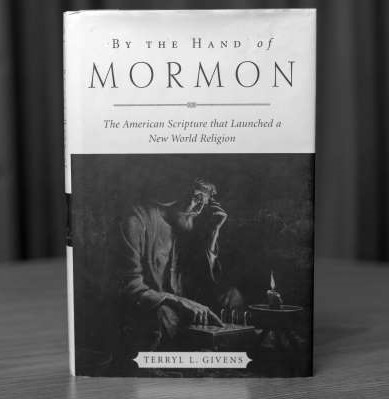 By the Hand of Mormon
Givens’s watershed book was thus a deeply complex phenomenon. It announced to the larger scholarly world that the Book of Mormon was academically respectable—that FARMS scholars, building on the work of their predecessors, had done their work responsibly and well. By the Hand of Mormon, in other words, effectively gave the FARMS scholars leave to take at least a temporary vacation from their burnout pace. They could breathe a little easier than they had for a long time. But Givens’s book also presented the same larger scholarly world with a muddled message about the Book of Mormon. The upshot of Givens’s argument was that the Book of Mormon was a divine arrow pointing to the prophetic gifts of Joseph Smith, who should be the real subject of study. But because Givens made that argument by giving three hundred pages of a scholarly publication to the study of the Book of Mormon, he also made clear that there was real potential for nonpartisan scholarly writing about the Book of Mormon. Thus, ironically, it was less the actual content of Givens’s argument than what By the Hand of Mormon enacted that would prove significant for Book of Mormon studies. Givens showed that there was space—as literary scholars in the late 1970s had surmised—for a version of Book of Mormon scholarship that might be uninterested in debating questions of historicity.
| Styles of Writing About the Book of Mormon |
| - Devotional (confessional) writing |
| - Apologetic (defensive) argument |
| - Neutral (secular) analysis |
There was in fact a literary reader of the Book of Mormon fully ready to take advantage of such a situation, simply waiting for the moment Givens created. Already in 2000, Grant Hardy had written a review of Mark Thomas’s Digging in Cumorah in the FARMS Review of Books (a retitled version of the Review of Books on the Book of Mormon), announcing that, although he didn’t think Thomas had quite acquired the neutral voice he’d have liked, he did think Thomas had the right idea. In 2003, only a year after By the Hand of Mormon appeared, Hardy published with the University of Illinois Press his Reader’s Edition of the Book of Mormon, an edition of the volume of scripture deliberately oriented to the literarily inclined reader (and, significantly, published by an academic press outside of Utah). A few years later, in 2010, his Understanding the Book of Mormon: A Reader’s Guide, published by Oxford University Press, would appear and receive universal acclaim. Hardy’s readings and labors were emphatically literary (they were specifically narratological—that is, attuned to how storytellers in the Book of Mormon go about telling their stories). And he was explicit that his aim was to leave debates over the historicity of the Book of Mormon out of his reading, hoping to construct an approach to and interpretation of the book that might be read with appreciation by outsiders to the faith as much as by insiders.
Hardy’s appearance on the scene in the wake of Givens’s By the Hand of Mormon coincided with a noticeable slowdown in FARMS’s production schedule. The first few years of the twenty-first century saw FARMS symposia and publications reduced to a trickle. The Journal of Book of Mormon Studies had changed its format in 1998, but then it changed its title in 2008 to the Journal of the Book of Mormon and Other Restoration Scripture—broadening its scope even as the size of the journal shrank. Annual symposia slowed considerably in the first years of the new century, with only one major collection of essays on the Book of Mormon appearing in 2004 (Glimpses of Lehi’s Jerusalem). Echoes and Evidences of the Book of Mormon, an encyclopedic summary of past FARMS research, appeared in 2002, suggesting that the work had largely been done and could now be anthologized and simply made more accessible. The Review of Books on the Book of Mormon became the FARMS Review of Books in 1996 and then the FARMS Review in 2003, broadening its scope several times over as it seemed there was less to say about the Book of Mormon. The field that FARMS had plowed for Book of Mormon scholarship was increasingly appearing to lie fallow.
It was into this fallow field that literary readers like Hardy came—but also, very soon after, theological readers such as Adam Miller and his Latter-day Saint Theology Seminar (initially the Mormon Theology Seminar). It was over the course of the two decades following the publication of By the Hand of Mormon that an explosion of interest in the Book of Mormon from the larger academic establishment occurred. By the beginning of the 2020s, articles and book chapters and whole monographs on the Book of Mormon were appearing throughout the academy, and intense interest in Book of Mormon scholarship had begun to take hold anew—and with a wider variety of approaches on display—among believing scholars. It’s time now, then, to explain the basic contours of the field that’s taken shape in the twenty-first century.
| Timeline of Book of Mormon Research | ||
| Year(s) | Name(s) | Event(s) |
| 1879 | Orson Pratt | Publication of the first study-oriented edition of the Book of Mormon |
| 1890–1930 | George Reynolds, B. H. Roberts, Janne M. Sjödahl | Appearance of early resources for studying the Book of Mormon (such as dictionaries and concordances), as well as preliminary studies of the text itself |
| 1920 | James E. Talmage | Publication of a new study-oriented edition of the Book of Mormon |
| 1945 | Fawn M. Brodie | Publication of No Man Knows My History, a popular biography of Joseph Smith that called Book of Mormon origins into question |
| 1940–1970 | Sidney B. Sperry, Hugh W. Nibley, M. Wells Jakeman | The rise of the first university-trained scholars to work on the Book of Mormon, who were focused especially on defending the book’s claim to be an ancient work |
| 1965–1985 | New Mormon history | A movement aiming at professionalization for the study of Latter-day Saint history, eventually raising questions about the Book of Mormon’s historical origins |
| 1976–1979 | Association for Mormon Letters (AML), Foundation for Ancient Research and Mormon Studies (FARMS) | The founding of new organizations sponsoring scholarship on the Book of Mormon, with AML promoting literary study of the scripture and FARMS promoting Nibley-like historical study of the scripture |
| 1980–1985 | Mark Hofmann, Signature Books, countercultism | Direct and indirect cultural pressures bearing on the Book of Mormon’s claims to divinity and ancient origins |
| 1981–1986 | Ezra Taft Benson | A new edition of the Book of Mormon, a new subtitle for the book (“Another Testament of Jesus Christ”), and a series of sermons promoting the centrality of the Book of Mormon to Latter-day Saint devotion |
| 1981–2000 | FARMS, Signature Books, Brigham Young University Religious Education | The so-called Book of Mormon culture wars, massive acceleration of FARMS publications (including journals, with the Review of Books on the Book of Mormon first published in 1989 and the Journal of Book of Mormon Studies in 1992), and the emergence of a doctrinal school of Book of Mormon research (at BYU) |
| 1997 | FARMS | Brigham Young University’s invitation to FARMS to become a formal and sponsored part of the campus community |
| 2002 | Terryl Givens | Publication of By the Hand of Mormon, modeling a new approach to Book of Mormon studies while FARMS slows down |
| 2002–2022 | Neal A. Maxwell Institute for Religious Scholarship, Grant Hardy, Latter-day Saint Theology Seminar | New labors and institutions promoting a wider variety of scholarly approaches to the Book of Mormon (especially literary and theological approaches), with the Maxwell Institute replacing FARMS at BYU in 2006 |
Notes
[1] For the traditional assessment of Latter-day Saints’ reception of the Book of Mormon, see especially Philip L. Barlow, Mormons and the Bible: The Place of the Latter-day Saints in American Religion (New York: Oxford University Press, 1991), 11–42; Grant Underwood, “Book of Mormon Usage in Early LDS Theology,” Dialogue: A Journal of Mormon Thought 17, no. 3 (Autumn 1984): 35–74; Noel B. Reynolds, “The Coming Forth of the Book of Mormon in the Twentieth Century,” BYU Studies 38, no. 2 (1999): 6–47; and Terryl L. Givens, By the Hand of Mormon: The American Scripture That Launched a World Religion (New York: Oxford University Press, 2002), 62–88. For the most important recent work that clarifies early reception, see Janiece Johnson, “Becoming a People of the Books: Toward an Understanding of Early Mormon Converts and the New Word of the Lord,” Journal of Book of Mormon Studies 27 (2018): 1–43.
[2] See, naturally, Sidney B. Sperry, The Problems of the Book of Mormon (Salt Lake City: Bookcraft, 1964).
[3] See John W. Welch, The Sermon at the Temple and the Sermon on the Mount (Salt Lake City, UT: Deseret Book; Provo, UT: FARMS, 1990).
[4] See Louis Midgley, “No Middle Ground: The Debate over the Authenticity of the Book of Mormon,” in Historicity and the Latter-day Saint Scriptures, ed. Paul Y. Hoskisson (Provo, UT: Religious Studies Center, Brigham Young University, 2001), 149–70.
[5] See Givens, By the Hand of Mormon, 209–39.
