
 menu icon in the top, right corner of the screen.
 icon above to close this box.
 icon at the bottom of the screen below the browser—if you don't see it, swipe up to unhide it.
Introduction
Daniel Becerra, Amy Easton-Flake, Nicholas J. Frederick, and Joseph M. Spencer, "Introduction," in Book of Mormon Studies: An Introduction and Guide (Provo, UT: Religious Studies Center, Brigham Young University; Salt Lake City: Deseret Book), 1‒10.
Latter-day Saints take the Book of Mormon seriously. They read and study it, memorize its passages, and mark up its pages. Individuals and families make it the center of their devotional study as they seek God’s voice in its pages and search it for answers to hard questions. Missionaries consume it, sifting its stories and sermons so they can teach with conviction. Quoted over the pulpit and mentioned in personal conversations, studied in pricey leather-bound editions and read on flickering phone screens, the Book of Mormon is ubiquitous in the life of the Saints. It’s so ubiquitous, in fact, that members of the Church sometimes reach a saturation point. Some stories and sermons may become too familiar and, as a consequence, can lose some of their vitality and power. “I already know this,” many find themselves saying as they read. “Is there something more to learn here? Should I be studying something else?”
This is a wholly understandable but also a lamentable feeling. It’s lamentable not only because the Book of Mormon is an infinitely rich text, filled with the Spirit of God and equipped to exalt those who abide by its precepts, but also because the familiarity many feel can be a superficial one. That is, people are often familiar with only one or two layers of the text. Thus it isn’t the Book of Mormon but the way in which one studies it that can limit its potential to inform and transform the reader. Perhaps we’re led to think we know the book so well because we don’t know how to reveal its real riches and depths. There are more resources available today for studying the Book of Mormon seriously than ever before. In fact, we seem to be at the beginning of a golden age of Book of Mormon scholarship, but the good work that’s going on isn’t reaching most Latter-day Saints.
"It isn’t the Book of Mormon but the way in which one studies it that can limit its potential to inform and transform the reader."
The last half century or so has seen a rather general flowering of Latter-day Saint intellectual culture. Particularly productive has been the field of Latter-day Saint history, which has recently come to be a recognized field of scholarship in the larger academy. Going by the name of “Mormon studies” nowadays, this field has traditionally included within it scholarship on the Book of Mormon. For most of the short history of “Mormon studies,” however, scholarship on the Book of Mormon has been treated as something primarily if not exclusively for religious insiders. In part, this is because so much scholarship on the Book of Mormon in the twentieth century was explicitly produced in the hope of either defending or attacking the faith claims (the beliefs) of The Church of Jesus Christ of Latter-day Saints. The field of “Mormon studies” has long been inhabited, however, by a spirit of neutrality with respect to faith claims. But something interesting has begun to happen in recent years. Book of Mormon scholarship that draws a broader audience has begun to appear, demanding attention from scholars outside the faith tradition and built on the idea that the Book of Mormon deserves to be studied in its own right—and not just for the purposes of defending or attacking the Church. In the context of these developments, scholarly work on the Book of Mormon has expanded dramatically, both in content and in scope. There’s much going on, and it can be difficult to know how to find one’s way around the field.
 The title page of the 1830 edition of the Book of Mormon. Courtesy of Intellectual Reserve, Inc.
It’s also worth saying that Book of Mormon studies can be a fraught place to work. The Book of Mormon is sacred scripture for Latter-day Saints, and research methods originally forged in the secular academy might seem like dangerous things to bring to the task of studying such a thing. It is certainly true that the history of Book of Mormon studies has featured a good many controversies and a lot of wrangling. Feelings rightly run high when our deepest convictions are concerned. In our view, it’s crucial to recognize this engagement outright. There are real dangers involved in Book of Mormon studies. There’s also, though, a great deal of promise. What’s needed is a wise approach to serious study of the Book of Mormon, one attentive to the concrete concerns of devoted believers. How can one balance a real recognition of the good that scholarship can do with a healthy skepticism about just how far scholarship can go? Negotiating the field of Book of Mormon studies isn’t just a matter of knowing what’s out there, nor of getting a list of safe books and articles to read, things beyond reproach. It requires developing real wisdom about what’s to be learned from all that’s going on in the field—and about what calls for caution.
For all these reasons, we’ve felt like it would be valuable to produce a short, readable introduction to Book of Mormon studies. For those who do not regularly engage with scholarship, it’s hard to know how to begin. Where do you find the important articles and books? Which sources provide reliable answers to hard questions? How does one know what the different schools of thought are? What challenges does one face in entering the field of Book of Mormon studies, even as a reader? These are the questions we try to answer in the following pages. The four of us who have contributed to this book are all religious educators at Brigham Young University (BYU) and are avid participants in the field of Book of Mormon studies. We write and publish for interested lay Latter-day Saint readers but also for scholarly audiences. We lecture to other academics using theory-laden language and multisyllabic adjectives at large conferences, but we also talk like normal human beings with our fellow believers in our classrooms at BYU. In this book, we try to bridge the unfortunate gap that often exists between the two worlds we inhabit all the time.
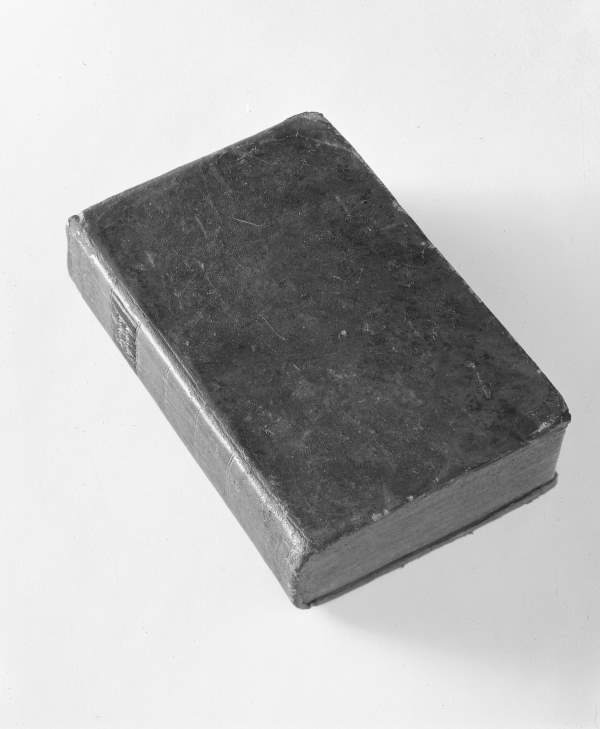 A first-edition Book of Mormon, printed in 1830. Courtesy of Intellectual Reserve, Inc.
Currently there’s no general guide to Book of Mormon scholarship available to the public. While some bibliographies and reviews of literature on specific topics are scattered about, few know where to find them. Internet searches are unfortunately unreliable, and the online resources that currently exist generally provide little context and so don’t tend to help the uninitiated get their bearings. Given all that’s happened in the last few decades—and especially all that’s happening right now—in Book of Mormon studies, this situation needs to be remedied. Introductory guides exist for almost every field of scholarship and are generally updated every few years to keep things current. Book of Mormon studies has grown to the point that it needs such an introductory guide, and so we want to provide one for those who are interested in engaging with the Book of Mormon in a more scholarly way. We recognize from the outset that what we’re putting together has its limitations and will require regular revising and updating. But we also know that things have to start somewhere, and we want to get things started.
We imagine three different kinds of readers picking up this book, and we’ve made efforts to engage all of them. First and above all, we want to write to believing Latter-day Saints—especially young ones—who are interested in contributing to Book of Mormon scholarship. We thus hope this book provides much-needed orientation for budding Book of Mormon scholars and that it might inspire others who are merely curious to try their hand at Book of Mormon scholarship. Second, though, we write also for the many Latter-day Saints who we know want to deepen their private study of the Book of Mormon without any ambitions about producing new scholarship. These readers might turn to a book like this for help in navigating their way through the growing body of Book of Mormon scholarship. And so we hope that this book helps direct such readers to the best of what’s happened and what’s happening and that it provides them with enough context to read sometimes difficult scholarship comfortably and with appropriate caution. Third and most delicately, we write for non–Latter-day Saint scholars (and nonscholars) who have some interest in the Book of Mormon and might appreciate some guidance in navigating a field that’s so deeply shaped by the concerns of believing readers. Although we haven’t written this book in the aspiringly neutral tone of the academy, we hope it will nonetheless serve such readers too, helping them sort out the field despite our efforts to speak principally to those within the faith.
Now, what’s the shape of the book you hold in your hands? Our presentation of the field is relatively simple. The first chapter provides a broad sketch of the history of Book of Mormon studies, tracing that history from the beginning all the way to the rapid expansion of the field in recent years. The second chapter, somewhat longer, surveys the field as it’s now constituted, explaining its seven subdisciplines by providing background and identifying major contributions. In the third chapter, we talk about important obstacles that need to be overcome as the field of Book of Mormon studies moves forward. Then the fourth and fifth chapters clarify what overcoming those obstacles really looks like. A short conclusion follows.
| An Overview of the Chapters Within This Book | |
| Chapter 1 | History of the field of Book of Mormon studies, from the first scholarly investigations of the Book of Mormon to the end of the twentieth century |
| Chapter 2 | Shape of the field today, divided into seven subdisciplines (production of the text, historical origins, literary criticism, intertextual study, theological interpretation, reception history, and ideology critique) |
| Chapter 3 | Obstacles can be overcome for the field’s long-term success |
| Chapter 4 | Questions traditionally addressed in Book of Mormon studies (How was the book translated? How do we explain changes to the text? What sources might lie behind the text? What of anachronisms in the text? Should language from Isaiah be in the book of Mormon? What of New Testament language in the volume? Where did the Book of Mormon take place?) |
| Chapter 5 | Questions being addressed today in Book of Mormon studies (How do we make sense of race in the Book of Mormon? Why are there so few women in the volume? How should we approach war and violence in the text? How relevant is the book in the twenty-first century?) |
At the end of the book is an appendix of a more practical nature. Its aim is to provide simple information about what interested readers might turn to next after reading this introduction to Book of Mormon studies. Publication information for the works mentioned throughout this book can be found in the appendix. The appendix goes much further than just providing full citations, however. It is divided into five parts. The principal audience of the first part (“Getting Started”) is the average Latter-day Saint rather than the budding scholar. It lays out the first steps to take in drawing on the very best of Book of Mormon scholarship for personal or devotional study. The second part (“Getting Serious”) is instead for the budding Book of Mormon scholar, someone hoping to know the field better. It gathers full citation information for books and essays mentioned throughout the book that anyone working in the field of Book of Mormon studies should know. It also includes brief annotations to help the student find his or her way. The third part (“Getting Specialized”) gets still more detailed and is aimed at students interested in specific topics. It notes books and articles mentioned throughout the text on specialized topics and includes (still briefer) annotations. The fourth part (“Getting Around”) is again aimed at all readers. It identifies and briefly discusses the major journals, book publishers, research outfits, and other institutions that are important to Book of Mormon studies. The fifth part is a list of other works we’ve cited along the way. What’s gathered in this appendix is of course anything but exhaustive, but it’s meant to be a relatively comprehensive guide to the most important work in Book of Mormon studies.
| Questions Answered in the Appendix | |
| Part 1 | Which edition of the Book of Mormon is most useful? What is the best introductory source on the story of the book’s coming forth? Where can one read about the history of the book’s reception? Are there any books on the Book of Mormon that everyone should read? |
| Part 2 | Are there other editions of the Book of Mormon one should consider? What are the standard reference materials in Book of Mormon studies? Where can one find bibliographies and literature reviews for the field? Are there more specialized publications on the history of the book of Mormon’s reception? What classic studies of the Book of Mormon are scholars who are working in the field expected to know? What more recent works should anyone getting serious about the field read? |
| Part 3 | What if someone wants to get much more into the weeds in Book of Mormon studies? What might he or she read? |
| Part 4 | What scholarly journals and presses publish work on the Book of Mormon? Are there online resources for Book of Mormon studies? Are there regular conferences on the Book of Mormon? What other institutions exist that sponsor research on the Book of Mormon? |
| Part 5 | Where can someone find full citation information for any other sources that we’ve mentioned along the way? |
One last question: Why us? Who are we? And why does it take four people to write a short book like this? As we’ve mentioned, we’re religious educators at Brigham Young University, professors who teach and write professionally about the Book of Mormon, among other things, for a living. Although we’re all relatively young, we’ve collectively written six books and over fifty articles and book chapters on the Book of Mormon (with many more on the way). We’ve all presented numerous papers on the Book of Mormon at conferences and taught dozens of courses on the Book of Mormon at Brigham Young University. In our ranks are editors and associate editors of the Journal of Book of Mormon Studies, officers of the Book of Mormon Studies Association, members of the Book of Mormon Academy, editors of and contributors to The Book of Mormon: Brief Theological Introductions, hosts of and participants in televised and online reflections on the Book of Mormon, and scholars writing about the Book of Mormon for major non–Latter-day Saint publishing outlets. Each of us brings devoted years of time, study, and research to this book.
Really, any of us might have written this book individually. We recognize, though, that a book that covers so many different areas and wrestles with so many important issues would suffer from being limited to one perspective. Each of us comes from different fields of study. Professor Becerra was trained in early Christian history at Duke University, Professor Easton-Flake in American literature at Brandeis University, Professor Frederick in Mormon studies at Claremont Graduate University, and Professor Spencer in philosophy at the University of New Mexico. Each of us, moreover, brings a different area of interest or specialization to the Book of Mormon: ethics (Professor Becerra), literary studies (Professor Easton-Flake), intertextuality (Professor Frederick), and theology (Professor Spencer). The diversity among our interests, backgrounds, and positions is, despite its still very real limits, an asset in trying to sketch the shape of the field we all work in.
One thing we certainly share is love for and devotion to the study of the Book of Mormon. We believe the Book of Mormon can thrive in both devotional and academic settings, and we hope our efforts here help it do so.[1]
Notes
[1] In many ways, the present book began as a much-shorter article written by two of us—Professors Frederick and Spencer—and published in the Religious Educator in 2020. In what follows, we’ve taken the liberty of drawing passages from that article on occasion. We thank the Religious Educator for allowing us to reprint that material.
