The Life and Teachings of Chieko N. Okazaki

Mark D. Ogletree

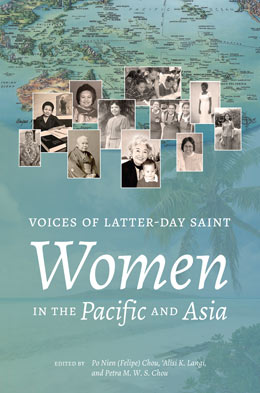
Mark D. Ogletree, “The Life and Teachings of Chieko N. Okazaki,” in Voices of Latter-day Saint Women in the Pacific and Asia, ed. Po Nien (Felipe) Chou, 'Alisi K. Langi, and Petra M. W. S. Chou (Provo: Religious Studies Center; Salt Lake City: Deseret Book), 13–34.

Chieko N. Okazaki was a prolific writer, speaker, and leader in The Church of Jesus Christ of Latter-day Saints. She was the first person of color to serve in a General Presidency of the Church, serving in the General Relief Society Presidency of the Church from 1990 to 1997. She was also the first woman to serve in all three women-led organizations: the Young Women General Board (1961–66), the Primary General Board (1988–90), and the General Relief Society Presidency (1990–97). Furthermore, from 1968 to 1971 she served with her husband, who was the first president of the Japan Okinawa Mission, which later became the Japan Central Mission.[1]

Sister Okazaki was called a “Mormon Trailblazer,” someone who had a “uniquely powerful voice,” and one who was “fearlessly honest.”[2] She was a fascinating woman who made a significant contribution to the general membership of the Church. Her messages centered on diversity, unity, and encouragement. Her reach was international, yet she found a way to touch the lives of individuals—many individuals.

In the Beginning

Chieko was born on October 21, 1926, on a plantation on the Big Island of Hawai‘i. Her parents were poor plantation workers, each with a sixth-grade education. Referring to her parents, Chieko said, “High school was out of the question for both of them, and college was an impossible dream.”[3] Her parents, born in Hawai‘i, were Buddhists of Japanese descent. These wonderful parents deeply desired that their children become educated; they were willing to make any sacrifice to help their children obtain that privilege.[4] In a general conference address while a member of the Relief Society General Presidency, Chieko explained, “They made many sacrifices so that I could go to high school and more so I could graduate from college. They did the same for my brothers with their chosen professions, although my brothers did not pursue academic interests. Neither one of my parents ever set foot on a college campus until my graduation. The only college graduate they knew socially was one teacher in our village.”[5]

Chieko had wonderful mentors in her life that helped direct her and gave her hope to rise above the quality of life her parents had. One such mentor was her sixth-grade elementary school teacher—Yuriko Yamamoto Nishimoto. This teacher was the first individual Chieko knew that had graduated from college,[6] and she inspired young Chieko to desire a college education. As a young girl, Chieko resolved to not only obtain an education, but to become a teacher herself. She wrote,

This resolve was tested when I was fifteen. The gasoline rationing imposed during World War II meant that the school busses could no longer take the high school students every day to Honomakau, ten or twelve miles away. My parents and I decided that I was old enough to leave home, go to Honomakau, and work as a maid for my room and board. I worked for Mr. and Mrs. Ehrlich, who both taught school in Kohala. They lived in a duplex, and in the other half of the duplex was Mrs. Nishimoto who, by then, was teaching business education at the high school.[7]

When Chieko was eleven years old, there was a Latter-day Saint missionary couple who offered classes on Mormonism at her elementary school. There was also a Latter-day Saint chapel behind her school, and she was curious about the Church. Since the Mormonism class was held at the same time as her study hall, Chieko and three of her friends enrolled in the class. They attended the class every Wednesday, as well as church services on Sundays, for four years.

At the young age of fifteen, Chieko worked as a maid for another family, putting herself through high school. The Ehrlichs, the couple Chieko lived with, taught orchestra and English at the high school. Chieko wrote about the details of that time of her life:

At the age of fifteen, I was in charge of the food budget. I would get up at 5:00, cook breakfast, clean house, make the beds, and go off to school at 8:30. When I came home, I would shop, clean, and cook dinner, then study in the evening until eleven or twelve o’clock.

Some nights I would lie in bed feeling overwhelmed and afraid of the magnitude of my challenges. But I was sustained by two things: I knew the life I was leading there did not stretch endlessly before me but was preparing me for a better future. And I knew that having to struggle was not wrong. Struggle was part of life. This was part of the legacy mother had given me.[8]

Eventually, Chieko walked away from her “shrines and incense” that originated from her Buddhist upbringing and became a member of the Church at age fifteen.[9] The gospel of Jesus Christ would become a strong anchor for her throughout her life.

The University of Hawai‘i

The sacrifices that Chieko and her parents made for her education paid off. She was able to enroll at the University of Hawai‘i and begin her pursuit to becoming an educator. She helped to pay her way through school by selling jewelry at Sears-Roebuck and then working as a clerk at the Swedish consulate. It was not until after Chieko graduated from college, that she learned her family helped put her through school by making zori (Japanese slippers/sandals). Chieko explained, “My tuition was about three hundred dollars per semester, so at fifty cents a pair that meant my family would have to make six hundred pairs of zori every three or four months.”[10] But those were the sacrifices her parents were willing to make to help Chieko fulfill her dream of being a teacher.

Meanwhile, Edward Y. Okazaki was also a student at the University of Hawai‘i. Ed had already served in the United States Army during World War II. In fact, he volunteered for the 442nd Infantry Combat Team, one of the most decorated Allied units during the war. He served in Italy and was severely wounded in France during the rescue of the of the 36th Texas Division. For his bravery, Ed received the Purple Heart and the Silver Star.[11] While at the University of Hawai‘i, Chieko and Ed began to deepen their relationship. Initially, Chieko was afraid to become too involved with Ed because he was a Congregationalist. Marrying outside the faith was a difficult decision for Chieko, but she trusted in the Lord and moved forward with faith. Chieko and Ed were married on June 18, 1949. Ten months later, Ed was baptized into the Church.[12] They were sealed in the Salt Lake Temple on June 22, 1951.[13]

Moving to Salt Lake City

Chieko and Ed moved to Salt Lake City in 1951. Ed pursued graduate studies at the University of Utah, and Chieko began teaching at Uintah Elementary School on the east side of town.[14] As a Japanese couple living in Utah so soon after World War II, Chieko and Ed faced significant prejudice. Many Utah families had lost their sons in the Pacific Theater, and they were still mourning their losses. These individuals did not understand that as a member of the 442nd Infantry, Ed had fought in the war to protect their sons, not destroy them.

Nevertheless, an insurance company would not insure their car because of their skin color. Some people said unkind things about them and treated them poorly because of their last name. There were neighborhoods in Salt Lake City that did not want the Okazakis to live among them because they looked different. They were not given church callings for a time because people did not know or trust them. Mothers withdrew their children from Chieko’s classes at the elementary school because she was Japanese. Yet, despite this level of discrimination, the Okazakis remained positive, they put their best foot forward, and they began to reach out to the people around them.[15]

For example, when Chieko first began teaching elementary school, she had to swim through some rough water. Chieko provided these details of her first week teaching:

When we moved to Utah, I was the first exchange teacher from Hawaii to teach at Uintah Elementary School in Salt Lake City. I had taught elementary school for three years in Hawaii and loved it thoroughly. I knew I could be a successful teacher. But still, I felt twinges of apprehension. It had not been all that long since the end of World War II, and I was braced for some racism.

I was not surprised, then, when my principal called me into the office a few days before school started. Her face told me instantly that something was wrong. Hesitantly she said, “I’m very sorry to say that three of the mothers of students assigned to your second grade have requested that they be transferred to a different room. They don’t want their children to have a Japanese teacher.”

“Oh, no problem!” I said cheerfully. “Don’t worry about it. It’s fine with me to make the switch. I will love whoever comes into my class.” She looked at me in amazement, then breathed a sigh of relief. When I told Ed about the incident that night, I laughed and said, “Three out of thirty-five isn’t bad! I have thirty-two students who want me, and three more who are going to have that chance.”

Then I poured all my efforts into making that first day a success. In those days of limited and expensive travel, Hawaii was exotic; and I was Japanese American from Hawaii, which made me exotic, too. I resolved to be exotic. I made a fuchsia-colored dress that showed off my skin and black hair and tucked a fuchsia flower in my hair. I was the most vivid thing in the whole school that first day.

The custom was for each teacher to meet her children on the playground, call the roll so that each child would know where to come, and lead her children into the classroom. The other two second-grade teachers, as a courtesy to me, said, “Would you like to assemble your class first?” I was absolutely delighted. It was exactly what I had hoped for.

I knew there was a lot of curiosity about me, because many of the second-grade mothers were there with their children. It could have been a threatening situation. I could have chosen to feel frightened and let the children and parents feel that. Or I could have chosen to be ultra-stern and rigidly professional by way of covering that up. But what I wanted the children to feel was my own joy and excitement. . . .

That very afternoon, the principal took me aside, smiling a little. “Chieko,” she said, “I just wanted you to know that those three mothers—you know, the ones who wanted their children in the other classrooms?—have come and asked if their children can be transferred back to you. I told them ‘Opportunity knocks only once.’” She laughed, “Can you imagine how furious the other mothers would be if I tried to talk them into transferring their children out of your room?”

My Japaneseness could have been a limitation. In fact, to those three parents initially it was a limitation. But because I was willing to work with it instead of letting it work against me, and because I did the best I could do, it turned into a wonderful experience for all of us.[16]

Photo of Chieko's familyAlthough she had a full-time job, Chieko was able to create a schedule where her boys remembered her being present in their lives. Here Chieko is pictured with her sons, Robert and Ken Okazaki, and their respective families, circa 2000. Courtesy of Robert Okazaki.

It is fascinating that instead of feeling sullen or sad because of her circumstance, Chieko was not affected. She simply moved forward, loving her students and letting these three mothers face the consequences of missing out on one of the best teachers in the school![17]

Chieko further explained, “So, although the racist comments we occasionally heard were unfair—as racist comments always are—we did not resent them. We simply tried to make each interaction we had with any individual one that would give that person a different feeling about us in particular and about Japanese people in general.”[18]

Ironically, even though Chieko and Ed were rejected and ostracized by many people, they accepted everyone. To them, there were no strangers. Their oldest son, Ken, said, “My parents were accepting of everybody. They knew many people who smoked and drank alcohol. My parents simply accepted everyone.”[19]

Involved Mother

Chieko Okazaki was an incredible, involved mother. Undoubtedly, she was busy with her professional life, but she found time for her children. When asked how engaged she was as a mother, her son Ken responded that he always remembered that his mother was around. He did not recollect her not being home.[20] Chieko’s youngest son, Robert reported that despite his mother’s busy schedule, each morning they would have a full breakfast with bacon and eggs—the works. His mother also made elaborate and healthy lunches for the boys to take to school, and every evening was a full course dinner. Chieko found a way to fit everything into the family schedule.[21] She chose to be present in her children’s lives, even though she had a full-time job. She was able to create a schedule where her boys remembered her being close by most of the time. Robert said, “Whenever I needed something, she was there.”[22]

Ken further shared that their mother was always positive. She found a way to see the bright side of almost everything. She rarely spoke negatively about anything or anyone. For example, she had cancer three times but rarely ever mentioned it to anyone. When Ken was on his mission, his mother was diagnosed with her first cancer, yet she never shared that information with him. She did not want her son to be distracted from the Lord’s work, and she certainly did not want her missionary son to worry about her. Robert reported that this was part of the Japanese culture—never to complain, to keep things to yourself, to grin and bear it, and to work through your problems without broadcasting them to the world.[23]

Chieko always looked for the best in people—including her two boys. Regardless of how difficult the circumstances could be, her nature was to be optimistic.[24] When Robert was an adult living in Denver, Chieko and Ed once came to visit him and his family. After attending Sunday services, Robert mentioned to his mother, “That was a terrible sacrament meeting.” His mother responded, “Bob, there is something good in every talk. You just have to find it.”[25]

Chieko also saw the good in every person. When Ed and Chieko served as mission leaders, their boys became somewhat rebellious. They rode motorcycles and wore long hair. Some might suppose that with General Authorities (such as Gordon B. Hinckley, Ezra Taft Benson, or Bruce R. McConkie) coming to visit the mission office, that Ed and Chieko would admonish their sons to cut their hair and put away their motorcycles. However, Ed and Chieko did not try to correct or change their sons’ behavior. These parents would not force their sons to obey. Robert reported that their parents believed in agency. They wanted their sons to be independent and make their own choices.

Working Wife

Chieko and Ed were a powerful team—they were a force for good and positively influenced many of their associates. They worked together, in tandem, in practically every area imaginable. Ken remembered that when doing the dishes “Mom would wash, dad would dry. Mom would cook, dad would clean up. They were always together.”[26] This teamwork was also evident in their Church service or if they were gardening in the backyard; this couple always seemed to be side by side.

Consider the following example of the teamwork between Chieko and Ed. It may be surprising, but Chieko never learned to ride a bike. Growing up on a plantation, her family was very poor, and a bike wasn’t something they could afford. As an adult, Ed tried to teach Chieko how to ride a bike, but she never grasped the concept. Nevertheless, Ed came up with a viable solution. He purchased an old, used tandem bike, and he and Chieko would ride around the neighborhood, with Ed providing the balance and the steering.[27] This couple always worked in tandem, and they enjoyed becoming a team. Ken reported that one of his favorite photographs of his parents is the two of them mixing cement together in a wheelbarrow. They did it together. In fact, Ken reported, “They did everything together.”[28]

Furthermore, Robert reported that he never saw his parents sitting around in the evenings, watching television. They were always working.[29] Ken shared that when his parents did take the time to sit down on the couch, or in a chair and the end of the day, they would collapse into a deep sleep.[30] This energetic couple would often work themselves to exhaustion.

A Passion for Growth and Learning

Chieko loved to learn and progress and grow. She was not satisfied if she was not developing and learning new skills or new knowledge. She also had the courage to try “new things” that may have been out of her comfort zone. For example, when Chieko addressed different groups of women who spoke languages that Chieko could not speak, she would try to learn that language and speak to those sisters in their native tongue.[31] Sometimes she would simply write out her talks phonetically, just so that she could connect with individuals in an audience or congregation. Learning a new language or writing out a talk in a foreign tongue would not be an easy task, but it was important to Chieko, and it showed her love and desire to connect with Saints who lived all over the world.[32]

Chieko’s interests were quite eclectic. For example, from Ed’s journals, we learn that he often drove Chieko to her “clogging class.”[33] Ed also commented, “Mom [Chieko] is a great cook and entertainer.”[34] From Chieko’s journal, she wrote, “I started my guitar lesson.”[35] On another occasion, she wrote, “I began my first piano lesson. I learned a lot and felt comfortable about the lesson. I think I’ll learn quite a bit. Scott is the teacher. Others who were supposed to come didn’t come so I had a private lesson. I had a good time.”[36] Chieko was also skilled and experienced in playing the ukulele.[37] She kept up her quest to continue to learn and try new things. Consequently, she also experienced the growth that would follow such pursuits.

Teacher and Principal

It was Chieko’s dream since she was a young schoolgirl to grow up and become like her mentor, Yuriko Yamamoto Nishimoto, her sixth-grade teacher. The deeper she immersed herself in her profession of teaching, and the more education she obtained, the more Chieko desired to become a school principal. To become a principal, however, would require a master’s degree. In short order, Chieko applied to the University of Northern Colorado, was accepted, and began her graduate work. Essentially, she would teach her classes during the day, and then drive the sixty-plus miles to Greely, Colorado, to take her graduate courses in the evening. Despite her demanding schedule, Chieko still managed her family, cared for their needs, and made straight A’s in her graduate program. This woman was always on the move.[38]

During her educational career, she worked both as a teacher and a principal at several elementary schools in different parts of the country.

  • She taught school in Maui (1948–51)
  • She taught school in Utah (1951–66)
  • She taught school in Colorado (1971–77).
  • She was the first principal of Japanese ancestry at Cherry Creek District in Aurora, Colorado.

Elder Craig Zwick, an emeritus member of the Quorum of the Seventy was a student of Chieko’s many years earlier. He wrote, “When she walked into class, her gaze penetrated the eye and heart of every student in the room. We all felt her goodness immediately.”[39] As a school principal in Colorado, Chieko was a servant-leader. She knew her faculty intimately; she knew every student by name. She seemed to love everyone. Chieko’s personal interest in students, desire for relationships, constant praise, and unfailing kindness to all won the hearts of the students, faculty, staff, and parents. She was able to balance ministering and administering as a servant-leader. She was in tune with the needs of so many individuals.

Service in General Church Organizations

As Chieko grew professionally, she was also recognized in the Church as a powerful teacher and an effective leader. As mentioned, she served in all three women-directed organizations. She served in the Young Women General Board (1961–66), the Primary General Board (1988–90), and the General Relief Society Presidency (1990–97).[40]

When Chieko was called into the General Relief Society Presidency, President Gordon B. Hinckley told her, “You bring a peculiar quality to this presidency. You will be recognized as one who represents those beyond the borders of the United States and Canada and, as it were, an outreach across the world to members of the church in many, many lands. They will see in you a representation of their oneness with the church.”[41] After that conversation with President Hinckley, Chieko related to her son, Robert, why she felt she had been called to this lofty position. She said that her mission would be to reach out to people on the fringes—especially those who did not feel part of the Church. In Robert’s words, he said that his mom recognized she was not “a Salt Laker”—meaning she did not quite fit the mold of those leaders who had pioneer ancestry and who had been in the Church their entire lives and lived on the Wasatch Front. Chieko knew she was different. Not only was she of Japanese descent, but she had only two children, and she was a career woman. Robert explained that his mother wanted to help break the mold of what a Church leader in that era should look like. She pushed the boundaries to some degree and was trying to make some changes in Latter-day Saint culture. She wanted people to understand that the Church of Jesus Christ was not just an American church and that everyone could contribute to building Zion, regardless of race, nationality, gender, professional interests, or family situation.[42]

A Global Impact

When Chieko was set apart as a counselor in the General Relief Society Presidency, President Hinckley promised, “Now, dear Sister Okazaki, you have many friends who love you in various lands. We bless you that your friends may be multiplied and that you may have cause to rejoice and thank the Lord for his great favor upon you.”[43]

Chieko was one who had an international influence—she was connected to sisters from all over the world. Since she was the first non-Caucasian woman to serve in general Church organizations, she was loved and admired by the women of the Church on every continent. Her messages seemed to break through all boundaries and barriers, and, with her incredible ability to teach, connect, and inspire, she made a significant international impact. Because of Chieko’s influence, women from other countries began to feel they had a place in the Church and that they could teach and lead in the same manner as Chieko. The confidence that Chieko possessed inspired other women to share their voice, their talents, and their gifts and to rise and help build the kingdom of God.

During her ministry, Chieko worked hard to unify the Saints and create a culture of Zion. She related well with others. She was a builder and a connector. When she visited a foreign country or interacted with those from different cultures or nationalities, she was always eager to learn from those individuals. She wanted them to feel loved, accepted, and that their differences could help contribute to building the kingdom of God. Chieko was inclusive, and she wanted others to feel her love for them and that the Church was just as much theirs as it was hers. Chieko wrote in her journal, “When Christ can say, ‘Ye are my Friends,’ then we ought to be able to do likewise.”[44] To Chieko, everyone was her friend, regardless of their circumstance or place in life.

Doctrinal Teachings

As a teacher and presenter, Chieko shared many messages in general conference and in other forums, such as women’s conferences and firesides, that were both memorable and relatable. As an author, Chieko was prolific. She wrote over ten books and many other articles that appeared in the Ensign magazine and other publication outlets.[45]

Furthermore, her talks contained significant content and substance grounded in the teachings of Jesus Christ. She spent many hours preparing for the messages that she would deliver. Although Chieko addressed many topics during her ministry, this chapter focuses on three of her major themes: diversity, lightening up, and kindness.

Diversity

The concept of diversity was significant for Chieko, and in many ways she brought this issue to the forefront of the Church during the 1990s. Having experienced prejudice at different times of her life, Chieko was in tune to those from different backgrounds and nationalities and who did not fit the mold of a “Utah Mormon.” She understood that people are different and that families may look different too. We are not supposed to be mirror images of each other. She wrote, “As an American of Japanese ancestry born in Hawaii who lives on the mainland, and as a convert to Mormonism from Buddhism, I’m a firm believer in diversity, in the injection of new flowers into old gardens, in springs rising from many sources to swell the rivers and run into the sea. I love diversity. I’m comfortable with it. I celebrate it and learn from it.”[46]

Chieko wanted to help those who felt marginalized as members of the Church. She wanted everyone to believe that that they had a place in the kingdom of God. She hoped that women who had careers felt they had a place in the Church just as much as mothers of large families, that a convert to the Church from Mexico should have as many opportunities to serve and contribute to the kingdom as a lifelong member from South Jordan, Utah. In her general conference talk “Rejoice in Every Good Thing,” Chieko explained,

Again, look around the room you are in. Do you see women of different ages, races, or different backgrounds in the Church? Of different educational, marital, and professional experiences? Women with children? Women without children? Women of vigorous health and those who are limited by chronic illness or handicaps? Rejoice in the diversity of our sisterhood! It is the diversity of colors in a spectrum that makes a rainbow. It is the diversity in our circumstances that gives us compassionate hearts. It is the diversity of our spiritual gifts that benefits the Church. . . .

As a Relief Society General Presidency, we are different. Elaine, Aileen, Carol, and I are married and single, homemakers and professionals, far travelers and homebodies, converts and fifth-generation members, high school graduates and graduate-degree holders. We have given service to our community and to the Church. But we know each other, we help each other, and we love each other. That’s the way it’s supposed to be. We rejoice in our diversity and enjoy a unified sisterhood. Do the same in your own wards and stakes.[47]

By modeling diversity in the General Relief Society Presidency, Chieko was suggesting that in wards and stakes, they should go and do likewise. She felt that presidencies in the Church should be eclectic and diverse. In other addresses, Chieko wanted to emphasize that families in the Church could also be different. Perhaps the stereotype in the 1990s consisted of a mother and father—with the father working—and the mother staying home to raise four to six children. Chieko’s family looked very different. Both she and Ed worked full time, and they had two children they were raising. In her message “Strength in the Savior,” she stated, “All of us face different family circumstances and home situations. All of us need strength in dealing with them. This strength comes from faith in the Savior’s love and in the power of his atonement.”[48]

Lighten Up!

Chieko had learned in her life not to take herself too seriously. She saw many Latter-day Saints trying to attain perfection in this life, and she also saw individuals wearing themselves out and breaking down—trying to do too much! On one occasion, Chieko was invited to speak at the Shreveport Louisiana Stake Conference. This conference took place in early September of 2000. She wrote in her journal, “That was the hottest place I have ever been to in my life. . . . I think it was about 107 degrees. . . . You can’t imagine what hot is like until you get outside and feel the heat. [It’s] like standing in front of a bonfire and feeling the intense heat hitting your entire body. I thought if this is anything like what hell is going to be like, I will have to work very hard to keep from getting there.”[49] Chieko was often able to see the lighter side of life, but she also knew the devastation that could come to individuals who took themselves much too seriously. On one occasion she wrote,

I’m a triple cancer survivor. And I am still dealing with the bewildering reality of loneliness. My beloved partner, Ed, went on ahead on March 20, 1992, leaving me to follow alone. This hard experience was followed by two others just a few weeks later: I lost a grandchild only a few days before it was due to be born, and my brother was diagnosed as having a brain tumor. . . .

I’d like to share with you my favorite Japanese proverb, which gives advice you might find helpful when life gets difficult. It’s a short saying, and it comes from the ancient book of Okazaki, chapter one, verse one:

Lighten Up!

If you’re doing the best you can, that’s good enough.[50]

Chieko understood that perfection was something that would come in the next life—not this one. She encouraged Latter-day Saints to do their best and to enjoy life. She never lost sight of the doctrine that we should have joy and happiness in this life. She wanted Latter-day Saints to understand that happiness is not something that awaits us in heaven. This earth life can be full of happiness, fun, excitement, and joy. She further explained,

You’re going to have some dark moments. We all do. But when they come, I hope you will remember to let the sunshine into your life. Don’t be hard on yourself, and don’t let other people be hard on you either.

Give yourself credit for the good things you do. If you make a mistake, give yourself credit for trying. Laugh a lot. Catch yourself singing. Whistle or hum as you go about your duties.

If you do only half of what you wanted to do, or do it only half as well as you would have liked, pat yourself on half your back. But lighten up! Be lighthearted enough that you can float above the dark clouds and see the rainbows in your life.[51]

Her book Lighten Up! was very popular among Church members. Many individuals connected to her message and counsel to relax more and enjoy the gospel of Jesus Christ instead of feeling guilty for not measuring up. Thankfully, Chieko did not take herself too seriously. Although some in the Church viewed her as a celebrity, she always saw herself as a servant.[52] Even though she worked hard, she also knew how to enjoy life, and how to build loving relationships with others.

Kindness

Photo of ChiekoChieko learned in her life not to take herself too seriously. Here she is having fun with a yo-yo. Courtesy of Robert Okazaki.

Kindness and charity were incredible Christlike attributes that Chieko and Ed shared together. Both Ed and Chieko had a strong desire to serve, bless, and help those around them. It is difficult to mention Chieko’s kindness without mentioning Ed’s kindness and his love for others. He spent much of his life in the service of friends, family, neighbors, and strangers.

Chieko often addressed the topic of kindness in her messages. She wanted the members of the Church to feel the Savior’s love, and she hoped that they would radiate that love to those around them. She taught, “Kindness is an addiction nobody would want to cure. Kindness multiplies and strengthens. It’s like a chemical reaction—a good one—that doesn’t stop, once it’s set in motion. A disciple’s heart is kind spontaneously, because kindness is self-replenishing. Kindness establishes a confident, loving, generous relationship with another person. . . . Consequently, kindness creates a confident, loving, generous you.”[53]

Not only did Chieko preach kindness, but she lived it. She believed that every human soul was important. She did not see social status, degrees, or wealth—she looked past all of that and saw into each person’s heart. She wrote, “I have always tried to seek the good in others and to do good to others.”[54]

For those who met Chieko, many felt that she was their new best friend. She was always so kind and considerate of others. If she walked across the campus of Brigham Young University, it could take over an hour. So many people felt that they knew her, and they wanted to share their experiences with her. Many individuals had stories that they wanted to tell her. Regardless of her busy schedule, she seemed to have an abundance of time for people. To Chieko, there were no important or unimportant people. Whether someone lived in a trailer park or a palace, Chieko treated everyone in the same manner.[55]

Conclusion: A Disciple to the End

Photo of Chieko with three of her grandsonsRegardless of her busy schedule, Chieko seemed to have an abundance of time for people. Here she is pictured with three of her grandsons (from left to right) William, Andrew, and Matt, circa 1998. Courtesy of Robert Okazaki.

Chieko Okazaki lived as she taught. She was a light. She radiated love. She was kind and compassionate. She lived out her days, trying to become a better disciple of Jesus Christ, demonstrating his love and compassion to everyone around her. On her eighty-fourth birthday, less than a year before her passing, Chieko’s family hesitantly moved her into an assisted living center. After she had blown out all the candles on her cake, she told her loved ones that her birthday wish was “to get to know each and every one of [the residents],” adding how grateful she was to be in her new place and looked forward to the opportunity to have “all these new friends.”[56]

Chieko’s good friend Carolee Hawkins went to visit her at the assisted living center just a short time before she passed away. Carolee related, “As we entered the lunchroom, I saw an empty table and said to Chieko, “Let’s sit there so we can talk.” She said, “No, Carolee, we need to sit with that woman who is eating alone.” Carolee said, “I got the message.”[57] It was one of Chieko’s last acts on this earth. She was reaching out to someone who was lonely. She was including someone who may have lacked friends. She would brighten this new friend’s day with delightful conversation, positivity, hope, faith, and optimism. This is the essence of the life of a disciple of Jesus Christ, Chieko Okazaki.

Notes

[1] Wikipedia, s.v. “Chieko N. Okazaki.”

[2] Peggy Fletcher Stack, “Beloved Mormon Women’s Leader Chieko Okazaki Dies,” Salt Lake Tribune, August 5, 2011.

[3] Chieko N. Okazaki, “Rowing Your Boat,” Ensign, November 1994, 93.

[4] Okazaki, “Rowing Your Boat.”

[5] Okazaki, “Rowing Your Boat.”

[6] Chieko N. Okazaki, Aloha! (Salt Lake City: Deseret Book, 1995), 223.

[7] Okazaki, Aloha!, 223.

[8] Chieko N. Okazaki, Lighten Up! (Salt Lake City: Deseret Book, 1993), 80.

[9] Stack, “Chieko Okazaki Dies.”

[10] Okazaki, Lighten Up!, 29–30.

[11] Obituary of Edward Yukio Okazaki, Deseret News, March 22, 1992.

[12] Stack, “Chieko Okazaki Dies.”

[13] Obituary of Edward Yukio Okazaki.

[14] Stack, “Leader Chieko Okazaki Dies.”

[15] Greg Prince, “There Is Always a Struggle: An Interview with Chieko N. Okazaki,” Dialogue: A Journal of Mormon Thought 45, no. 1 (Spring 2012): 114–18; see also Aloha!, 91.

[16] Okazaki, Lighten Up!, 48–50.

[17] Stack, “Chieko Okazaki Dies.”

[18] Okazaki, Lighten Up!, 11.

[19] Ken Okazaki, interview by Mark Ogletree, February 22, 2023.

[20] Ken Okazaki, interview.

[21] Robert Okazaki, interview by Mark Ogletree, March 15, 2023.

[22] Robert Okazaki, interview.

[23] Robert Okazaki, interview.

[24] Ken Okazaki, interview.

[25] Robert Okazaki, interview.

[26] Ken Okazaki, interview.

[27] Robert Okazaki, interview.

[28] Ken Okazaki, interview.

[29] Robert Okazaki, interview.

[30] Ken Okazaki, interview.

[31] Carolee Hawkins, interview by Mark Ogletree, February 22, 2023.

[32] Robert Okazaki, interview.

[33] Edward Y. Okazaki, diary, 1988–89, October 26, 1988, University of Utah Special Collections, https://collections.lib.utah.edu/ark:/87278/s6450tf7.

[34] Edward Y. Okazaki, diary, October 29, 1988.

[35] Chieko N. Okazaki, diary excerpts, 1979–90, September 22, 1981, University of Utah Special Collections; https://collections.lib.utah.edu/ark:/87278/s6cp29xd.

[36] Chieko N. Okazaki, diary excerpts, September 19, 1989.

[37] Ken Okazaki, interview.

[38] Robert Okazaki, interview.

[39] Peggy Fletcher Stack, “Friends Remember Little Mormon Dynamo with a Big Heart,” Salt Lake Tribune, August 17, 2011.

[40] Stack, “Chieko Okazaki Dies.”.

[41] As cited in Hawkins, interview.

[42] Interview, Robert Okazaki.

[43] Prince, “There Is Always a Struggle,” 122.

[44] Chieko Okazaki, diary, January–April 2006; March 18, 2006.

[45] Wikipedia, s.v. “Chieko N. Okazaki.”

[46] Chieko N. Okazaki, Disciples (Salt Lake City: Deseret Book, 1998), 142.

[47] Chieko N. Okazaki, “Rejoice in Every Good Thing,” Ensign, November 1991, 88–89.

[48] Chieko N. Okazaki, “Strength in the Savior,” Ensign, November 1993, 94.

[49] Chieko N. Okazaki, diary, September 6, 2000.

[50] Okazaki, Lighten Up!, 3, 5.

[51] Okazaki, Lighten Up!, 6.

[52] Hawkins, interview.

[53] Chieko N. Okazaki, Sanctuary (Salt Lake City: Deseret Book, 1997), 79.

[54] Okazaki, Lighten Up!, 123.

[55] Hawkins, interview.

[56] Stack, “Chieko Okazaki Dies.”

[57] Hawkins, interview.