
 menu icon in the top, right corner of the screen.
 icon above to close this box.
 icon at the bottom of the screen below the browser—if you don't see it, swipe up to unhide it.
Seek to Declare My Word
Missionary Work and the Bayanzurkh Building (2002-7)
Po Nien (Felipe) Chou and Petra Chou, "Seek to Declare My Word: Missionary Work and the Bayanzurkh Building (2002-7)," in Voice of the Saints in Mongolia (Provo, UT: Religious Studies Center, Brigham Young University; Salt Lake City: Deseret Book), 177‒98.
“Declare my word, and I will prepare a place for them” (Doctrine and Covenants 31:6).
The translated scriptures helped both the missionaries and the members of the Church of Jesus Christ and their efforts to preach and declare the word of God to the people of Mongolia. Soyolmaa Urtnasan, then the Mongolia Service Center manager, is deeply grateful for her cousin Munkhtsetseg Dugarsuren’s work to translate the Mongolian Book of Mormon, which has been a blessing to further missionary work in Mongolia.[1] Along with the translated scriptures and the call of the first Mongolian elders, missionary work in Mongolia also benefited from Preach My Gospel, introduced in 2004.
During this time, several new buildings were purchased or completed in various cities to provide a gathering place for the growing number of Saints in Mongolia. The continued missionary work, including the full-time missionary service of native Mongolian elders in their home country, was a blessing to their own people. The youth conferences further helped to prepare the youth for their future missions. Church membership grew from 4,358 in 2002 to 7,721 in 2007. Gary R. Gibbons served as mission president from 2002 to 2004, followed by Steven J. Sorensen from 2004 to 2005, and Wallace F. Bryner from 2005 to 2007.
First Mongolian Elders Called to Serve in Mongolia
Gary R. Gibbons and his wife, Debra B. Gibbons, arrived to preside over the mission in July 2002 with several building projects underway. The building purchased in Khovd was approved by the city and remodeled for use in 2002. In February 2003, two new Church buildings in Nalaikh and Selenge were completed and dedicated. In addition, the first native Mongolian elders were called to serve in Mongolia during this time. In total, there were twelve male Mongolian missionaries serving in 2002, along with four female Mongolian missionaries.[2]
“I was one of the first Mongolian elders called to serve in Mongolia,” said Baatarchuluun Tumurbaatar. After his father passed away, a friend invited him to church, and he was baptized in 2001. He explained why he joined the Church: “First, my friend told me that if I was active for a year, the Church would send me to the U.S. . . . As a new convert, I served as a branch Young Men president and then as a counselor in the branch presidency. Then I was truly converted, . . . not to go to the US, but to go on a mission.” While other Mongolian missionaries were going to the US on missions, Baatarchuluun was among the first group of native missionaries called to serve in Mongolia, a total of five elders in his group. There was no Missionary Training Center, but serving a mini-mission helped him prepare to teach and baptize. He served from 2002 to 2004 and called it “wonderful and the best two years of my life.” He served in Khovd, Erdenet, and Nalaikh.[3] He shared the following about his first area:
Khovd was over 1,000 km west of UB and the work there was very bad. There were only 20 people and no baptisms for 6 months.
My mission president was thinking about closing the area. He prayed and then woke up at 3 a.m. He was wondering what to do with it, when he got a call from Salt Lake telling him I was called to serve in Mongolia. This was his answer.
So in 2002, my first area was Khvod. After just a month, we had 8 baptisms from two families. I served in Khovd for 9 months and had 75 baptisms, with about 120 members attending church. I call it the miracle in Khovd.[4]
 Baatarchuluun Tumurbaatar was one of the first Mongolian elders called to serve in Mongolia. Photo taken in Ulaanbaatar, Mongolia, in June 18. Courtesy of Po Nien (Felipe) and Petra Chou.
Elder Baatarchuluun was sent to Erdenet next, and his mission president told him that his primary job was to bring the priesthood-holding brothers to church. “There were many sisters in Erdenet, and it felt like a Relief Society branch,” said Baatarchuluun. Notwithstanding, he decided to focus on baptizing families and was able to bring ten brothers to church during his five months in Erdenet. His last ten months were spent serving in Nalaikh as a branch president.[5] He explained,
The mission president called me to move . . . to UB to be a branch president. I came to my mission president’s house for breakfast, and he asked me, “You know how hard it is to baptize 70 people? Your job is not to baptize, but to bring back 70 people that want to quit the church.
For the first three months, I couldn’t sleep. Not sure what to do. I prayed and pondered. There was another church where they can drink and where they gave them food and other things. So they wanted to quit our church. . . .
So I tried to be their friend and teach them, visit them, tell them every week, “We love you. How can we help you? How are you feeling?” I had lots of interviews. If they came to church, I would interview them. I would go to their friends, eat with them, make friends with them, just ministering. . . . We had 180 members. Of the 70, only 2 of them quit the church. The other 68 came back to church.[6]
After his mission, Baatarchuluun had the opportunity to serve in many other callings, including service as a counselor in the stake presidency after studying at BYU–Hawaii. He said, “I learned a lot which prepared me for future callings. . . . It’s not about the title but the responsibility to do more and help more.” He summarized his feelings by saying, “I’m in God’s hand. What callings or positions I have, it is up to God. He tests me and helps me to become better and better. . . . I am not perfect, but I always think that this gospel is my best choice.”[7]
Preach My Gospel
Along with the scriptures, Preach My Gospel became an important missionary resource. On 15 October 2004, Preach My Gospel was introduced in a worldwide satellite broadcast to all 338 missions of the Church. Elder M. Russell Ballard of the Quorum of the Twelve explained that Preach My Gospel was produced under the direction of the First Presidency and the Quorum of the Twelve and had “their complete and total blessing and endorsement.”[8]
In July 2004, when President Sorensen arrived to preside over the mission in Mongolia, native Mongolian missionaries were unable to travel to attend a Missionary Training Center, so the mission provided a two-week pre-mission training course at the mission home. However, he explained that “the biggest change in missionary work has been the introduction of Preach My Gospel.” President Sorensen added,
We saw a draft of the [Preach My Gospel] booklet at the mission presidents’ seminar the end of June, and the program was introduced to all missions throughout the Church via satellite in August. By October, we had an English copy for every missionary in the mission. Approximately April 2005, we should have our Mongolian copies. Preach My Gospel focuses on using time wisely, using effective commitment patterns, and four new missionary discussions. There are new daily planners, new ways of reporting, new Area Books, and a lifelong pattern for living eternal principles. Missionaries have been seeing greater success by using these principles and are excited about the new program.[9]
 Preach My Gospel Mongolian. Courtesy of Po Nien (Felipe) and Petra Chou.
Missionary Michael P. Corrigan said that Preach My Gospel was introduced to the mission by President Sorenson. Corrigan wrote in the “Assistants’ Corner” of the mission newsletter that Preach My Gospel was “revolutionizing missionary work all across the world” and that “it [was] an honor and a privilege to be the group starting this program here in the Mongolia Ulaanbaatar Mission.” He added that they were literally pioneers in this work and encouraged the mission to use the principles in Preach My Gospel to become “more successful servants of the Lord.”[10]
Unlike the previous missionary discussions, Preach My Gospel lessons encouraged missionaries to teach in their own words and adapt as needed, rather than recite a memorized script. Benjamin White, a Latter-day Saint educator, wrote, “In the years to come, we will see the long-term effect Preach My Gospel will have on convert retention, returned missionary retention, missionary baptismal productivity, and missionary effectiveness in teaching the gospel of Jesus Christ.”[11] Many missionaries in Mongolia were blessed to have this wonderful resource in their own language. Odgerel Ganbaatar, who served a mission in Mongolia in 2005, explained the following:
When I was preparing to go on a mission, we didn’t have Preach My Gospel in my own language. It was in English. I didn’t speak much English, but I . . . did my best to study from it. On my 4th day at the Missionary Training Center, in May 2005, I received [one of the] first [copies of] Preach My Gospel in the Mongolian language. I was so happy to read and study from it. I was able to teach people not what I [had] memorized but [from what I] studied first from Preach My Gospel in my language and how to teach people with the Spirit. . . . That is the key to conversion. . . .
Preach My Gospel has helped me even today to be successful on my career. Even though I work in the countryside away from my family, I still have my Preach My Gospel in my bag and I still use it in my life as a guide.[12]
Trent Tueller, who finished his mission in 2005, said, “Preach My Gospel helped us learn to drop our agenda and focus on the needs of the people we were teaching, being led by the Spirit.”[13] Odbayar Badamjav, who was a missionary in Mongolia in 2006, recalled the importance of Preach My Gospel. He recalled, “Preach My Gospel was a very important guide for my mission.” He followed the information in this resource as he prayed for personal revelation, prepared lessons, studied its pages, sought for service opportunities, conducted companionship inventories, and improved on Christlike attributes. Odbayar added, “I loved the chapter on weekly planning sessions in Preach My Gospel because I learned the importance of effective planning throughout my mission and loved the companionship inventory part.”[14]
Solongo Erdenee Byrd, a missionary in the Mongolia Ulaanbaatar Mission, explained that as a missionary in 2009, there was no Missionary Training Center. She and others studied Preach My Gospel at the building in Ulaanbaatar, went on a trip to the temple, and then reported directly to the mission field. She added, “Preach My Gospel was everything to me on my mission. I studied it every morning, especially about how to use the Book of Mormon for your investigators and inactive members.” She concluded that Preach My Gospel and the Book of Mormon became her “mission study guides,” blessing her and others she taught. Many missionaries from Mongolia have been blessed by their experience with Preach My Gospel during and after their missions.[15]
Bayanzurkh or BZ Building
During the fall of 2000, the Church began construction of the Bayanzurkh Church Center in Mongolia. President Ganbold Davaasambuu of the Ulaanbaatar North District said, “We had the groundbreaking for the BZ [Bayanzurkh] Building in 2000, and it was dedicated in 2004. Mission president [G. Harlan] Clark, myself, and others came for the groundbreaking using gold shovels.” He continued, “It was really exciting, and about twenty-six or twenty-seven people, including the couple missionaries, used ten shovels for the groundbreaking.”[16] Mission president Gary R. Gibbons arrived in 2002 and reported on the construction progress as follows:
The Bayanzurkh Building is nearing completion, and we have started three more buildings in Choibalsan, Erdenet, and in the Songino area of the city of Ulaanbaatar. . . .
The big Bayanzurkh Building will have a large chapel and classrooms which will accommodate three large branches. The rest of the building will house the mission office, the mission home, areas for missionary training and housing, a CES area for Institute and Seminary classes, a service center with a distribution center, a missionary medical clinic, an English library, and an employment center. All three of these buildings should be completed and dedicated in 2004.[17]
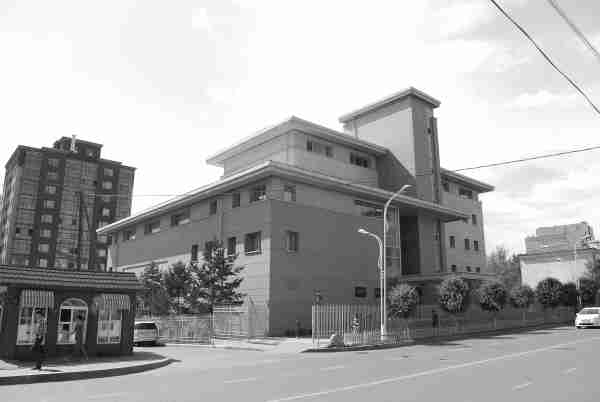 The Bayanzurkh Building in Ulaanbaatar was built and dedicated in 2004. Photo taken in 2018. Courtesy of Po Nien (Felipe) and Petra Chou.
The Bayanzurkh Building, locally referred to as the “BZ Building,” became a busy building that served as the center of operations for the various activities moving forward to help establish the Church in Mongolia. President Gibbons began moving the mission headquarters to the new building on 14 June 2004, and the first youth conference was held in the building 17–19 June. President John B. Dickson, then Asia Area President, dedicated the Bayanzurkh Building in two sessions on 19 June. President Sorensen and his wife, Joan, arrived together on 1 July 2004 to preside over the mission and recorded the following about the new building:[18]
First, this wonderful Bayanzurkh Building . . . has become our home. It is a five-story building in downtown Ulaanbaatar, the capital city. It houses the mission home, mission offices, two dormitories, training classrooms for missionary preparation, missionary medical clinic, service center, translation, distribution, libraries, family history library, CES, Employment/
Career Center, as well as a chapel/ multi-purpose room and classrooms and offices that are used by three branches and the district. . . . Because this building is centrally located and has so much to offer, it has been used and appreciated by so many. Beginning in July, we held weekly Public Affairs meetings in preparation for the open house September 9–11. We held a large service project September 8th for all missionaries and members to clean up a 3-block area around the building, which prompted much interest by the local television stations as well as the local store owners. The open house was a huge success that brought in dignitaries, government officials, and many curious people wanting to see the building and learn about our beliefs. . . . After the open house, there was a huge response to our invitation to learn English, and we had classes two times a week for three months with over 300 attending each evening.[19]
Kent Pulsipher and his wife, Joan, had many assignments including a public affairs assignment during their mission in Mongolia. They reported about the open house on 9–11 September:
We also had a Public Affairs assignment and had been training the Branch and District leaders on what an Open House was, why we had one, and how to do it. It was a new experience for them. We sent out 250 VIP invitations and the missionaries and Branch members passed out 10,000 flyer invitations to all they came in contact with. We had 200 VIPs come on Thursday and over 2,000 members and general public came on Friday and Saturday. We had a Service Project prior to the Open House where our young Elders and Sisters and others form the Branches cleaned Tokyo Street back 100 yards on both sides of the street.
We determined the Open House to be a success. We had great media coverage and gave out Media Kits to them, which included a Mormon Tabernacle CD, a booklet about the Hong Kong [China] Temple, Proclamation to the World on the Family, The Living Christ, and the Strength of Youth pamphlets. Books of Mormon were also handed out to those interested and we went through 700 copies of them. We served cookies and punch at a reception area, where missionaries sat at a table with our guests and visited with them. We had approximately 800 missionary referrals from the Open House. . . .
We had over 400 interested in learning English. We set up 10 classes, using volunteer returned English-speaking Mongolian missionaries and several young adults to teach the classes. . . .
We consistently had over 350 attend the classes on Tuesday and Thursday evenings. We got over 30 golden missionary referrals from these classes.[20]
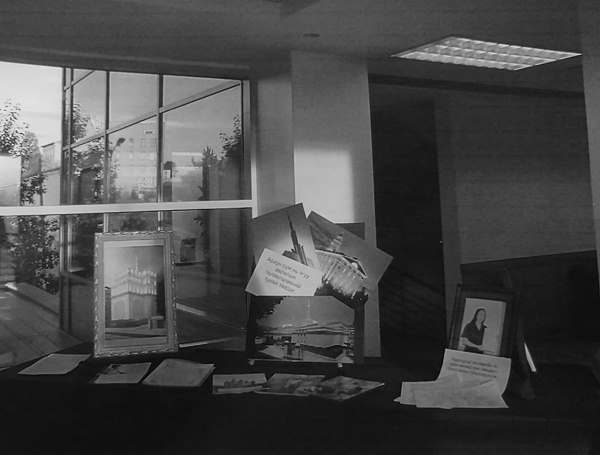 Bayanzurkh Building open house in 2004. Courtesy of Po Nien (Felipe) and Petra Chou.
Elder and Sister Pulsipher also reported that along with the members, dignitaries, and general public who came to the open house, there were also “Five TV channels, 2 radio stations, and 8 newspapers [which] reported many of the events positively.” They indicated that the open house provided “1,000s of inquiries and 100s of mission teaching opportunities.”[21]
Gankhuyag Tsogoo added, “When the BZ [Bayanzurkh] Building was finished in 2004, we had a big open house. The public and the members came. We had never seen a building like this.”[22] President Sorensen also reported many visitors from the Asia Area office in Hong Kong and Church headquarters in Salt Lake City.
Mongolia must be one of those “places you must see,” because we had constant visitors all summer while the weather was beautiful. Elder and Sister Burton, medical directors from Asia Area: Richard Hunter, public affairs from Asia Area; Elder and Sister Arthur, family history advisers from Asia Area helped with the open house and set up the family history library; Elder Harold Brown from SLC Humanitarian Center; Elder [William] Jackson, Asia Area Authority Seventy; and Elder and Sister [Daryl] Garn from the Asia Area Presidency came for a mission tour in August. They were able to visit Murun, Erdenet, and Ulaanbaatar. Visitors who come are interested in what’s happening in Mongolia as well as provide training for us.[23]
Odserjmaa Dorjgotov noted that the Church had many open houses for several new buildings in Mongolia during this period, including the Bayanzurkh Building. She explained that “when we have a new building, we have an open house and invite a lot of guests to the open house all day.”[24]
President Sorensen returned to the United States for an emergency lifesaving operation after experiencing heartburn and chest pains. Wallace F. Bryner and his wife, Bonnie, were serving as the Pacific Island Area Medical Advisers in New Zealand when they received a call to move to Ulaanbaatar to preside as the new mission president in Mongolia on 19 May 2005. President and Sister Bryner arrived in Mongolia on 22 May 2005 to preside over the mission. President Dickson returned to Ulaanbaatar to instruct President Bryner as well as dedicate the Songino and Erdenet chapels in 2005. Four thousand people attended the open house in Erdenet, and 1,800 in Songino, which also received 1,227 referrals. In addition, President Bryner presided over the groundbreaking ceremony for the new Chingeltei chapel in Ulaanbaatar, and the Choibalsan open house had 6,300 visitors and 1,500 referrals collected.[25]
Visit by Elder Dallin H. Oaks
Various Church leaders have held meetings at the Bayanzurkh Building during their visit to the members in Mongolia. These leaders have included members of the Asia Area Presidency and of the Quorum of the Twelve Apostles, including Elders Dallin H. Oaks, Jeffrey R. Holland, and David A. Bednar.[26] When Elder Dallin H. Oaks, then a member of the Quorum of the Twelve, visited Mongolia on 19 August 2005, he held meetings with members on the first floor of the Bayanzurkh Building.[27] Mission records reported,
The mission was on a high because of the visit of Elder and Sister Dallin H. Oaks. He and Sister Oaks arrived in Ulaanbaatar on Aug. 19th and were greeted at the airport at midnight by about 70 young men and women singing primary songs and holding lighted candles.
He presided at six meetings and taught very helpful and basic training ideas. His training helped President Bryner as much as anyone else in the congregation. Elder Oaks presided over the District Conference in Darkhan and gave a fireside in Ulaanbaatar. Elder Oaks was an answer to prayers for Mongolia.[28]
Odserjmaa Dorjgotov recalled attending the returned missionary conference and another meeting with all the members during Elder Oaks’s visit. During the returned missionary conference, she was sitting with the choir. She recalled, “I was part of the choir . . . a couple of rows behind Elder Oaks, and afterwards I was able to shake the hand of Elder Oaks.” This was an incredible experience for Sister Odserjmaa to meet and shake hands with an Apostle of the Lord Jesus Christ.[29] Elder Oaks also met with the members and taught them about the importance of families. Bayardelger Jamsran was baptized in 2002, and said, “Elder Oaks shared with us much about families. . . . He introduced his family and shared experiences from his own family.” Bayardelger would later take his family to the temple to be sealed together in 2009. He said, “Our goal was to be sealed in the temple. . . . When we were sealed together as a family, I felt that this was the best miracle we ever had! . . . Then, my daughter was married later that year in the temple too![30]
Family History
An important part of the Bayanzurkh Building is the family history center on the third floor of the building. Emerson and Wanda Cannon served in the family history center, and Sister Cannon directed the family history work of the mission. She recorded the following:
The [family history] room is small, but well equipped with two computers and a printer. There are two filing cabinets which contain all the supplies necessary to complete the work. These supplies include the pedigree sheets, family group sheets, how to start your Family History sheets, and other information helpful for the work. To facilitate the work, these materials have been translated from English to the Mongolian language. A booklet that is called “A Book of Remembrance” in Mongolian is also available to help members record the important times in their lives. This booklet is distributed to investigators by the missionaries as well as by family history trainers as they go to various parts of the mission. During the Bayanzurkh Building open house family history was presented by a display which drew many questions from those who came.[31]
Sister Cannon’s four-member team helped to organize and prepare the family history work. Sister Naraa, “whose heart has been touched with a great love for the work,” researched and completed temple work for five generations of her own family. Sister Baagii, a returned missionary who speaks English fluently, helped to translate and input “the records of the patrons into the computer” and prepared disks with these records to be sent to the temple. Another returned missionary, Sister Doogie, helped to translate and was learning to input records on the computer. Sister Cannon herself, the mission adviser to the family history work, was “the interface between the mission, the districts, and the patrons.” In 2004 she reported that training was held in Darkhan, Erdenet, Choibalsan, Zuun Khara, and Ulaanbaatar, with hundreds of names entered in the family history records.[32]
In 2009, while missionary Malan R. Jackson worked on reactivation efforts among less-active returned missionaries in Mongolia, his wife, Linda, was busy helping with the family history program. Mission president D. Allen Andersen had encouraged the members to have fifty thousand names ready for temple work as an important step to be considered for a temple in Mongolia.[33] Elder and Sister Jackson proposed name formats, coordinated the use of the Mongolian Cyrillic alphabet, and worked on protocols for research at the National Archives and the Civil/
Over the years, many members in Mongolia have sought to find their ancestors. Enkhbayar Dashdavaa and his wife were sealed in the Hong Kong China Temple, and he was also sealed to his parents and siblings. For Enkhbayar Dashdavaa, temple ordinance work and family history go together.[36] He explained:
My favorite calling is family history, it is my hobby along with my family, including my mom and dad. My tribe is known for keeping history because we have ancestors’ name[s] for generations, which makes it easier to put in family search. . . . We collected 10,000 names and we are working on temple work for all of them.
I feel it’s true that when we lived together, we were the ones called to live in this time when the gospel is available. Our ancestors depend on us. More names will come as we do the work. I love all the ordinance cards and the work, because they represent saving ordinances for our ancestors. I feel the presence of their spirit helping me to find names.
Since we were sealed together, I haven’t gone to the temple. But I can find and collect names and share them with my parents. They go to the temple in the U.S. When they are there, they are close to a temple, so they can go to perform the ordinances.[37]
General Conference and Other Events
At the Bayanzurkh Building, members of the Church were also able to participate in the first broadcast of general conference in 2004. President Sorensen recorded the following in the mission historical records: “We have the only two-way satellite system in the country, thus giving us the incredible opportunity to view and tape general conference and other Church broadcasts live in four languages. Our first live broadcast was the General Relief Society meeting September, 2004. We taped general conference the following weekend and were able to deliver VHS tapes to every branch in the country in the native Mongolian language within two weeks of conference rather than having to wait months for the DVD to arrive.”[38]
 Returned missionary conference in March 2006, at the Bayanzurkh Building in Ulaanbaatar. Courtesy of Odgerel Ochirjav.
General conference provided an opportunity for members to receive messages from prophets and apostles and other General Authorities and General Officers. Members would bring food for a potluck to mingle between sessions, both on Saturday and Sunday. According to Purevjargal Dorj, “Conference in Mongolian was awesome!” She remembered coming to church to watch general conference on a small TV screen and learning much.[39] Bayardelger Jamsran said that after attending general conference, he clearly knew and lived the gospel differently and more diligently.[40] Chimedbaatar Tseden testified that “we are led by living prophets.” He added, “When I listen to prophets and apostles, and afterwards read the printed [talks], it increases my faith.”[41]
Oyun Altangerel said, “I love listening to the apostles, especially their message for us during their general conference talks. . . . They are great examples.” She recalled watching general conference in Mongolia for many years. “We had the [general conference] broadcast using a projector and listened to it in our own language. It was nice [that] it [was] all translated,” said Oyun. She explained, “Sometimes we read the Book of Mormon and can’t see modern-day examples in it. . . . But general conference is wise advice from our leaders for our day.”[42]
The building also hosted a returned missionary conference in March 2006.
All of the returned missionaries that had been called from Mongolia were invited and about 175 came. About 25 of them had not been seen at any Church activity since returning home from their missions. In all, 527 missionaries have served from Mongolia. Many of them are in the [United] States and some are in Hawaii attending BYU-H. . . . It was incredible how successful the event was and we believe that the spirit of missionary work was rekindled in many of them. . . . Elder Gibbons and President Bryner each spoke briefly but the rest of the program was from the missionaries—talks, plays, PowerPoint slide show[s], games, lunch, etc. It was one of the best events of the year.[43]
Other important events at the Bayanzurkh Building included marriage receptions. Many members celebrated their marriages at the Bayanzurkh Building. Tserennyam Sukhbaatar and his wife, for example, had their reception in July 2006 in the Bayanzurkh Building. Afterward, they traveled for four days by train and bus to Hong Kong for their temple sealing. The trip included a train ride that was about thirty hours long with sitting or standing room only, and a stay in Beijing. They were blessed to be in a beautiful sealing room together. Tserennyam would later become a stake president when the Ulaanbaatar Mongolia West Stake presidency was reorganized in 2018.[44]
Odserjmaa Dorjgotov said that after they returned from their respective missions, she and her husband, Bilguun Chuluundorj, were married at the government office, followed by a reception at the Bayanzurkh Building. Two weeks later, they went to the Hong Kong China Temple to be sealed in 2006. She explained, “We had a group of six or seven missionaries from Mongolia going to the temple in Hong Kong for their endowment, and I volunteered to translate for the group. . . . So the Church provided my travel and we paid for my husband’s travel.”[45]
Youth Conference
The first Young Women camp occurred back in 1995. Sister Mary N. Cook shared the following:
The first Young Women camps in Mongolia were some of the most memorable experiences of my life. While serving a mission, my husband and I assisted the newly baptized leaders and young women. We had just one branch in Mongolia, and most of the people had been members less than one year. . . .
Quoting from my August 15, 1995, journal entry:
“Last week we went camping with the young women. It was fun . . . wet, but fun. . . . We had forty-three girls show up, seven leaders, and one other missionary couple.
“Overall, the camp was great. As soon as we pitched our tents, torrential rains came down on us. . . . They didn’t seem to mind. They went hiking, picked baby strawberries by the handful, peeled potatoes in the creek . . . all in the rain. We didn’t hear a complaint.
“Friday night, we studied the Book of Mormon by candlelight. . . . They loved every aspect of the evening.”
The Church in Mongolia was in its infancy. They had no scriptures translated into Mongolian, no camp manual, nor even hymns in Mongolian. But for two days in the Mongolian steppe, they enjoyed God’s creations, studied the gospel together, became more united, and felt the Spirit as they shared their testimonies of their newfound religion.[46]
This Young Women camp and future youth conferences provided opportunities for youth to gather and develop friendships with others who shared their same faith and values. It provided opportunities for Church leaders to encourage and instruct the youth, while helping them to deepen their faith and prepare themselves to be future leaders. Bayardelger Jamsran, then in a district presidency, recalled going with the youth to attend youth conference, to encourage and support them.[47] Tserenbat Jamiyan, from the Darkhan District, has participated in several youth activities and youth conferences. He has been given the title of “one who loves young people” and has spent his life serving the youth of Mongolia. He is always touched when they visit or send him letters.[48]
On 17–20 June 2004, the first youth conference held at the Bayanzurkh Building included about 500 youth and leaders. Mission records reported that “it was the first event of significance in the new building.”[49] Over the years, there have been many youth conferences, each with a special theme. The 2010 youth conference, for example, gathered 345 youth and 108 leaders with the theme “be strong and of good courage,” singing “Be Strong.”[50]
It was exciting to see the way the song “Be Strong” captured the hearts of the youth. With a choir from Erdenet leading the way, all the youth and leaders sang it together for the opening meeting. Later they sang it together with piano accompaniment for the fireside. Then, after the dance Friday evening. . . . They cranked up the speakers and everyone sang their hearts out while . . . spontaneously holding hands high above their heads and waving their arms back and forth to the rhythm of the song. It was . . . truly magic! Also, it was fun to hear the youth sing “Be Strong” in small groups as they walked around the camp and, finally, as they walked to their buses to leave the conference, echoes of “Be Strong” floated through the air.[51]
Mongolia’s Master Cook
“I love to cook as a way to give service with the youth and the Church,” said Enkhbat Damdin. Although he is not a professional cook, Brother Enkhbat is nicknamed “Mongolia’s master cook,” and has had the opportunity to cook for four of Mongolia’s presidents. He loves to use his gift to cook for others. He has also had the opportunity and honor to cook for future prophets and apostles, like Elders Gerrit W. Gong and Ronald A. Rasband, then of the Quorum of the Seventy before their calls to apostleship. A dedicated cook, Brother Enkhbat has been cooking for youth conferences in Mongolia for over a decade. His first experience cooking for the youth conference came unexpectedly during the 2009 youth conference when the hired cooking crew failed to make enough food.[52]
My wife was pregnant with our second daughter. I wasn’t cooking at the youth conference. I was just there with my wife who was teaching a lesson. There were over 440 youth and leaders.
One day, there was a problem in the kitchen. There was no food for about 170 of the kids. President Odgerel Ochirjav, the stake president, was upset and reminded them, “We paid you to feed all the kids!” The kitchen people said, “We have lambs and alcohol. We can feed the leaders, but the kids are ok with no food.” President Odgerel Ochirjav said, “No, we don’t do it that way.” He asked me [Enkhbat] to go in the kitchen and help instruct them how to cook, and so we fed all the kids and even had leftovers. That was my first experience cooking for youth conference.[53]
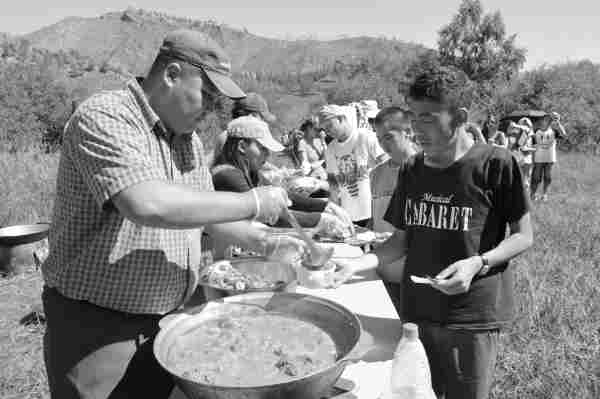 A young single adult (YSA) conference in Mongolia on 27 August 2014. Over the years Enkhbat Damdin (front left) served as the master cook, supervising the kitchen crews of youth and YSA for various conferences. Courtesy of Odgerel Ochirjav.
The following year, President Odgerel had learned his lesson regarding the kitchen and feeding everyone at youth conference. He told Enkhbat, “We won’t give our money to the camp people. We’ll do our own cooking for less, and we’ll save money and have money left over to buy camp gear for all, . . . and the kids will be able to eat plenty.” Since 2009, Enkhbat has organized the youth as part of the kitchen crew at every year’s youth conference. He has also helped with young single adult conferences.[54]
Enkhbat doesn’t just cook by himself. He instructs the youth and organizes them into different crews: cutting crew, cooking crew, cleaning crew, and so on. He has different colored aprons for each crew and assigns them to help in the kitchen. The kids have fun cooking together with him.[55] The money saved from cooking their own food allowed the stake to purchase camping gear and cooking equipment. The cooking equipment is reused each year for youth conference, and it is also part of the emergency preparedness equipment for the stake.[56]
Summary
With the publication of Preach My Gospel and additional Mongolian missionaries serving, including the first Mongolian elders, the work of declaring the glad tidings of the gospel news accelerated in Mongolia. As the work progressed, the dedication of the Bayanzurkh Building also helped to further establish the mission. Other blessings included visits by leaders, focus on family history, and broadcasts of general conference to the Saints in Mongolia. Youth conferences also provided an opportunity to strengthen the youth and prepare them for missions and the temple. These milestones would bless the Mongolian Saints as they sought to declare the word of God throughout Mongolia and other parts of the world.
Notes
[1] Odgerel Ochirjav, email message to Po Nien (Felipe) Chou, 17 March 2017.
[2] Gary R. Gibbons, “Mission Historical Summary 2003—Mongolia Ulaanbaatar Mission.”
[3] Baatarchuluun Tumurbaatar, interview by Po Nien (Felipe) Chou and Petra Chou, 19 June 2018, Ulaanbaatar, Mongolia.
[4] Tumurbaatar, interview.
[5] Tumurbaatar, interview.
[6] Tumurbaatar, interview.
[7] Tumurbaatar, interview.
[8] M. Russell Ballard, in “Preach My Gospel: Introduction for Leaders,” Missionary Training Satellite Broadcast, 15 October 2004, DVD.
[9] Sorensen, “Mission Historical Summary 2004—Mongolia Ulaanbaatar Mission.”
[10] Michael P. Corrigan, “Assistants Corner,” in Sorensen, “Mission Historical Summary 2004—Mongolia Ulaanbaatar Mission.”
[11] White, “History of Preach My Gospel,” 129–58.
[12] Odgerel Ganbaatar, email message to Odgerel Ochirjav, 1 March 2018.
[13] Trent Tueller, email message to Odgerel Ochirjav, 1 March 2018.
[14] Odbayar Badamjav, email message to Odgerel Ochirjav, 28 February 2018.
[15] Solongo Erdenee Byrd, email message to Odgerel Ochirjav, 4 March 2018.
[16] Ganbold Davaasambuu, interview by Po Nien (Felipe) Chou and Petra Chou, 20 June 2018, Ulaanbaatar, Mongolia.
[17] Gibbons, “Mission Historical Summary 2003—Mongolia Ulaanbaatar Mission.”
[18] Sorensen, “Mission Historical Summary 2004—Mongolia Ulaanbaatar Mission.”
[19] Sorensen, “Mission Historical Summary 2004—Mongolia Ulaanbaatar Mission.”
[20] Sorensen, “Mission Historical Summary 2004—Mongolia Ulaanbaatar Mission”; Pulsipher and Pulsipher, “History of LDS Employment Resource Center—Project,” 2004.
[21] Sorensen, “Mission Historical Summary 2004—Mongolia Ulaanbaatar Mission”; Pulsipher and Pulsipher, “Mongolia History April–December 2004,” 2004.
[22] Gankhuyag Tsogoo, interview by Po Nien (Felipe) Chou and Petra Chou, 19 June 2018, Ulaanbaatar, Mongolia.
[23] Sorensen, “Mission Historical Summary 2004—Mongolia Ulaanbaatar Mission.”
[24] Odserjmaa Dorjgotov, interview by Po Nien (Felipe) Chou and Petra Chou, 19 June 2018, Ulaanbaatar, Mongolia.
[25] Bryner, “Mission Historical Summary 2005—Mongolia Ulaanbaatar Mission.”
[26] Dorjgotov, interview.
[27] Bryner, “Mission Historical Summary 2005—Mongolia Ulaanbaatar Mission.”
[28] Bryner, “Mission Historical Summary 2005—Mongolia Ulaanbaatar Mission.”
[29] Odserjmaa Dorjgotov, interview by Po Nien (Felipe) Chou and Petra Chou, 19 June 2018, Ulaanbaatar, Mongolia.
[30] Bayardelger Jamsran, interview by Po Nien (Felipe) Chou and Petra Chou, 20 June 2018, Ulaanbaatar, Mongolia, translated by Ariunchimeg Tserenjav.
[31] Cannon, “Family History.”
[32] Cannon, “Family History.”
[33] Malan and Linda Jackson to family, 31 May 2009.
[34] Linda Jackson to D. Allen Andersen, 2 May 2009.
[35] Linda Jackson to family, 7 April 2009.
[36] Enkhbayar Dashdavaa, interview by Po Nien (Felipe) Chou and Petra Chou, 20 June 2018, Ulaanbaatar, Mongolia, translated by Ariunchimeg Tserenjav.
[37] Dashdavaa, interview.
[38] Sorensen, “Mission Historical Summary 2004—Mongolia Ulaanbaatar Mission.”
[39] Purevjargal Dorj, interview by Po Nien (Felipe) Chou and Petra Chou, 19 June 2018, Ulaanbaatar, Mongolia.
[40] Jamsran, interview.
[41] Chimedbaatar Tseden, interview by Po Nien (Felipe) Chou and Petra Chou, 20 June 2018, Ulaanbaatar, Mongolia, translated by Ariunchimeg Tserenjav.
[42] Oyun Altangerel, interview by Po Nien (Felipe) Chou, 20 June 2018, Ulaanbaatar, Mongolia, translated by Ariunchimeg Tserenjav.
[43] Bryner, “Mission Historical Summary 2006—Mongolia Ulaanbaatar Mission.”
[44] Tserennyam Sukhbaatar, interview by Po Nien (Felipe) Chou, 20 June 2018, Ulaanbaatar, Mongolia.
[45] Dorjgotov, interview.
[46] Cook, “First Young Women Camp in Mongolia,” 27.
[47] Jamsran, interview.
[48] Tserenbat Jamiyan, interview by Po Nien (Felipe) Chou and Petra Chou, 20 June 2018, Ulaanbaatar, Mongolia, translated by Ariunchimeg Tserenjav.
[49] Sorensen, “Mission Historical Summary 2004—Mongolia Ulaanbaatar Mission.”
[50] Lasson and Lasson, “All-Mongolia Youth Conference,” 21 June 2010; Clark, “Mission Historical Summary 2010—Mongolia Ulaanbaatar Mission.”
[51] Lasson and Lasson, “All-Mongolia Youth Conference,” 21 June 2010; Clark, “Mission Historical Summary 2010—Mongolia Ulaanbaatar Mission.”
[52] Enkhbat Damdin, interview by Po Nien (Felipe) Chou and Petra Chou, 19 June 2018, Ulaanbaatar, Mongolia, translated by Gankhuyag Tsogoo.
[53] Damdin, interview.
[54] Damdin, interview.
[55] Ariunchimeg Tserenjav, interview by Po Nien (Felipe) Chou and Petra Chou, 20 June 2018, Ulaanbaatar, Mongolia.
[56] Tuvshinjargal Gombo, interview by Po Nien (Felipe) Chou and Petra Chou, 19 June 2018, Ulaanbaatar, Mongolia.
