
 menu icon in the top, right corner of the screen.
 icon above to close this box.
 icon at the bottom of the screen below the browser—if you don't see it, swipe up to unhide it.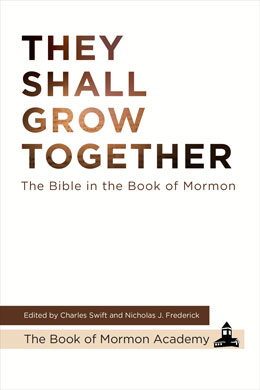
Introduction
Soon after the Book of Mormon came off the press, it was clear to thoughtful readers that this sacred text shares several significant connections with the Bible. From lengthy passages similar to texts from Isaiah, Malachi, and Matthew to thousands of shorter allusions, the idiomatic language of the King James Version of the Bible courses through the Book of Mormon. Yet the commonalities are not limited to language; the two books of scripture share additional common ground as products of interrelated worlds with similar origins, ideals, and cultures.
To serious students of scripture, it comes as no surprise to learn that the Book of Mormon and the Bible share multiple connections. After all, the Hebrew Bible and the New Testament, while different in many important ways, also have much in common both in terms of issues centered around language and those rooted in shared origins and culture. It would be expected that two books like the Book of Mormon and the Bible, considering who wrote them, would connect together. In fact, the former book prophesies that the Bible and the Book of Mormon “shall grow together, . . . bringing [people] to the knowledge of their fathers in the latter days, and also to the knowledge of [the Lord’s] covenants” (2 Nephi 3:12). While such a growing together offers answers for millions of people, questions inevitably arise as well. This latest volume in the BYU Book of Mormon Academy (BOMA) series attempts to help readers better understand several of these questions and answers.
Established in 2013 by the leadership of the Department of Ancient Scripture at Brigham Young University, BOMA is a consortium of faculty from BYU’s departments in Religious Education. These faculty are united in their dedication to discuss, research, and write about the Book of Mormon both as committed scholars and as faithful members of The Church of Jesus Christ of Latter-day Saints. Our first book published, Abinadi: He Came Among Them in Disguise, was an in-depth study of the teachings and story of Abinadi.[1] Our second, Illuminating the Jaredite Records, explored the record of the people of Jared and its influence on the Nephites and the Lamanites.[2] The third volume, Samuel the Lamanite: That Ye Might Believe, presented the reader with a careful look into the sermon and story of Samuel the Lamanite.[3] This fourth volume offers readers insights into both the worlds and the words of the Book of Mormon and the Bible, with the hope of shedding light on how these two books have grown together to answer questions and guide people as they strive to live better lives.
This volume is divided into two main sections, each offering a different lens through which to study the scriptural texts. The first section looks at the Bible in the Book of Mormon in terms of cultural and historical lenses—focusing on the worlds of the two books of scripture. In the first essay of this section, we read of the great Old Testament prophet Moses, who also plays a major role in much of the Book of Mormon. Jared W. Ludlow, in “The Influence of the Figure of Moses in the Book of Mormon,” illuminates that role by reviewing the many times Moses is mentioned in the Book of Mormon and offering an analysis of how the life and example of that great prophet may have influenced several of the prophets in this Restoration text. Next, while scholars have written about instances where the Book of Mormon text shares similarities with Deuteronomy, David Rolph Seely devotes his attention to a different area of inquiry. In his essay, “The Rhetoric of Self-Reference in Deuteronomy and the Book of Mormon,” he discusses examples of self-referential texts, that is, scriptural texts in which their authors refer to their own texts within the context of the texts they are writing.
Readers of the Book of Mormon are familiar with the story of Nephi and his brothers casting lots to determine who should first go to the house of Laban. In his essay, “‘O God of Israel, Give a True Decision’: Lot Divination in Biblical Tradition and the Book of Mormon,” Kerry Hull carefully establishes a historical, contextual, and theological framework for understanding the role of casting lots in the Bible and Near Eastern traditions. By doing so, he helps us understand how this ancient practice was not a random act but a conventional means of discerning the will of the Lord. In “The Tower of Babel, the Jaredites, and the Nature of God,” George A. Pierce and Krystal V. L. Pierce combine a close exegetical reading of Genesis 11 with an inductive reading of the Jaredite narrative in the Book of Mormon. Their study of the ancient texts surrounding the tower help them shape a better understanding of why the tower may have been built and what its possible purpose might indicate regarding the builders’ perception of the nature of God.
The final two chapters of this section deal with two very different issues. Jan J. Martin turns to the Old Testament, the Book of Mormon, and other sources in her essay, “The Prophet Nephi and the Covenantal Nature of Cut-off, Cursed, Skin of Blackness, and Loathsome,” as she seeks to better understand what may have occurred when the Lamanites became a people separated from the Nephites. She suggests that Nephi’s representations of Laman and Lemuel’s people were covenantal in nature. And in his essay, “‘They Did Fell The Tree’: The Hanging of Zemnarihah as a Ritual Resolution for Nephite Trauma,” Dan Belnap explores a unique scene in the Book of Mormon: the hanging of Zemnarihah, the leader of the Gadianton robbers at one point in the book’s narrative. Through careful analysis of the text and other sources, the author explores how the execution may have been part of a ritual process that served a greater purpose for the Nephites and their military.
The second section focuses on textual and literary lenses—the words of the Book of Mormon and the Bible. Leading off this section are two essays dealing specifically with the text of the New Testament. In the first, “The Good Shepherd and His Other Sheep in John 10 and 3 Nephi 15–16,” Frank F. Judd Jr. focuses attention on the image of Jesus as the Good Shepherd from John 10. Judd argues that understanding the Old World context of the Good Shepherd can help readers who encounter similar imagery in the Savior’s discourse in 3 Nephi 15–16. In the second essay, “The Language of Paul in the Book of Mormon,” Nicholas J. Frederick explores how the writings of Paul are present throughout the Book of Mormon text. Frederick argues that an awareness of Paul’s texts and their contexts can lead to a deeper engagement with the text of the Book of Mormon.
In his essay, “The Book of Mormon on the Bible,” John Hilton III considers the different ways in which the Book of Mormon text addresses or describes the Bible as a text, such as Lehi’s prophecy that the Bible and the Book of Mormon would “grow together” and Mormon’s claim that the Book of Mormon was written with the “intent that ye may believe” the Bible. Hilton’s essay is followed by one exploring one of the more popular and enduring theories of Hebrew Bible composition that is often termed the “Documentary Hypothesis.” In his helpful essay, “The Documentary Hypothesis and the Book of Mormon,” Avram R. Shannon tackles the question of how the Book of Mormon text can provide further insights into Mosaic composition of the Pentateuch (Genesis–Deuteronomy) and what that in turn can mean for the Book of Mormon’s own composition.
We usually think of the tree in Lehi’s dream as directly corresponding to the tree of life in Genesis. However, in his essay titled “‘I Beheld a Tree’: Lehi’s Dream and Revelation,” Charles Swift puts forth the idea that the tree has much more in common with the Christ-centered portrayal of the tree of life found in Revelation. Next is the essay “The Sticks of Judah and Joseph: Reflections on Defending the Kingdom,” in which Joseph M. Spencer offers his careful reading of Ezekiel 37:15–19 with its image of the sticks of Judah and Joseph and possible connections to the Book of Mormon. He also reflects on what might be learned from how this Old Testament passage has been understood and used in the past.
Understanding the writings of Isaiah can be a daunting proposition. Ryan Sharp’s essay, “Except Some Man Should Guide Me,” discusses how readers can better comprehend why Nephi relies so heavily on Isaiah and what we can learn from the Isaiah passages. Some of the lengthy Isaiah passages in the Book of Mormon fall into a category of what many biblical scholars have termed “second Isaiah.” In his careful essay, “Deutero-Isaiah in the Book of Mormon: Latter-day Saint Approaches,” Joshua M. Sears explores the “second Isaiah” theory and how readers can make sense of the presence of those texts in the Book of Mormon.
Lastly, one of the more provocative questions surrounding the presence of the Bible in the Book of Mormon pertains to the several quotations from the book of Micah found therein. In his essay, “Passages from the Book of Micah in the Book of Mormon,” Dana M. Pike provides a thorough study of where passages from Micah appear and how Jesus and the Book of Mormon authors reformulated Micah’s language to help the Nephites understand their role in God’s plan.
Any single volume about the Bible in the Book of Mormon can only begin to scratch the surface, since the relationship between these two sacred texts has been the topic of heated debate for the past two centuries and has provoked scores, if not hundreds, of articles and books seeking some sort of resolution. Some readers who are approaching this topic for the first time may feel a bit overwhelmed as they try to gain a clearer sense of how the debates and arguments have unfolded over the years. With this in mind, we have included in appendix 1 a review of the significant works and arguments surrounding this complex issue that will hopefully help situate readers as they approach the essays in this volume. While we realize that there is still much to do regarding the study of the intersections between these two books of scripture, it is our sincere hope as editors that this book will prove to be a strong contribution to the discussion about what these books share and why that sharing is important to study and understand.
We in the Book of Mormon Academy offer our sincere gratitude to the many individuals who have made this volume a reality. Our first and deepest appreciation is to our families for their love, sacrifice, and endless support. We offer a special thanks to the BYU Religious Education administration, particularly Dr. Scott C. Esplin, dean of Religious Education, and Dr. Shon D. Hopkin, chair of the Department of Ancient Scripture. We also thank our department secretary, Jeanine Ehat, for her great help. We are thankful to everyone at the BYU Religious Studies Center who have been invaluable to the publication of this book, including Dr. Jared W. Ludlow, publications director, for his support; Joany Pinegar, publications coordinator, for her help in making all the details come together; Devan Jensen, executive editor, for his expert guidance; and our managing editor, Don Brugger, without whom this book would not be possible. We express our appreciation to Brent Nordgren, business and production supervisor, for helping readers know about the book. And we are grateful to those at Deseret Book for their invaluable expertise.
Charles Swift
Nicholas J. Frederick
Provo, Utah 2022
Notes
[1] Shon D. Hopkin, ed., Abinadi: He Came Among Them in Disguise (Provo, UT: Religious Studies Center, Brigham Young University; Salt Lake City: Deseret Book, 2018).
[2] Daniel L. Belnap, ed., Illuminating the Jaredite Records (Provo, UT: Religious Studies Center, Brigham Young University; Salt Lake City: Deseret Book, 2020).
[3] Charles Swift, ed., Samuel the Lamanite: That Ye Might Believe (Provo, UT: Religious Studies Center, Brigham Young University; Salt Lake City: Deseret Book, 2021).
