
 menu icon in the top, right corner of the screen.
 icon above to close this box.
 icon at the bottom of the screen below the browser—if you don't see it, swipe up to unhide it.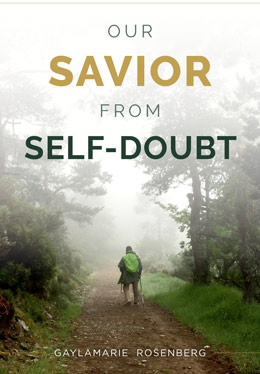
Introduction
A few years ago, my husband and I had the unique experience of walking the Camino de Santiago (the “Way of Saint James”) in northern Spain with students from Brigham Young University (BYU). The Camino de Santiago pilgrimage was established over one thousand years ago to honor the Apostle James for his ministry in Spain. Much like pioneer treks that members of The Church of Jesus Christ of Latter-day Saints participate in today to pay tribute to their pioneer roots, the Camino celebrates Christian roots in Europe. Many people walk its paths in honor of Christ, celebrating how Christ has helped them or seeking His help and healing.
The Camino route winds through rolling green hills, sparkling streams, beautiful wildflowers, charming medieval churches, and quaint towns with lots of cows. While walking the path, you frequently see people from other countries who greet you by saying, “Buen camino” (“Have a nice journey”). They carry a scallop shell—a symbol that they are a peregrino (“pilgrim”) making the trek to the city of Santiago. The most traditional route, called the French Road, is five hundred miles long. In 2019, 347,578 people from 187 countries walked some or all of the Camino path—a path that was created to celebrate the impact of Christ on our mortal journeys.[1]

 Above and below: Photos taken on the Camino de Santiago that show the landscape of the trek. Photos by author.
My favorite part of walking the Camino de Santiago was watching people make spiritual connections. One father brought his intellectually gifted son to disconnect him from his computer and help him value connecting with God and others. Another person walked the path to heal from the insecurity and bitterness resulting from two abusive marriages. Her goal was to open her heart to Christ and seek His healing power as she walked.
I was particularly intrigued by a conversation I had on the Camino with a college student. She struggled with doubt about herself and her connection to God. She told me she wanted to know if God loved her and cared about her. Thoughtfully, she asked, “Does He believe in me? With all the people in the world, is there really a God in heaven who knows me personally?” Was the Savior there for her? Did she need to go it alone and rely on her own ability, or could she trust that there was a God in heaven who would help her? My heart was filled with love for her. I wanted to do all I could to witness of a Savior who knew her personally, who did not doubt her ability to progress, and who could help her through any struggle with self-doubt.
In the last few years of teaching college students, I have noticed their increasing struggles with doubt—doubt about God and doubt about themselves. My greatest concern is that many of them try to overcome these feelings alone, without the help of our Savior. Without His strength to guide them, they might see self-doubt settle in and paralyze their efforts to move forward.
The Paralyzing Impact of Self-Doubt
Doubting that we have what it takes to succeed is common. We doubt we have ability, talent, or motivation. “I can’t do it,” we say. “I’m not as capable as others.” “I’m not anyone special, and I’m too overwhelmed to do it all.” “I’m not perfect and never will be.” I relate to a bumper sticker that says, “God put me on this earth to accomplish a certain number of things. Right now I am so far behind that I will never die.”[2] If you feel your weaknesses are overwhelming, you are not alone. We all have imperfections. No one is exempt. And none of us likes having them!
It is likely that someone close to you is struggling with self-doubt. You may have coworkers who doubt the value of their contributions, a spouse who is unhappy with his or her appearance, children who feel untalented compared to their peers, friends who doubt that they are worthy of God’s help, or members in your ward who feel inadequate to serve. The possibilities are endless.
Elder Jeffrey R. Holland spoke of self-doubt in a BYU devotional: “[Self-doubt] can have damaging effects that block our growth, dampen our spirit, diminish our hope, and leave us vulnerable to other more conspicuous evils. . . . I know of nothing Satan uses quite so cunningly or cleverly in his work.”[3] Satan aims to destroy our sense of identity. He will do all he can to prevent us from accepting who we are and what we can become. While serving as a counselor in the Relief Society General Presidency, Sheri L. Dew said, “The Lord’s motives stand in stark contrast to those of Lucifer, who is obsessed with attempting to make us feel less than who we are as sons and daughters of God.”[4] Satan’s work could be described with some d words: discouragement, distraction, disconnection, deceit, and doubt. No wonder he is called the devil and desires to damn the souls of God’s children. He seeks to disable our efforts, but Christ seeks to enable our progression. There are several e words that reflect the Savior’s efforts: encourage, empower, enhance, elevate, edify, expiate, educate, and enlighten. No wonder He desires to endow us with eternal life and exaltation.
With our understanding of God’s plan of salvation, we know who we are and what we may become. We know we are born in God’s image and endowed with divine potential. We know Jesus Christ came to save us from anything that would limit our ability to become like Him. We know He lives, loves us, is mindful of us, strengthens us, and has the power to make all things possible. So why do we doubt ourselves? What holds us back?
We doubt ourselves for several reasons. We become impatient with our progress. We dwell on weaknesses, making us more critical and judgmental of ourselves. We fear we are not enough. We compare our weaknesses to others’ strengths. We try to do too many things at once. We feel unworthy of God’s help and rely on our own strength.
Fortunately, self-doubt can motivate us to seek divine refinement. Imperfections don’t need to be debilitating; they are an opportunity for growth. Having imperfections was one of the conditions of mortality that we as premortal spirits joyfully embraced. Having a realistic view of our abilities produces humility, which is powerful in progression—it opens our hearts to the Spirit and to divine tutoring. On the other hand, if we don’t accept Christ’s help, self-doubt can paralyze our efforts to develop our potential.
Changing Our Focus
I had a memorable experience at a parent-teacher conference when my daughter was in fourth grade. Her teacher explained how my daughter was doing and then remarked, “If I want my students to improve their writing skills, I point out the good things they are doing. This approach motivates them to improve.” Then he looked at me and said, “Just remember, whatever you focus on will increase.”
I nodded and replied, “Nice tip.”
He then spoke about my daughter’s social skills and said again, “Whatever behavior you focus on will increase. If you focus on the negative, the negative will increase. If you focus on the positive, the positive will increase.” As I was leaving, he reiterated, “You know, the one thing I wish parents would remember about raising children is that whatever they focus on will increase.”
I smiled. “I think I got it.” And I haven’t forgotten.
In my research about self-doubt, I’ve discovered many good ideas and skills for changing unproductive thinking. But none ring truer to me than the advice I received from my daughter’s teacher: whatever we focus on will increase. When we focus on our weaknesses and inadequacies, those weaknesses and inadequacies will continue to occupy our thoughts. So if we feel that we are stuck in a rut of negative self-talk, we need a change of focus!
Clinical psychologists and therapists have found that people are significantly better at dealing with negative self-talk when they change their focus from fixing negative emotions to enhancing positive emotions. Here are a few examples:
- In his book Flourish, clinical psychologist Martin Seligman explains the impact of changing theories and techniques from “What is wrong here?” to “What is right here?” with positive psychology. This approach focuses on positive emotions, engagement, meaning, positive accomplishment, and good relationships. One of the simple yet powerful exercises he teaches is to write down daily “three things that went well today and why they went well.” Changing the focus from negative emotions to positive emotions enables a person to flourish.[5]
- In The Seven Principles for Making Marriage Work, marriage therapist John Gottman explains, “I was not able to crack the code to saving marriages until I started to analyze what went right in happy marriages.” He states that couples are “emotionally intelligent” when they spend more time enhancing their strengths rather than dwelling on their weaknesses.[6]
- In Mindset: The New Psychology of Success, psychologist Carol Dweck addresses how people cope with failure and perceive success. She studied how students grappled with hard problems and found that there are basically two mindsets: a fixed mindset or a growth mindset. Those students who believed in a growth mindset focused on challenges as stepping stones to progress and felt optimistic about their possibilities.[7]
- In What Happy People Know, behavioral therapist Dan Baker explains that “fear of not having enough” and “fear of not being enough” prevent us from progression. His antidote to this fear is appreciation—appreciation for what we have, what we can do, and what brings us joy. He helps clients focus on strengths to develop and blessings to enjoy.[8]
- In The Gifts of Imperfection, social worker Brené Brown explains how our imperfections often hold us back from finding happiness in the present moment. She focuses on teaching “wholehearted living” that emphasizes the gifts and blessings of learning through our imperfections.[9]
All these well-known writers and mental health experts have emphasized the powerful influence of retraining our minds to produce more positive, realistic, and helpful thoughts instead of negative and unhelpful ones. They have successfully helped others create mental resilience and strength by changing their focus to positive emotions—which results in more positive emotions. Training our minds to focus on positive thoughts and actions increases our self-motivation and discipline, augments our ability to think clearly and rationally, trains us to be more reflective than reactive, and reduces negative mental chatter: the self-talk that gets in our way of personal peace and progression.
My desire is to help readers challenge and change unproductive thoughts about themselves. We will discuss the source of doubt, and we will learn ways to increase our focus on healthy and productive thoughts that bring out the best in us by
- focusing on patient progress instead of immediate perfection,
- focusing on how God sees us instead of how we see ourselves,
- focusing on what we can do instead of what we can’t do,
- focusing on developing our own abilities instead of comparing our abilities,
- focusing on doing one needful task at a time instead of several at a time,
- focusing on Christ’s willingness to forgive instead of our unworthiness to be forgiven, and
- focusing on Christ’s invitation to walk with Him instead of trying to walk alone.
Recognizing our thought patterns is a crucial step in overcoming self-doubt. I started writing in a journal a long time ago to help me identify healthy versus unhealthy thoughts. I gave my journal a title: “Think-in-Ink.” If you are like me, writing down what you’re thinking can bring clarity to your mind. At the end of each chapter of this book, there is an invitation to focus on productive thoughts and a “think-in-ink” challenge with space provided to write down your thoughts and ideas.
“All-One” versus “At-One”
Overcoming self-doubt requires a willingness to change our focus. Our ability to change our focus to positive, productive thoughts and actions is enhanced most powerfully when we seek and accept divine assistance. First and foremost, overcoming self-doubt requires a willingness to keep our focus on our Savior and Redeemer Jesus Christ. We speak often of the Atonement of Jesus Christ and His redeeming and enabling powers that help us overcome physical and spiritual death. But we may forget that He can also help us overcome feelings of self-doubt, insecurity, low self-esteem, and inadequacy, all of which obstruct the path that leads us to our divine potential.
There is a stark contrast between the words alone and atone. Both have the same root word: one. Alone, “all-one,” means to be isolated, to have no help, or to have no one present. When we are alone, we depend on ourselves. In contrast, atone, “at-one,” means to become united or reconciled.[10] Adam and Eve left Eden for the lone world—apparently a contrast to the divine society of paradise. But even in the lone world they were promised they would not be alone. The good news of the Atonement is that we are not alone. We have the Savior! He invites us to be united—“at-one”—with Him. Christ invites us into a perfectly unified relationship with Him and our Father: “That they may be one, even as we are one: I in them, and thou in me, that they may be made perfect in one” (John 17:22–23). This invitation to be united with Christ and our Father is an invitation to accept Their help in the refining process to become like Them. Christ will help us change the way we think, the way we feel, and our motivation to act. We progress with Him. We become our best selves with Him. We have hope and happiness because of Him.
We are not left alone when we don’t feel good about ourselves. Christ invites us to walk with Him, so why should we try to deal with self-doubt alone? Instead, we can focus on the Savior’s ability to help us. Sheri Dew asked, “Are we satisfied with far less than the Lord is willing to give us, essentially opting to go it alone here rather than partner with the Divine?”[11] We choose to receive His help and strength. “For I the Lord thy God will hold thy right hand, saying unto thee, Fear not; I will help thee” (Isaiah 41:13; italics added).
As we focus on the Savior’s help in overcoming self-doubt—by focusing on His patience, charity, power, voice, forgiveness, and gifts to us—we will see the depth of His love and support for each one of us. With this new understanding, fear will give way to faith, doubt will change to diligence, and weakness will transform into strength. Peace, hope, confidence, and happiness will come into our lives as we embrace the Savior’s ministering to each of us personally.
Farther and Higher with Christ
In a medieval book compiled about the Camino de Santiago, called the Codex Calixtinus, we find a Latin hymn dedicated to the Apostle James. It admonishes pilgrims to go “farther and higher with God’s help.”[12] As I walked the Camino last summer, I received a powerful reminder of the importance of accepting Christ’s invitation to walk with Him and to trust in His ability to empower us with personal strength and confidence.
Enoch is a perfect example of going “farther and higher with Christ” when faced with feelings of self-doubt. In Moses 6, God asked Enoch to preach His word, to which Enoch replied, “Why is it that I have found favor in thy sight? . . . All the people hate me; for I am slow of speech” (verse 31). Enoch believed that God had chosen him, but he feared he was not eloquent enough to succeed in his calling. God asked Enoch to try and then promised, “Behold my Spirit is upon you, wherefore all thy words will I justify; and the mountains shall flee before you, and the rivers shall turn from their course; and thou shalt abide in me, and I in you; therefore walk with me” (verse 34).
How do we experience the Savior’s help when we are faced with doubt about who we are and what we may become? What are signs of “abiding” in His presence? We help each other recognize the Savior’s help by sharing about our faith in Him. Speaking of a friend who strengthened him, William E. Berrett, a former patriarch in the Church, remarked, “We could warm our hands by the fire of his faith.”[13] I love that metaphor because it makes me imagine a long journey walking together with family and friends through life, with evening fires to warm our hands. On the Camino route I often saw our BYU students warming their hands by the fire of the faith of those around them. Likewise, the fire of these students’ faith warmed the hands of many strangers they met from all over the world, who were also gathering to share how they experienced the warmth of our Savior. We need each other. We encourage each other to rely on divine insight. I’m thankful for the many family members and friends that have helped me challenge doubts about myself by sharing how they experience the warmth, love, and strength of Christ.
The purpose of this book is to boost confidence—confidence empowered by Christ. My desire is to increase awareness of several sources of self-doubt and to share ways we can move our focus from our weaknesses to the strength made possible through divine help. I have felt peace and joy in my life as I have taken my feelings of weakness and inadequacy to the Lord and felt His strength. I hope you will feel the warmth of the Savior as you read about His willingness to strengthen you. I know He believes in you. I know He believes in what you may become with His help.
Feelings of inadequacy must not prevent us from pressing forward; they are often the very means by which we open our hearts and seek the Savior’s companionship. I invite you to consider what kind of impact self-doubt has had in your life and what you can do to accept the Savior’s help. Doctrine and Covenants 62:1 reads, “Jesus Christ [is] your advocate, who knoweth the weakness of man and how to succor them.” He is our Savior from self-doubt.
Notes
[1] See “Informe estadístico: Año 2019,” Oficina de Acogida al Peregrino, pp. 2, 4–8, http://
[2] This saying is attributed to Bill Watterson. See Bill Watterson, “Bill Watterson Quotes,” Brainy Quote, https://
[3] Jeffrey R. Holland, “For Times of Trouble” (Brigham Young University devotional, March 18, 1980), 1, speeches.byu.edu.
[4] Sheri L. Dew, “Our Only Chance,” Ensign, May 1999, 66.
[5] Martin E. P. Seligman, Flourish: A Visionary New Understanding of Happiness and Well-Being (New York: Simon and Schuster, 2011), 33, 70.
[6] John M. Gottman, The Seven Principles for Making Marriage Work (New York: Three Rivers Press, 1999), 3, 46.
[7] See Carol S. Dweck, Mindset: The New Psychology of Success (New York: Ballantine Books, 2016), 6–7.
[8] Dan Baker and Cameron Stauth, What Happy People Know: How the New Science of Happiness Can Change Your Life for the Better (New York: St. Martin’s Griffin, 2003), 78–81.
[9] Brené Brown, The Gifts of Imperfection: Let Go of Who You Think You’re Supposed to Be and Embrace Who You Are (Center City, MN: Hazelden, 2010), 1–6.
[10] See Merriam-Webster, s.vv. “alone,” “atone,” https://
[11] Sheri Dew, “We Are Not Alone,” Ensign, November 1998, 95.
[12] “Dum pater familias” (hymn), lines 19–20, in Codex Calixtinus, la.wikisource.org/
[13] Quoted in Boyd K. Packer, “A Tribute to the Rank and File of the Church,” Ensign, May 1980, 62.
