
 menu icon in the top, right corner of the screen.
 icon above to close this box.
 icon at the bottom of the screen below the browser—if you don't see it, swipe up to unhide it.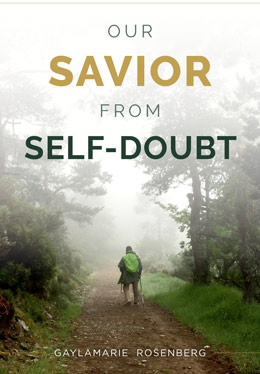
Focus on His Gifts to Us
Gaylamarie Rosenberg, "Focus on His Gifts to Us," in Our Savior From Self-Doubt (Provo, UT: Religious Studies Center, Brigham Young University; Salt Lake City: Deseret Book), 61‒84.
Feelings of self-doubt come from comparing our weaknesses to others’ strengths. The Savior helps us enhance the gifts and talents He has given us. We can change our focus to enhancing strengths instead of dwelling on weaknesses—focusing on what we have instead of what we don’t have. We can focus on developing our own abilities instead of comparing our abilities.
National Football League (NFL) quarterback Steve Young shared a story about the danger of comparing ourselves to others. As he sat next to Stephen R. Covey on an airplane one day, Young discussed his experience playing for the San Francisco 49ers. He shared his feelings of inadequacy playing backup quarterback to the very talented Joe Montana. He felt that the comparisons between him and Montana made it impossible to be successful. Covey asked him if he was fortunate enough to get advice from Montana and the coaches that could help him improve. Young assured him that the best resources in the league were at his disposal. According to Young, the conversation between him and Stephen Covey went as follows:
“If I understand your situation with the 49ers correctly,” he continued, “you are in the one place in the NFL where you can find out just how good you can get.”
Now he really had my attention. . . .
“So here’s the question,” he said. “Do you want to find out how good you can get?”
“Yeah, I do.”
“I mean, some people are just afraid to find out,” he said.
“No. I absolutely want to find out.”
“Then go do it,” he said. “Good luck.”
. . . It was divine intervention that forced me to rethink my situation in a completely different paradigm.
I have a quest, I told myself. My quest is to find out how good I can become.
It’s not about comparisons or outside expectations.
It wasn’t going to be easy. But I couldn’t wait to get back on the field.[1]
Young went on to become a successful quarterback, including winning the Most Valuable Player award when his team won Super Bowl XXIX in 1995.
Are we willing to see how good we can get? Sometimes we are afraid to see how good we may become. We fear not measuring up. We fear judgment and criticism from others. We fear we will let others down, let ourselves down, or worse, let God down. The words of President Thomas S. Monson encourage us: “My young brothers and sisters, don’t take counsel of your fears. Don’t say to yourselves, ‘I’m not wise enough . . . so I shall choose the easier way.’ I plead with you to tax your talent, and our Heavenly Father will make you equal to those decisions.”[2] How do we tax our talents? What gets in our way? Fear can prevent us from using the gifts and talents we have been given. And this kind of fear is most paralyzing when we compare ourselves to others.
Comparing ourselves to others happens all too often. We feel weak because we see the strengths in others that we lack. Yet we need to learn and grow from each other. About the people of his day, the Apostle Paul warned, “They measuring themselves by themselves, and comparing themselves among themselves, are not wise” (2 Corinthians 10:12). How do we learn from others in a way that motivates and inspires us to become our best selves without becoming discouraged by comparing our weaknesses to another’s strengths?
The Problem with Comparisons
We see gifts and talents in people all around us, and we may desire to emulate others’ abilities. It is easy to compare ourselves to others. Comparisons are a challenge I face when teaching at the university. In the company of excellent professors, it is easy to feel inadequate. It’s also easy for me to feel inadequate when I compare my physical fitness to that of other women in my ward. Many are thin and physically fit and run marathons. Me? I’m lucky to walk around our neighborhood, and I’m thrilled if I actually exercise five days in a week. (Exercising daily has been a New Year’s resolution of mine for at least the last thirty years of my life—and I’m still working on it!)
Comparisons often distort reality. This happens frequently when viewing social media. While scrolling through our feed, we may think, “Kate is a gourmet cook and an immaculate housekeeper; my husband does his own laundry and is lucky to get a bowl of soup.” But in reality, Kate has probably burned a lot of dinners too! Or “On Anne’s Facebook page, her ten beautiful children are the picture of perfection, while we wake up at ten o’clock in the morning and hang out in our pajamas all day.” But Anne probably has kids that scream at each other too!
Regarding these types of thoughts, Elder Dieter F. Uchtdorf reminded us, “God is fully aware that you and I are not perfect. Let me add: God is also fully aware that the people you think are perfect are not. And yet we spend so much time and energy comparing ourselves to others—usually comparing our weaknesses to their strengths. This drives us to create expectations for ourselves that are impossible to meet. As a result, we never celebrate our good efforts because they seem to be less than what someone else does.”[3] Are we hesitant to develop our talents and abilities because we think our efforts will not be as good as someone else’s?
Comparisons create unneeded stress from unhealthy competition. Instead of competing with ourselves, we compete against each other, chasing the expectations for another person instead of creating our own. BYU religion professor J. B. Haws spoke of the self-obsessed nature of making comparisons:
Think of all of the questions that bombard us on a daily basis: Did I get picked for a leadership position on my mission? Did I score more points than my rival in the basketball game? Did I get the highest score on the test in my class? Was I the one student from BYU who landed the internship? Did I play more flawlessly in my audition than did everyone else? Did my witty comment in Sunday School make more people laugh than my roommate’s comment did? If I glance over at the treadmill next to mine, will I find that I am running at a faster pace? And on and on and on. These constantly nipping questions are all about me, me, me. And it is exhausting.
Doesn’t it sound freeing and liberating to think less about ourselves?[4]
Can we see how good we can become—not compared to others, but compared to our personal best?
Comparisons also inhibit relationships. While serving as Relief Society General President, Elaine L. Jack said, “Comparisons may keep you from achieving your potential and basking in associations that will enrich your lives and the lives of others.”[5] Are we more focused on comparing ourselves to others than on connecting with others? When we compare, we hesitate to share what we have, thinking that we don’t have much to offer, so we don’t extend ourselves to uplift and bless others. We lose out on relationships because comparisons hold us back from interacting. When we focus on what we don’t have compared to others, we become too preoccupied with ourselves to forget ourselves and to focus on what we have to bless other lives.
Comparisons smother personal joy. Comparing drives out the happiness we can find in what we do have and what we can do. Elder Quentin L. Cook said, “We cannot be grateful and envious at the same time. If we truly want to have the Spirit of the Lord and experience joy and happiness, we should rejoice in our blessings and be grateful.”[6] Gratitude withers on the vine of comparison. We look for what we don’t have instead of what we do have.
Comparisons also blind us to the gifts and talents God has given us—however big or small they may seem. I think this is what the Savior meant when He said, “But with some I am not well pleased, for they will not open their mouths, but they hide the talent which I have given unto them, because of the fear of man. Wo unto such, for mine anger is kindled against them. . . . Thou [shalt not] bury thy talent that it may not be known” (Doctrine and Covenants 60:2, 13).
We will never stop competing and comparing our abilities until we discover and develop our own abilities.
Parable of the Talents
The Savior taught us about faithful stewardship over what we have been given. In the parable of the talents, the Lord likened the kingdom of heaven to “a man travelling into a far country, who called his own servants, and delivered unto them his goods. And unto one he gave five talents, to another two, and to another one; to every man according to his several ability; and straightway took his journey” (Matthew 25:14–15). We know that the servant with five talents worked to gain five more and that the servant with two talents worked to gain two more, but the servant with one talent buried it and was left with nothing.
To the servants who worked hard to gain more talents, the man replied, “Well done, thou good and faithful servant: thou hast been faithful over a few things, I will make thee ruler over many things: enter thou into the joy of thy lord” (verse 21; see also verse 23). The Lord was pleased with the servants’ diligence in using the talents they had been given and earning even more. And He gave each servant the same reward, regardless of how many talents he was given. However, the Lord was not pleased with the “slothful servant” (verse 26) who buried and neglected his talent. To that servant He said, “Take therefore the talent from him, and give it unto him which hath ten talents. For unto every one that hath shall be given, and he shall have abundance: but from him that hath not shall be taken away even that which he hath” (verses 28–29).
This parable refers to a talent (a coin), which was a very large sum of money in Roman times. We can learn financial-management principles from this story. But the Savior is not interested in stock markets; He is interested in stewardship. The point of the parable is to be grateful and faithful with what we have been given—which applies to our skills and gifts. And we too will receive the same eternal reward as wise stewards, regardless of how many talents we were initially given.
Some have received many talents, others few. We don’t know why God gives others talents and abilities that we don’t possess. But we do know that the Lord wants us to use and develop what we have been given. Elder Bruce R. McConkie taught, “Every man must use such talents as he may have or they will be lost. If a man cannot compose music, perhaps he can sing in the choir; if he cannot write books, at least he can read them; if he cannot paint pictures, he can learn to appreciate the artistry of others; if he cannot achieve preeminence in one specific field, so be it, he still can succeed in his own field; for each man has some talent, and he will be judged on the basis of how he uses what he has.”[7]
What happened to the slothful servant? He buried the one talent he had been given. Why? Was he afraid of losing it? Did he not recognize the value of his gift? Did self-doubt and fear of failure prevent him from using his one talent? Perhaps his doubt increased as he watched the other servants multiply their talents. We may not know the answers to these questions, but we know that he held himself back from earning more. Do we ever feel like this servant? Do we try to develop our talents, or do we hide them because we feel they might not be as great as others’ talents?
Since Christ invites us to become at one (“at-one”) with Him, He knows we must obtain talents, gifts, and abilities to become like Him. Do we recognize what gifts He has already granted us? Are we great receivers of those gifts? Elder Uchtdorf reminds us:
In our day the Savior has said that those “who [receive] all things with thankfulness shall be made glorious” [Doctrine and Covenants 78:19], and “the fulness of the earth is [theirs]” [see Doctrine and Covenants 59:15–21]. . . .
. . . Do we feel our Father’s love expressed in these gifts? Do we receive them in a way that deepens our relationship with this wonderful, divine Giver? Or are we too distracted to even notice what God gives us each and every day?
We know that “God loveth a cheerful giver” [2 Corinthians 9:7], but does He not also love a good, grateful, and cheerful receiver?[8]
Our task is to recognize and develop the gifts we have been given. The Savior promises to enhance our talents and gifts when we choose to act. Where do we start? What can we do to recognize and enhance the gifts and talents God has given us?
Finding Our Strengths
When I asked friends what helped them recognize and develop their talents, several of them responded the same way: “What talents?” “I don’t really have any talents.” I can relate. I’ve never considered myself very talented. I’m not musical or athletic, and I’m not a “Star Baker”—all talents I’m still determined to acquire someday! (I’m hoping this happens before I die, but if not, they will still be on my list for the next life.) One friend shared this experience: “When I was a teenager, I used to say to my mom, ‘I don’t have any talents; I’m not a great singer, dancer, musician, or athlete.’ Her response was always the same: ‘But you are great at organizing.’ Organizing? What teenager wants to be great at organizing? Well, in the last thirty years of my life, that strength has been such a gift to me in many ways. I wish I could go back to my teenage self and say, ‘Just wait! You will be so grateful for this talent!’”
Ralph Waldo Emerson encouraged us to find our strengths: “You are sensitive to a thousand influences . . . instructed by the past . . . invited by the future. You are not born equal—you are born unique. You have powers that have come to you from a host of ancestors. Your strengths are greater than your weaknesses. Finding our strengths, our unique powers, should be a purpose of the journey of life.”[9] I love the idea that a host of ancestors is strengthening us. Sometimes we obtain talents by learning from good examples, inherit natural talent, or both. Have you inherited the ability to be kind and compassionate from Grandmother Betty? Are you musically talented like Grandpa Marvin? Are you good at fixing things like your father? Or have you had an easy time learning academically like your mother?
We have help from both sides of the veil encouraging us to discover and use the gifts and talents God has given us to build His kingdom. I imagine that this host of ancestors is “round about [us], to bear [us] up” (Doctrine and Covenants 84:88), reminding us that our strengths are greater than our weaknesses. Every talent, every gift is needed! God needs us to discover our gifts, talents, and strengths and use them for the good of others and ourselves.
What can we do to recognize the gifts and talents God has given us? Some gifts and talents that are commonly seen as the most important are intelligence, wealth, power, position, appearance, and performance skills (musical, athletic, and artistic). Yet we look over other gifts that are just as important—or more important—and highly beneficial. Elder Marvin J. Ashton describes these gifts that are not always recognized:
Among these may be your gifts—gifts not so evident but nevertheless real and valuable . . . : the gift of asking; the gift of listening; the gift of hearing and using a still, small voice; the gift of being able to weep; the gift of avoiding contention; the gift of being agreeable; the gift of avoiding vain repetition; the gift of seeking that which is righteous; the gift of not passing judgment; the gift of looking to God for guidance; the gift of being a disciple; the gift of caring for others; the gift of being able to ponder; the gift of offering prayer; the gift of bearing a mighty testimony; and the gift of receiving the Holy Ghost.[10]
Many gifts from God are unseen: gifts of the Spirit, gifts of character, and gifts of godly attributes. As we learn in Doctrine and Covenants 46:16–26, “All these gifts come from God, for the benefit of the children of God.” When we dig deep to recognize gifts from God, let’s not forget those of a more spiritual and invisible nature. I admire the talent one friend has for patience, another for selfless service, another for a happy disposition, another for creativity, another for wisdom and insight. There is so much talent around us!
Writing about talents in a journal can be helpful: identify what skills come easily to you and what skills you’ve gained only by hard work. What abilities have others seen in you? Often we recognize our talents by the gracious and encouraging words of others who point out our talents to us. I’ll never forget my Young Women leader Sally Todd, who gave me a mirror that had writing all around the border of the frame. She had written a list of talents she saw in me. I remember looking at the mirror and thinking, “Really? I have those abilities? Is it true?” Her kind encouragement helped me consider the blessings and abilities God has given me.
If we have received a patriarchal blessing, it can be helpful to study it, looking for gifts God has blessed us with. We can look for sentences—or impressions that come to mind—about gifts, talents, and abilities we have been given to build up the kingdom of God on earth. They can often remind us that God loves us, is mindful of us, and has marvelous things in store for us.
Psychologist Dan Baker realized that helping people find their strengths was an important key to overcoming self-doubt. He discovered, “When I could help people to find their strengths, they didn’t need to go to war against their weakness.” He shared the importance of enhancing strengths in his work helping girls with eating disorders: “I knew better than to confront their weaknesses. I never talked about eating with them. They weren’t good at eating. I talked about what they were good at and about what they loved. Then, when they finally found their strengths, they began to nourish their newfound selves. . . . Focusing on strengths works simply because it feels better than focusing on weakness. It creates energy, which is always necessary for transformation.”[11] Baker learned that dwelling on weaknesses is a waste of energy—energy that’s needed to achieve healing and change.
Remember what my daughter’s teacher told me: “Whatever you focus on will increase.” If we continue to focus on our weaknesses, our self-doubt will increase. If we focus on enhancing our talents and strengths, our abilities will increase. Going to war against our weaknesses is not the solution for overcoming our feelings of inadequacy. Focusing on what we have is always more productive than focusing on what we don’t have. With this in mind, how can we develop the talents that we do have?
Developing Gifts and Talents
In Doctrine and Covenants 6:33 we read, “Fear not to do good, . . . for whatsoever ye sow, that shall ye also reap; therefore, if ye sow good ye shall also reap good for your reward.” Building talents begins with our thoughts and actions. We learn from Charles A. Hall, “We sow our thoughts, and we reap our actions; we sow our actions, and we reap our habits; we sow our habits, and we reap our characters; we sow our characters, and we reap our destiny.”[12] With these words in mind, I would like to highlight three things we can do to develop our gifts and talents: prepare our mindset, learn from others, and work hard.
Prepare our mindset
How can we prepare our thoughts to magnify our strengths? How do we talk to ourselves? Statements such as “That’s just the way I am,” “I can’t change,” and “There is nothing I can do about it” imply that we have no ability to change or grow. But we do! That is the point of God’s plan for progression—we can grow, we can change, and we can become better all the time. We are made in God’s image with divine potential to continually develop more talents and abilities. We must keep changing and growing to become godlike.
Changing our focus from a “fixed mindset” to a “growth mindset” enhances our talents. As we discussed in chapter 1, psychologist Carol Dweck describes a fixed mindset as closed to change, whereas a growth mindset is open to learning and growing.[13] Someone with a fixed mindset thinks, “I am who I am, and I can’t do anything about it. I have little ability to change and improve.” For example, Ashley says, “I have no musical or athletic ability, so there is no use in trying to develop those talents. I have to settle for the way I am.” Kayla says, “I’m not smart and never will be. I can’t do anything about it.”
In contrast, a person with a growth mindset thinks, “I have agency and the ability to learn, grow, and develop my abilities. I can work hard and acquire new strength.” People with a growth mindset don’t just seek challenge, they thrive on it. They want to become better. They are on a quest to see how good they can get, just as Steve Young was. We can shift our thoughts from “I’m not a great communicator” to “I can learn to become a great communicator. I’m going to do everything I can to be a better listener and responder.” Or “I can’t play the guitar yet, but I’m excited to take lessons and practice every day.” Or “I need help to control my temper. I know it’s going to be hard, but I believe it’s possible. I’ll keep trying until patience becomes a hallmark of my character!”
Dweck encourages us to open our minds to growth opportunities. We see life differently when we see the possibility of growth instead of dwelling on the false idea that we will be stuck where we are forever—as if we can’t do anything about it.
What talents would we like to develop? Can we look for possibilities with a growth mindset?
In a BYU devotional, sports psychologist Craig Manning emphasized the need for a proactive mindset in developing talents and abilities. He shared this story from when he played tennis for a college team:
When I was a student at BYU, I realized that I needed to think more positively. I started working on this, and every time I caught myself thinking or talking to myself in negative, reactive ways, saying, “Your backhand stinks” or “Don’t miss that backhand,” I would stop that thought and immediately replace it with thoughts such as “I love my backhand” or “I am going to rip it down the line.” And instead of saying to myself, “School is tough; BYU is too hard for me,” I started telling myself, “I’ve got this; I can get good grades.” At some point I realized that I would always say to myself, “Don’t forget this” or “You’d better not forget this for the exam,” so one of my favorite phrases became “I will remember this.” . . .
What is potentially the greatest lesson the Lord has taught me is that faith begins with how you talk to yourself.[14]
I love how Manning learned that “faith begins with how you talk to yourself.” How do we talk to ourselves about our abilities? Do our thoughts show our trust in and gratitude for God’s promise that we are capable of growth? Do we have faith in His ability to help us? Do we believe we are endowed with agency—the ability to act? If we believe in what the Lord makes possible for us, we will talk to ourselves differently. We will catch ourselves in negative thoughts and choose more productive thoughts. Manning learned to prepare his mind ahead of time to think of positive, proactive, short phrases during potentially stressful times. He chose where to focus his thoughts, and this directed his actions.
Our thoughts guide our behavior. How many of us have set a goal not to eat sugar, then noticed over the following week that instead of eating less sugar we ate much more sugar? That’s because we told our brain what not to do but didn’t tell it what to do. If we want to reinforce a particular positive behavior, we have to state the positive behavior we want our brain to think about. The key is focusing on what to do, not on what not to do. What is within our ability right now? What action can we take? We can decrease doubtful thoughts about our abilities by preparing our minds with positive thoughts to focus on instead.
In a July 2020 fireside, Manning challenged members of my stake to create habits for proactive thinking patterns. He taught a principle called the “3 to 1 ratio”: it takes three positive thoughts to counteract the impact of one negative thought. Or, for every reactive thought that is full of self-doubt and fear, it takes three proactive thoughts to counteract the reactive thought—and the negative impact. He encouraged us to focus on what we can do instead of what we can’t do by doing the following:
- Start every morning with three “can-do” statements, such as “I will _____,” “I can _____,” and “I am capable of _____.” By doing this, we train our conscious brains to focus on and spend time on what we can do.
- Create a power statement to replace a thought filled with self-doubt. Prepare a short phrase or a couple of words to think of every time a doubtful thought creeps into your mind. For example, you could say, “I’ve got this,” “I can do this,” or “God believes in me.” We can quickly transform a thought that reflects insecurity, doubt, or fear into a positive thought with a power statement of capability.
- Write down the answers to these questions: What are three things I’m doing well? What is one thing I could improve? Answering these questions will keep our thoughts at a 3 to 1 ratio—for every one behavior we want to improve, we focus on three behaviors that we’re doing well. The point is to turn our focus on our strengths and build on them while acknowledging where we need to improve to enhance our progress.[15]
We make more progress by enhancing our strengths than by dwelling on our weaknesses. How can we prepare our thoughts to enhance our abilities when we play a sport, make a dinner, help a child, perform in church, or take on new responsibilities at work? We can focus our thoughts on what we can do with the talent and ability we already have. For example, we can change the thought “I’m a terrible cook” to “I love pasta, and I can make a great sauce with killer zucchini noodles.” “I’m not talented” can become “God has given me the gift to think of others’ feelings. I’m going to brighten someone’s day today.” “I’m going to be a failure at my new job” can become “I’m brand-new at this job and have lots to learn, but I can work hard and learn from everyone around me.”
Preparing our minds by focusing on what we can do instead of what we can’t do is a powerful habit that helps us enhance our talents and abilities.
Learn from others
It’s also essential to develop our talents by learning from others’ strengths. Our daughter Eliza was a competitive gymnast for several years. Gymnastics is a very demanding sport. She spent hours after school working out with her team. And we spent hours and days driving back and forth from the gym, going to meets, and watching her practice. During one week of practice, Eliza had just mastered the difficult skills of a back handspring on the balance beam and a kip cast to handstand on the uneven bars when I approached her coach and asked when she could move up to the next level of competition. The coach looked at me and said, “That will depend entirely upon how well she listens and applies the corrections we give her.” Her coach didn’t point out Eliza’s flaws. She didn’t praise her talent. She spoke about her ability to be humble. The key to Eliza’s growth was her willingness to learn from her coaches. Her coaches were not shy in giving corrections, because they wanted to keep her safe from injury and help her master skills. Eliza’s success would be determined by how well she would listen to and apply the suggestions given to her by those who had greater expertise in her sport.
Throughout our lives, we need coaches who can offer corrections for improvement. And we need to be safe. We advance to new levels of refinement when we seek suggestions. Are we willing to listen and to learn from others to help ourselves progress?
Steve Young went from feeling threatened by Joe Montana to feeling excited to learn from him. Montana’s gifts were an asset for Young, not an obstacle. Can we look at others’ talents as gifts that we can learn from instead of looking at them as points of comparison designed to make us feel weak?
Are we on a quest to see how good we can get, enhancing our talents by learning from others’ strengths? Having an open heart and mind and recognizing that we can learn from one another is essential. We can be happy for others and their strengths and feel grateful that we can learn from them. There is so much goodness and talent around us to learn from.
As we develop our talents, we need to beware of pride. My friend’s daughter learned this difficult lesson when she played on a high school soccer team. She was one of the best players on the team. Her coaches had high expectations for her until she reached her junior year in high school, when they recognized a problem. The coaches told this player’s mother that she was not coachable. She wasn’t willing to accept suggestions for improvement. Unfortunately, she was cut from the team. Pride got in the way of developing her talent.
President Dallin H. Oaks has taught, “[Pride] is an attitude that commences with personal comparisons with others and leads to demeaning thoughts or oppressive actions. . . . The pride of self-satisfaction imposes its primary effects upon the one who is proud. His attitude blocks his own progress.”[16] Can we look at our own behavior and see if pride is blocking our progress? Are we losing out on growth and development because of our lack of humility?
Most of us don’t consider ourselves prideful if we are the ones who lack a talent and envy the one who has it. After all, that person has the talent and we don’t, so doesn’t that give us a right to tear that person down to make ourselves feel better? And why is it prideful to look for the negative in someone who has what we desire? We think, “I’m not hurting her; I’m just trying to find weaknesses in her to make myself feel better”—as if we are seeking some kind of confirmation that she isn’t perfect. If our identity is centered on how we compare to those around us, we will always battle pride.
Pride feeds on comparisons. A proud person thinks he or she is better than others. Pride also involves a destructive pattern of criticizing and demeaning others to exalt oneself. We fail to appreciate others’ strengths because we want to see weakness. Pride feeds on our desire to make others look bad so we can feel better about who we are or what we have done. And it prevents us from appreciating the goodness we can learn from others, because we are too focused on ourselves. C. S. Lewis has written, “Pride gets no pleasure out of having something, only out of having more of it than the next man. . . . It is the comparison that makes you proud: the pleasure of being above the rest. Once the element of competition has gone, pride has gone.”[17]
The antidote for pride is humility. If Kate feels bad that she can’t play the violin as well as Sarah, she can take violin lessons to improve her talent, and she can appreciate and learn from Sarah’s talent. If Robert is embarrassed that he failed a chemistry test, he can ask classmates who did well on the exam for study suggestions and seek his teacher’s advice for improvement. If we are on a quest to see how good we can become, humility is essential. A humble person seeks to learn from others. “An emotionally healthy person will make a plan to take herself/
Learning from others is essential for developing talents. Can we focus less on comparing our talents to others’ talents and focus more on appreciating and learning from them?
Work hard
Developing talents requires hard work. My daughter’s coach told her, “Hard work beats talent when talent doesn’t work hard.” Some people have natural talent, but that doesn’t mean those without natural talent can’t become good with discipline and effort. Many of us have had to work our way through school without natural talent or work hard at homemaking skills that don’t come naturally. We can all learn and develop skills, no matter the lack of natural gifts.
A friend told me she learned how to develop talents by serving in the Church. She didn’t know what she could do until she was asked to accept a calling outside her comfort zone. It challenged her to develop new skills of public speaking, teaching, leading a group of youth, and conducting music. Often we don’t know what gifts and talents we have until we try something new and stretch our capability.
Learning how to work hard and not give up when the going gets tough is essential. My husband’s mother taught him the value of hard work when he was a young boy. One Saturday she asked him to sweep the garage. When he had finished sweeping, she told him that he needed to sweep the garage again because it was still dirty. “You missed the corners,” she said. He finished again, and his mother was still not satisfied.
“Do I really have to do it again?” he asked.
“Yes, again,” she responded. And again. And again. She made him sweep the floor six times before it looked clean to her. My husband said that that experience taught him to work hard not only at completing a task but at doing it well and thoroughly. His acquired talent for detail and hard work has been a significant blessing throughout his life. He learned that if a task is worth doing, it’s worth doing well.
Developing talents takes time. It takes hard work. Doctrine and Covenants 60:13 says, “Thou shalt not idle away thy time, neither shalt thou bury thy talent that it may not be known.” Enhancing talents always requires diligence and endurance, even if we have to sweep the garage six times! When we learn how to work hard at our day-to-day tasks, we learn how to work hard spiritually. Discipline, consistency, perseverance, patience, and hope are all essential lessons that will help us work hard in spiritual endeavors such as seeking personal revelation (which requires a lot of hard work!) and creating strong gospel study habits. Elder Neal A. Maxwell taught, “The capacity to work and work wisely will never become obsolete. . . . I have not seen any perspiration-free shortcuts to the celestial kingdom; there is no easy escalator to take us there.”[19] So the next time you have a child who whines that he has to clean out the garage, you can remind him, “You’re learning how to work hard because there is no escalator to celestial glory.” We work hard because it’s working through weaknesses that refines us and helps us become like Christ.
God needs us to discover our gifts, talents, and strengths and to use them for good. We need one another. We grow together. We can learn from the goodness, strength, and talent around us. When we are on a quest to see how good we can become, it is enough for the Lord to work with us and through us to bless lives around us.
Sharing Our Gifts and Talents
On the Camino, we could see the talents in our students, each one contributing to the success of the group. Some students had the talent of encouraging others; others were fun and witty; others were helpful and thoughtful; and others were punctual and reliable. One of the talents the members of our group shared that blessed my life and the lives of hundreds of strangers was singing. On several occasions, the students sang in the small Romanesque churches after a service for pilgrims. Sometimes they sang standing; other times they sang sitting in a circle. A handful of pilgrims would usually gather to listen. Then more would congregate. And more and more. Our students sang Latter-day Saint hymns to pilgrims from several countries. These hymns were often unknown to the other pilgrims, but the Spirit was tangible. “Be Still, My Soul,” “Abide with Me,” and “I Stand All Amazed” were some of the group’s favorites. The four-part harmony, the sincerity of the words, and the unity and love in the group all contributed to these spiritually touching performances. One pilgrim from another Christian faith thanked our students and said, “Oh, thank you so much. I’ve always wanted to hear the Mormon Tabernacle Choir! It was so nice to hear you.” A minor correction was needed! Needless to say, people appreciated fifteen BYU students sharing their singing talent that day!
 Photo of Camino study abroad group sharing their talent of singing in a church. Photo by author.
We read in Matthew 5:15–16, “Neither do men light a candle, and put it under a bushel, but on a candlestick; and it giveth light unto all that are in the house. Let your light so shine before men, that they may see your good works, and glorify your Father which is in heaven.” Can we share the light God has given us? Are we willing to do so? Can we pull our gifts and talents out from under the bushel?
President David O. McKay shared what he thought the Savior might ask us about our stewardships in this life. The first three questions he proposed were the following: “First, He will request an accountability report about your relationship with your wife [or husband]. . . . Second, He will want an accountability report about each of your children individually. . . . Third, He will want to know what you personally have done with the talents you were given in the pre-existence.”[20] Can we be wise stewards over what we have been given? Can we focus on what we have instead of on what we don’t have?
When we are on a quest to see how good we may become, we develop skills, knowledge, and wisdom to bless the lives of others. We develop our talents by preparing our minds with a growth mindset, we learn from others’ strengths, and we work hard. While speaking to a group of Relief Society sisters, President Eliza R. Snow urged, “My sisters, let us cultivate ourselves, that we may be capable of doing much good.”[21] We need each other. We are fed and taught by the goodness we see in each other.
When we share the gifts and talents we have been given, we become powerful instruments in God’s hands to help build His kingdom. We will experience joy and fulfillment and bless lives around us. I’m so thankful for the goodness and talents of others around me that have blessed my life. They motivate me to do better and be better.
Focusing on what we have instead of what we don’t have is empowering. Elder Bruce R. McConkie taught, “I start where I am, and I go forward from there. I start using such talent as I have, and I begin to apply principles of eternal truth to my life. And I consult and counsel with the Lord in the process. And no matter where I am, the gospel takes me forward and onward and upward, and blessings flow to me that will ennoble and sanctify and improve me in this life and eventually give me glory and honor and dignity in the life to come.”[22]
I imagine the Savior walking beside us to offer support, saying, “Look at what you have been given! You have so much to contribute for good. You have been given talents and blessings to make your life joyful, fulfilling, and meaningful. Please recognize them, appreciate them, use them, and share them! Let your light shine that it may glorify our Father.”
♦ ♦ ♦
Invitation: Focus on recognizing and enhancing the talents and gifts God has given you. Focus on what you have instead of on what you don’t have. Finally, focus on developing your own abilities instead of comparing your abilities.
Think-in-ink journal challenge: Write down three gifts and talents God has given you. (Are they visible or less visible talents?) Write down one talent you would like to develop. When and how can you work on this talent? Who can you learn from?
Notes
[1] “Steve Young: On Faith, Family, and Football,” LDS Living, September/
[2] Thomas S. Monson, “Life’s Greatest Decisions” (Brigham Young University devotional, September 7, 2003), speeches.byu.edu.
[3] Dieter F. Uchtdorf, “Forget Me Not,” Ensign, November 2011, 120.
[4] J. B. Haws, “Wrestling with Comparisons” (Brigham Young University devotional, May 7, 2019), 6–7, speeches.byu.edu.
[5] Elaine L. Jack, “These Things Are Manifested unto Us Plainly,” Ensign, November 1990, 89.
[6] Quentin L. Cook, “Rejoice!,” Ensign, November 1996, 30.
[7] Bruce R. McConkie, Doctrinal New Testament Commentary, vol. 1, The Gospels (Salt Lake City: Bookcraft, 1976), 689.
[8] Dieter F. Uchtdorf, “The Good and Grateful Receiver” (First Presidency Christmas devotional, December 2, 2012), broadcasts.ChurchofJesusChrist.org.
[9] Ralph Waldo Emerson, quoted in Thomas S. Monson, “Guideposts for Life’s Journey” (Brigham Young University–Idaho commencement address, August 22, 2003), https://
[10] Marvin J. Ashton, “There Are Many Gifts,” Ensign, November 1987, 20.
[11] Dan Baker and Cameron Stauth, What Happy People Know: How the New Science of Happiness Can Change Your Life for the Better (New York: St. Martin’s Griffin, 2003), 73–76.
[12] Charles A. Hall, in Home Book of Quotations, sel. Burton Stevenson (New York: Dodd, Mead, 1935), 845; quoted in Delbert L. Stapley, “Good Habits Develop Good Character,” Ensign, November 1974, 20.
[13] See Carol Dweck, Mindset: The New Psychology of Success (New York: Ballantine Books, 2016), 12–13.
[14] Craig Manning, “The Power of Your Words” (Brigham Young University devotional, January 31, 2017), 4, speeches.byu.edu.
[15] Craig Manning, “How to Not Only Survive, but Thrive during the Challenging Times We’re Living in,” fireside, Lindon Utah Stake, July 26, 2020, https://
[16] Dallin H. Oaks, Pure in Heart (Salt Lake City: Bookcraft, 1988), 96.
[17] C. S. Lewis, Mere Christianity (New York: Macmillan, 1952), 109–10.
[18] John Lewis Lund, How to Hug a Porcupine: Dealing with Toxic and Difficult to Love Personalities (n.p.: Communications Company, 1999), 278.
[19] Neal A. Maxwell, “Put Your Shoulder to the Wheel,” Ensign, May 1998, 38–39.
[20] David O. McKay, from notes of Fred A. Baker, Managing Director, Department of Physical Facilities; quoted in Robert D. Hales, “Understandings of the Heart” (Brigham Young University devotional, March 15, 1988), 8, speeches.byu.edu.
[21] Eliza R. Snow, “Let Us Cultivate Ourselves,” address, Salt Lake City Seventeenth Ward Union Hall, Salt Lake City, Utah Territory, February 18, 1869. Reprinted in Jennifer Reeder and Kate Holbrook, eds., At the Pulpit: 185 Years of Discourses by Latter-day Saint Women (Salt Lake City: Deseret Book, 2017), 42.
[22] Bruce R. McConkie, “Agency or Inspiration—Which?” (Brigham Young University devotional, February 27, 1973), 6, speeches.byu.edu.
