
 menu icon in the top, right corner of the screen.
 icon above to close this box.
 icon at the bottom of the screen below the browser—if you don't see it, swipe up to unhide it.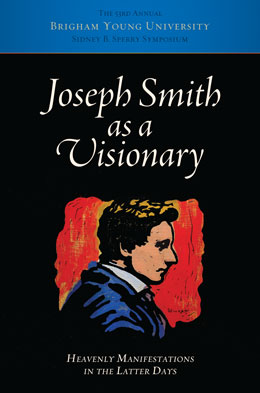
Joseph Smith’s Vision of the Celestial Kingdom
The Problem of Evil, the Promise of Salvation
Robert L. Millet
Robert L. Millet, "Joseph Smith’s Vision of the Celestial Kingdom: The Problem of Evil, the Promise of Salvation," in Joseph Smith as a Visionary: Heavenly Manifestations in the Latter Days, ed. Alonzo L. Gaskill, Stephan D. Taeger, Derek R. Sainsbury, and Roger G. Christensen (Provo, UT: Religious Studies Center, Brigham Young University, 2004), 229–46.
Robert L. Millet is a professor emeritus of ancient scripture at Brigham Young University.
Few doctrinal problems in Christian history have caused as much unrest, fostered more doubt, and resulted in more people leaving Christianity and, in many cases, religion in general than what is known as the problem of evil and suffering. Stated simply it is this: If God is an all-powerful being, if he truly loves all his children, then why does he permit the proliferation of evil and the suffering of so many in the world? It is a tough issue, one that philosophers and theologians have debated and wrestled with since the time of the philosopher Epicurus in 300 BC.
A subset of the problem of evil and suffering is what has come to be known as the soteriological problem of evil and suffering. Soteriology is the study of salvation and how it is to be obtained. The soteriological problem of evil and suffering may be stated this way: If it is true that salvation comes only through the name and redemption of Jesus Christ, what do we make of the fact that the bulk of humanity from Adam to the end of mortality will go to their graves without even hearing the name of Christ, much less hearing of his gospel and plan of salvation?
Beloved Christian apologist C. S. Lewis found himself puzzled by this dilemma. On one occasion he remarked: “Here is [a matter] that used to puzzle me. Is it not frightfully unfair that this new life [in Christ] should be confined to people who have heard of Christ and been able to believe in Him? But the truth is God has not told us what His arrangements about the other people are. We do know that no man can be saved except through Christ; we do not know that only those who know Him can be saved through Him.”[1]
That Lewis trusted in the goodness of God—which would certainly include the Almighty’s love for all his children and his eagerness to provide every possible opportunity for their ultimate salvation—is evident in another fascinating insight:
There are people (a great many of them) who are slowly ceasing to be Christians but who still call themselves by that name: some of them are clergymen. There are other people who are slowly becoming Christians though they do not yet call themselves so. There are people who do not accept the full Christian doctrine about Christ but who are so strongly attracted by Him that they are His in a much deeper sense than they themselves understand. There are people in other religions who are being led by God’s secret influence to concentrate on those parts of their religion which are in agreement with Christianity, and who thus belong to Christ without knowing it. Many of the good Pagans long before Christ’s birth may have been in this position.[2]
I have loved C. S. Lewis and his writings for decades, so I am touched that this remarkable and peerless Christian scholar did indeed wrestle with this most troublesome issue—the fate of the unevangelized. At the time of his death and thus his entrance into the postmortal spirit world on November 22, 1963, Lewis would no doubt have rejoiced with what he learned about postmortal opportunities and the infinite goodness of an omni-loving God.
Latter-day Saints are more than happy to announce to the world that God has, in fact, made it known how people who have never heard of Christ and his gospel can have the opportunity to hear. The beginning of that understanding comes to us through an experience Joseph Smith had in 1836—what we now refer to as Joseph Smith’s vision of the celestial kingdom.
The Doctrine Unfolds
A significant moment in Latter-day Saint history and doctrine took place in the fall of 1833 in the life of a woman by the name of Lydia Goldthwaite. Lydia grew up in Massachusetts and New York and at the age of sixteen married Calvin Bailey. Calvin had a serious problem with alcoholism and eventually left Lydia and their child. At the time, Lydia was also expecting another baby. That baby died at birth, and within months her first child died also. When she was twenty years old, Lydia moved to Canada to stay with the Freeman Nickerson family. There she was introduced to the restored Church of Christ and first became acquainted with its leader, Joseph Smith. On October 24, 1833, the family sat around the table and listened to Joseph. Those who recorded this event reported that the Spirit of God was poured out upon the group in a remarkable manner, and Lydia even spoke in tongues.
The next day, as Joseph’s company prepared to return to Kirtland, Ohio, Joseph paced back and forth in the sitting room in deep study. Finally he said:
I have been pondering on Sister Lydia’s lonely condition, and wondering why it is that she has passed through so much sorrow and affliction and is thus separated from all her relatives. I now understand it. The Lord has suffered it even as he allowed Joseph of old to be afflicted, who was sold by his brethren as a slave into a far country, and through that became a savior to his father’s house and country. Even so shall it be with her; the hand of the Lord will overrule it for good to her and her father’s family.[3]
Turning to the young woman, he continued:
Sister Lydia, great are your blessings. The Lord, your Savior, loves you, and will overrule all your past sorrows and afflictions for good unto you. Let your heart be comforted. . . . You shall yet be a savior to your father’s house. Therefore be comforted, and let your heart rejoice, for the Lord has a great work for you to do. Be faithful and endure unto the end and all will be well.[4]
This event took place some two years and three months before the Prophet Joseph’s vision of the celestial kingdom. It is hard to imagine that an occasion of this doctrinal significance did not reverberate in the mind and heart of the Prophet during that two-year period. We can only speculate about the degree to which this incident may have contributed to or laid the groundwork for what we can now read in section 137 of the Doctrine and Covenants.
In the history of Christianity, the day of Pentecost stands as the scriptural reminder of the baptism by fire that came to the Saints in the meridian of time. On that occasion they preached, prophesied, and spoke in tongues, inspired and divinely empowered in a way that they had not experienced before (Acts 2). A similar outpouring of the Holy Spirit took place among the Latter-day Saints. Professor Milton V. Backman wrote:
During a fifteen-week period, extending from January 21 to May 1, 1836, probably more Latter-day Saints beheld visions and witnessed other unusual spiritual manifestations than during any other era in the history of the Church. There were reports of Saints’ beholding heavenly beings at ten different meetings held during that time. At eight of these meetings, many reported seeing angels; and at five of the services, individuals testified that Jesus, the Savior, appeared. While the Saints were thus communing with heavenly hosts, many prophesied, some spoke in tongues, and others received the gift of interpretation of tongues.[5]
Joseph Smith and other early leaders of the Church had begun to meet in the Kirtland Temple before its completion and had participated in priesthood ordinances, all in preparation for a partial endowment consisting of washings, anointings, sealing of anointings, and the washing of feet.[6] On Thursday evening, January 21, 1836, the Prophet and a number of Church leaders from Kirtland and Missouri gathered on the third or attic floor of the Kirtland Temple in the translating room, or “President’s Room.” The following is recorded:
At early candlelight I [Joseph Smith] met with the presidency at the west school room in the <Temple> to attend to the ordinance of anointing our heads with holy oil: Also the [high] councils of Kirtland and Zion met in the two adjoining rooms, who waited in prayer while we attended to the ordinance. I took the oil in my left hand, Father Smith being seated before me, and the remainder of the presidency encircled him round about. We then stretched our right hands towards heaven and blessed the oil and consecrated it in the name of Jesus Christ. We then laid our hands upon our aged Father Smith, and invoked the blessings of heaven. I then anointed his head with the consecrated oil, and sealed many blessings upon him; The presidency then in turn laid his hands upon his head . . . and pronounced such [blessings] upon his head, as the Lord put into their hearts, all blessing him to be our Patriarch to anoint our heads and attend to all duties that pertain to that office. The presidency then . . . received their anointing and blessing under the hand, of father Smith; and in my turn my father anointed my head, and sealed upon me the blessings of Moses, to lead Israel in the latter Days, even as Moses led him in days of old; also the blessings of Abraham, Isaac, and Jacob. All of the Presidency laid th[e]ir hands upon me, and pronounced upon my head many prophecies, and blessings, many of which I shall not notice at this time. But as Paul said, so say I, let us come to visions and revelations.[7]
What follows in the historical records is what we have come to know as Joseph Smith’s vision of the celestial kingdom. Warren Parrish, a clerk and scribe for the Prophet during the 1830s, recorded Joseph Smith’s description of what took place.
The Vision Commences
Joseph the Prophet had learned by vision in February 1832 the nature of those who would inherit the highest heaven, the celestial kingdom. These persons are they who “overcome by faith, and are sealed by the Holy Spirit of promise,” they “into whose hands the Father has given all things,” they “who are just men [and women] made perfect through Jesus the mediator of the new covenant, who wrought out [his] perfect atonement through the shedding of his own blood” (Doctrine and Covenants 76:53, 55, 69).
In the 1836 vision given to Joseph Smith in the Kirtland Temple, “the heavens were opened upon us, and I beheld the celestial kingdom of God, and the glory thereof, whether in the body or out I cannot tell” (Doctrine and Covenants 137:1). This language is reminiscent of the words of the Apostle Paul in his second epistle to the Corinthian Saints (2 Corinthians 12:1–2). It seems that both Paul and Joseph Smith were stating that they did not completely understand what had taken place during their sacred experiences; they could not discern whether they were physically transported to the celestial kingdom (what Paul called the “third heaven”) or whether what they experienced was a vision.
Continuing, Joseph wrote, “I saw the transcendent beauty of the gate through which the heirs of that kingdom will enter, which was like unto circling flames of fire; also the blazing throne of God, whereon was seated the Father and the Son. I saw the beautiful streets of that kingdom, which had the appearance of being paved with gold” (Doctrine and Covenants 137:2–4). The Prophet was often faced with the challenge of describing glorious events, visions, revelations, even theophanies that were ineffable, incapable of being described with our limited mortal vocabulary. In speaking of the First Vision, for example, he wrote of a pillar of light “above the brightness of the sun” and of the Father and the Son as two personages “whose brightness and glory defy all description” (Joseph Smith—History 1:16–17). God manifested his divine nature, a nature characterized by such words as light, power, life, spirit, and glory.
The faithful have been promised that they may qualify to “dwell with the devouring fire” and dwell with “everlasting burnings” (Isaiah 33:14)—that is, dwell with God. “How consoling to the mourners,” the Prophet Joseph stated at the funeral service for King Follett, “when they are called to part with a husband, wife, father, mother, child or dear relative, to know, that although the earthly tabernacle shall be dissolved, they shall rise in immortal glory.”[8] “God Almighty himself dwells in Eternal fire,” the Prophet said a month later; “flesh and blood cannot go there, all corruption is devoured by the fire— our God is a consuming fire.”[9]
In speaking of the glory of the celestial kingdom and the nature of celestial bodies, Elder Melvin J. Ballard taught: “Those who come forth in the Celestial Glory with Celestial bodies have a body that is more refined. It is different. The very fiber and texture of the Celestial body is more pure and holy than a Telestial or Terrestrial body, and a Celestial body alone can endure Celestial Glory.” Elder Ballard explained that when he was a child, “I did not know whether I wanted to live in a Celestial world or not if it was that hot. But when I come to understand [that] if I have a body suitable to dwell in eternal burnings then I think I would like it.”[10]
Joseph Smith’s vision of the celestial kingdom was not unlike John the Revelator’s vision of the holy city, the earth in its sanctified and celestial state: “The foundations of the wall of the city,” wrote John, “were garnished with all manner of precious stones.” Further, “the street of the city was pure gold, as it were transparent glass” (Revelation 21:19, 21).
Alvin Smith: The Scriptural Prototype
Joseph’s account of the vision continues: “I saw Father Adam and Abraham; and my father and my mother; my brother Alvin, that has long since slept; and marveled how it was that he had obtained an inheritance in that kingdom, seeing that he had departed this life before the Lord had set his hand to gather Israel the second time, and had not been baptized for the remission of sins” (Doctrine and Covenants 137:5–6).
That the Prophet saw Father Adam and Abraham, the father of the faithful, in the celestial kingdom is no surprise.[11] Adam would have come forth from the dead in the First Resurrection, which was initiated by Jesus Christ in the meridian of time. On one occasion, Zebedee Coltrin accompanied the Prophet Joseph Smith, Oliver Cowdery, and Sidney Rigdon on a trip to New Portage, Ohio. Brother Coltrin reported:
I noticed that Joseph seemed to have a far off look in his eyes, or was looking at a distance. Presently he stepped between Brother Cowdery and me, and taking us by the arm said, “Let’s take a walk.”
We went to a place where there was some beautiful grass, and grape vines and swamp birch interlaced. President Joseph Smith then said, “Let us pray.” We all three prayed in turn—Joseph, Oliver, and me. Brother Joseph then said, “Now brethren, we will see some visions.”
Joseph lay down on the ground on his back and stretched out his arms, and we laid on them. The heavens gradually opened, and we saw a golden throne, on a circular foundation, and on the throne sat a man and a woman, having white hair and clothed in white garments. Their heads were white as snow, and their faces shone with immortal youth. They were the two most beautiful and perfect specimens of mankind I ever saw. Joseph said, “They are our first parents, Adam and Eve.”[12]
Further, we are told in the revelation on eternal and plural marriage that because Abraham, Isaac, and Jacob had done no more nor less than what they were commanded, “they have entered into their exaltation, according to the promises, and sit upon thrones, and are not angels but are gods” (Doctrine and Covenants 132:37).
It’s clear that Joseph’s vision was a glimpse into the future celestial realm, for he saw his parents in the kingdom of the just, when in fact both were still alive in 1836. Joseph Sr. would pass away in September 1840, and Lucy Mack Smith would live for another twenty years. Father Smith was, interestingly, in the same room with his son at the time the vision was received.
The Prophet also saw his brother Alvin, who was the firstborn of Father and Mother Smith. Alvin was born on February 11, 1798, in Tunbridge, Vermont. His was a pleasant and loving disposition, and he constantly sought opportunities to aid the family in their financial struggles and to build a home suitable for their large family. Lucy Mack Smith wrote that on the morning of November 15, 1823, “Alvin was taken very sick with the bilious colic,” probably appendicitis. A physician hurried to the Smith home and administered calomel, an experimental drug, to Alvin. The dose of calomel “lodged in his stomach,” and on the third day of sickness Alvin realized that he was going to die. He asked that each of the Smith children come to his bedside for his parting counsel and final expression of love. According to Mother Smith’s record, “When he came to Joseph, he said, ‘I am now going to die, the distress which I suffer, and the feelings that I have, tell me my time is very short. I want you to be a good boy, and do everything that lies in your power to obtain the Record.’” We recall that Joseph had been visited by Moroni less than three months before this time, in September. “Be faithful in receiving instruction,” Alvin added, “and in keeping every commandment that is given you.”[13]
Alvin died on November 19, 1823. Mother Smith wrote of the pall of grief surrounding his passing: “Alvin was a youth of singular goodness of disposition—kind and amiable, so that lamentation and mourning filled the whole neighborhood in which he resided.”[14] Joseph observed many years later: “I remember well the pangs of sorrow that swelled my youthful bosom and almost burst my tender heart, when he died, He was the oldest, and the noblest of my Father’s family. . . . He lived without spot from the time he was a child. . . . He was one of the soberest of men, and when he died the Angel of the Lord visited him in his last moments.”[15]
Because Alvin had died seven years before the organization of the Church and had not been baptized by proper authority, Joseph wondered during his vision how it was possible for his brother to have attained the highest heaven. According to William Smith, a Presbyterian minister preached Alvin’s funeral sermon. “Hyrum, Samuel, Katherine, and mother were members of the Presbyterian Church. My father would not join. He did not like it because Rev. Stockton had preached at my brother’s funeral sermon and intimidated very strongly that he had gone to hell, for Alvin was not a church member, but he was a good boy and my father did not like it.”[16]
What relief and even excitement must have filled the souls of both the Prophet Joseph Smith and his father when they heard the voice of an omniscient and omni-loving God declare, “All who have died without a knowledge of this gospel, who would have received it if they had been permitted to tarry, shall be heirs of the celestial kingdom of God; also all that shall die henceforth without a knowledge of it, who would have received it with all their hearts, shall be heirs of that kingdom; for I, the Lord, will judge all men according to their works, according to the desire of their hearts” (Doctrine and Covenants 137:7–9).
This latter statement—that God will judge us not merely on our works but also on the desire of our heart—was taught in the Book of Mormon. In speaking with his errant son, Corianton, the prophet Alma declared, “And it is requisite with the justice of God that men should be judged according to their works; and if their works were good in this life, and the desires of their hearts were good, that they should also, at the last day, be restored unto that which is good” (Alma 41:3, emphasis added; compare 2 Corinthians 8:12). President Dallin H. Oaks has reminded us, “Just as we will be accountable for our evil desires, we will also be rewarded for our righteous ones. Our Father in heaven will receive a truly righteous desire as a substitute for actions that are genuinely impossible. My father-in-law was fond of expressing his version of this principle. When someone wanted to do something for him but was prevented by circumstances, he would say: ‘Thank you. I will take the good will for the deed.’”[17]
God does not hold anyone accountable for a gospel law of which he or she was ignorant or unable to live. Through this vision, Joseph the Prophet began to see that every person will have an opportunity—here or hereafter—to accept and apply the principles of the gospel of Jesus Christ. The Book of Mormon prophet Jacob taught that “where there is no law given there is no punishment” (2 Nephi 9:25). Only the Lord, the Holy One of Israel, is capable of perfect judgment, and thus only he can discern completely the hearts and minds of mortals. He alone knows when a person has received sufficient knowledge or impressions of the Spirit to constitute a valid opportunity to receive the gospel of Jesus Christ.
The first public discourse on baptism for the dead by the Prophet was delivered on August 15, 1840, at the funeral of Seymour Brunson, a member of the Nauvoo high council. Simon Baker described the occasion:
I was present at a discourse that the prophet Joseph delivered on baptism for the dead 15 August 1840. He read the greater part of the 15th chapter of Corinthians and remarked that the Gospel of Jesus Christ brought glad tidings of great joy, and then remarked that he saw a widow in that congregation that had a son who died without being baptized, and this widow in reading the sayings of Jesus “except a man be born of water and of the spirit he cannot enter the kingdom of heaven,” and that not one jot nor tittle of the Savior’s words should pass away, but all should be fulfilled. He then said that this widow should have glad tidings in that thing. He also said the apostle [Paul in 1 Corinthians 15:29] was talking to a people who understood baptism for the dead, for it was practiced among them. He went on to say that people could now act for their friends who had departed this life, and that the plan of salvation was calculated to save all who were willing to obey the requirements of the law of God. He went on and made a very beautiful discourse.[18]
After the meeting, the widow Jane Nyman was baptized vicariously for her son by Harvey Olmstead in the Mississippi River.
One month later, on September 14, 1840, on his deathbed, Joseph Smith Sr. made a final request of his family—that Joseph the Prophet be baptized by proxy for Alvin. The historical records indicate, however, that Hyrum, the oldest living son, complied with that wish and was baptized vicariously in 1840 in the Mississippi River and again in 1841 in a baptismal font in the Nauvoo Temple.[19]
The Salvation of Little Children
Another beautiful doctrine enunciated in the vision of the celestial kingdom deals with the status of children who die. “And I also beheld that all children who die before they arrive at the years of accountability are saved in the celestial kingdom of heaven” (Doctrine and Covenants 137:10). This part of the vision affirmed what earlier prophets had taught. King Benjamin had learned from an angel that “the infant perisheth not that dieth in his infancy” (Mosiah 3:18). After having described the nature of those who will come forth in the First Resurrection, Abinadi said simply, “Little children also have eternal life” (Mosiah 15:25).
A revelation given to Joseph Smith in September 1830 had specified “that little children are redeemed from the foundation of the world through mine Only Begotten” (Doctrine and Covenants 29:46; compare JST, Matthew 19:13–15). The Prophet later taught, “The Lord takes many away even in infancy that they may escape the envy of man, and the sorrows and evils of this present world; they were too pure, too lovely, to live on earth; therefore if rightly considered instead of mourning we have reason to rejoice as they are delivered from evil, and we shall soon have them again.”[20] Because God knows the end from the beginning,[21] “we may assume that the Lord knows and arranges beforehand who shall be taken in infancy and who shall remain on earth to undergo whatever tests are needed in their cases.”[22]
At the funeral of his granddaughter Rebecca Adams, Elder Bruce R. McConkie explained: “We come here for two great reasons—the first, to get a body; the second, to be tried, examined, schooled, and tested under mortal circumstances, to take a different type of probationary test than we underwent in the premortal life. There are some of the children of our Father, however, who come to earth to get a body—for that reason solely. . . . This would be the case with Rebecca Adams.” That is, God “takes them to Abraham’s bosom as soon as they have received bodies or shortly thereafter.”[23]
In speaking of the status of children in the Resurrection, the Prophet Joseph Smith stated:
As concerning the resurrection, I will merely say that all men will come from the grave as they lie down, whether old or young; there will not be “added unto their stature one cubit,” neither taken from it; all will be raised by the power of God, having spirit in their bodies, and not blood. Children will be enthroned in the presence of God and the Lamb with bodies of the same stature that they had on earth, having been redeemed by the blood of the Lamb; they will there enjoy the fulness of light, glory and intelligence, which is prepared in the celestial kingdom.[24]
Joseph F. Smith, a son of Hyrum who became the sixth President of the Church, explained:
Joseph Smith declared that the mother who laid down her little child, being deprived of the privilege, the joy, and the satisfaction of bringing it up to manhood or womanhood in this world, would, after the resurrection, have all the joy, satisfaction and pleasure, and even more than it would have been possible to have had in mortality, in seeing her child grow to the full measure of the statue of its spirit.[25]
A question raised occasionally is whether children who die before the age of accountability need to undergo temptation and testing, perhaps during the Millennium. Amulek informed us that our disposition here will be our disposition in the hereafter (Alma 34:32–35). Such is the case with little children. They were pure in this mortal existence, will be pure in the world of spirits, and will come forth in the Resurrection of the pure in heart at the appropriate time. When the Savior returns to the earth in glory, wickedness will be cleansed from the face of the earth. The Millennium will be ushered in with divine power, and then Satan and his hosts will be bound by the righteousness of the people (1 Nephi 22:26). During this glorious time, the earth will be given to the righteous “for an inheritance; and they shall multiply and wax strong, and their children shall grow up without sin unto salvation” (Doctrine and Covenants 45:58).
The devil will, however, be loosed at the end of the Millennium (Revelation 20:3; Jacob 5:77; Doctrine and Covenants 29:22; 43:31; 88:111). Could not those who had left mortality without trial be tested during that “little season?” No, for these children will already have come forth from the grave as resurrected and immortal beings. How could such persons, whose salvation is already assured, possibly be tested? President Joseph Fielding Smith observed:
Satan will be loosed to gather his forces after the millennium. The people who will be tempted, will be people living on this earth [mortals], and they will have every opportunity to accept the gospel or reject it. Satan will have nothing to do whatever with little children, or grown people who have received their resurrection and entered into the celestial kingdom. Satan cannot tempt little children in this life, nor in the spirit world, nor after the resurrection. Little children who die before reaching the years of accountability will not be tempted.[26]
From Scripture to Canonized Scripture
Following the sustaining of General Authorities and General Officers of the Church by President N. Eldon Tanner at the April 1976 general conference, he made the following remarks:
President Kimball has asked me to read a very important resolution for your sustaining vote. At a meeting of the Council of the First Presidency and the Quorum of the Twelve held in the Salt Lake Temple on March 25, 1976, approval was given to add to the Pearl of Great Price the two following revelations:
First, a vision of the celestial kingdom given to Joseph Smith the Prophet in the Kirtland Temple, on January 21, 1836, which deals with the salvation of those who die without a knowledge of the Gospel; and second, a vision given to President Joseph F. Smith in Salt Lake City, Utah, on October 3, 1918, showing the visit of the Lord Jesus Christ in the spirit world, and setting forth the doctrine of the redemption of the dead.
It is proposed that we sustain and approve this action and adopt these revelations as part of the standard works of The Church of Jesus Christ of Latter-day Saints. All those in favor manifest it. Those opposed, if any, by the same sign.
Thank you. President Kimball, the voting seems to be unanimous in the affirmative.[27]
The vision of the celestial kingdom was thereby placed within our canon of scripture. In a revelation received by Joseph Smith in November 1831, the Lord spoke of those who would be sent forth to declare the message of the restored gospel. He instructed four men—Orson Hyde, Luke S. Johnson, Lyman E. Johnson, and William E. McLellin, each of whom would become a member of the first Quorum of the Twelve Apostles in this dispensation—to “speak as they are moved upon by the Holy Ghost. And whatsoever they shall speak when moved upon by the Holy Ghost shall be scripture, shall be the will of the Lord, shall be the mind of the Lord, shall be the word of the Lord, shall be the voice of the Lord, and the power of God unto salvation” (Doctrine and Covenants 68:3–4; emphasis added).
In an article describing the placement of the vision of the celestial kingdom and the vision of the redemption of the dead within the standard works, Elder Bruce R. McConkie taught:
From the days of the first dispensation it has been the practice of the Lord’s people to make selections from the scriptural utterances of those who are appointed to lead the Church and to publish these selections as formal and official scripture. All inspired sayings and writings are true and are and should be accepted and believed by all who call themselves Saints. But the revelations, visions, prophecies, and narrations selected and published for official use are thereby made binding upon the people in a particular and special sense. They become part of the standard works of the Church. They become the standards, the measuring rods, by which doctrine and procedure are determined.
By being added to the standard works, the Prophet’s vision of the celestial kingdom and President Joseph F. Smith’s vision of the redemption of the dead take on a new and added significance. They have both been scripture from the moment they came into being, but now the truths they contain are placed before the people with an emphasis and a witness far beyond the general run of inspired utterances. They both contain gospel truths which are not otherwise found in the standard works, and they will now be cited and known more, and will be cross-referenced into the balance of the standard works as their subject matter requires.[28]
In a letter to me regarding the canonization of President Joseph F. Smith’s vision—and the principle would certainly hold for the vision of the celestial kingdom—Elder McConkie explained that the two visions were
approved for inclusion in the Standard Works by the unanimous vote of the First Presidency and the Council of the Twelve. President Kimball proposed [their] inclusion. The matter had been discussed by the Council of the Presidency and the Twelve on prior occasions. I had taken occasion to divide the document[s] into verses as [they] now appear. President Kimball and all the Brethren thought [the visions] should be formally and officially recognized as scripture so that [they] would be quoted, used, and relied upon more than the case would have been if [they] had simply been published as heretofore in various books. By putting [them] in the Standard Works formally, [they get] cross referenced and [are] used to better advantage by the Saints.[29]
Conclusion
I was in the Tabernacle on Temple Square in Salt Lake City at the April 1976 conference when the announcement was made that two revelations or visions were being added to our standard works. Sitting next to me was a man I had known for years when I lived in Louisiana. He had for most of his life been a devoted Roman Catholic, but after working closely with my father for several years and becoming better acquainted with our family and our religious commitments, he expressed a desire to learn more about The Church of Jesus Christ of Latter-day Saints. He was baptized only a couple of months before coming to general conference.
When the announcement was made by President N. Eldon Tanner regarding enlarging our scriptural canon, an audible sense of wonder and excitement was felt and heard by those in attendance. My friend was absolutely overwhelmed with the announcement and, with his eyes almost bulging out of their sockets, looked at me and said, “Wow! Do we do this at every conference?” I smiled and replied that what we had just experienced was rather unusual, and that additions to the canon had not taken place in about one hundred years. After the session was ended, we walked across the street to Deseret Book, where stacks of inserts of the two visions were made available for purchase. At that time, it was announced that the new revelations would be added to the Pearl of Great Price. In June 1979, however, by administrative decision and as a direct outgrowth of the production of the new 1981 edition of the triple combination, the two revelations were moved to the Doctrine and Covenants.
Surely nothing is more set, fixed, and established than the remarkable and inspiring truth that the canon of scripture of The Church of Jesus Christ of Latter-day Saints is open, flexible, and expanding. Elder Jeffrey R. Holland pointed out, “In our heartfelt devotion to Jesus of Nazareth as the very Son of God, the Savior of the world, we invite all to examine what we have received of Him, to join with us, drinking deeply at the ‘well of water springing up into everlasting life’ (John 4:14), these constantly flowing reminders that God lives, that He loves us, and that He speaks. I express the deepest personal thanks that His works never end and his ‘words . . . never cease.’”[30]
In concluding where we began, the vision of the celestial kingdom, what we now know as section 137 of the Doctrine and Covenants, is more precious than rubies, perhaps even more doctrinally significant than many of us have realized. Together with the vision of the redemption of the dead, the vision of the celestial kingdom is essentially the constitution underlying the Latter-day Saint belief and practice regarding the salvation of the dead—the promise that no daughter or son of God will be denied the privilege of hearing the message of the gospel of Jesus Christ.[31]
The powerful and provocative response of The Church of Jesus Christ of Latter-day Saints to the theological dilemma posed by the soteriological problem of evil is set forth plainly by the Prophet Joseph Smith: “All those who have not had an opportunity of hearing the Gospel, and being administered unto by an inspired man in the flesh, must have it hereafter, before they can be finally judged.”[32] On another occasion, Brother Joseph stated the principle this way: “Every man that has been baptized and belongs to the kingdom has a right to be baptized for those who have gone before; and as soon as the law of the Gospel is obeyed here by their friends who act as proxy for them, the Lord has administrators there to set them free.”[33]
In short, “it is no more incredible that God should save the dead, than that he should raise the dead.”[34] This vision opens a vitally important door: that there are those of our Heavenly Father’s children who come to earth, do not know of or accept Jesus Christ and his gospel, who may yet attain the celestial kingdom, the highest degree of glory hereafter.
Notes
[1] C. S. Lewis, Mere Christianity (San Francisco: Harper Collins, 2001), book 2, chapter 5, 64; emphasis added. Because many of Lewis’s works have been published by various publishing houses (which usually have differing pagination), I have chosen to include the specific book and chapter.
[2] Lewis, Mere Christianity, book 4, chapter 10, 208.
[3] “Lydia Knight’s History,” 21–23, cited in Journal History, October 19, 1833, Church History Library, Salt Lake City (hereafter CHL).
[4] “Lydia Knight’s History,” 21–23.
[5] Milton Backman Jr., The Heavens Resound: A History of the Latter-day Saints in Ohio, 1830–1838 (Salt Lake City: Deseret Book, 1983), 285. See Karl Ricks Anderson, The Savior in Kirtland: Personal Accounts of Divine Manifestations (Salt Lake City: Deseret Book, 2012), 225–47.
[6] See Backman, Heavens Resound, 285–87.
[7] Joseph Smith, History, 1838–1856, volume B-1 (1 September 1834–2 November 1838), 695, www.josephsmithpapers.org.
[8] Joseph Smith, Discourse, 7 April 1844, as Published in Times and Seasons, 614, www.josephsmithpapers.org; see also accounts of the King Follett Sermon.
[9] Joseph Smith, Discourse, 12 May 1844, as Reported by Thomas Bullock, [2], www.josephsmithpapers.org. See Doctrine and Covenants Reference Companion, ed. Dennis L. Largey (Salt Lake City: Deseret Book, 2015) on such terms as light (373–75), power (501–2), life (370–72), spirit (620), and glory (233–34).
[10] Melvin J. Ballard, “The Three Degrees of Glory” (address delivered in the Ogden, Utah, Tabernacle on September 22, 1922), in Melvin J. Ballard: Crusader for Righteousness (Salt Lake City: Bookcraft, 1966), 225.
[11] President Joseph F. Smith would later see in vision Adam, or Michael, in paradise, the abode of the righteous in the postmortal spirit world (Doctrine and Covenants 138:38).
[12] From They Knew the Prophet, comp. Hyrum and Helen Mae Andrus (Salt Lake City: Bookcraft, 1974), 28; see Karl Ricks Anderson, Savior in Kirtland, 58.
[13] Lucy Mack Smith, History of Joseph Smith by His Mother, ed. Preston Nibley (Salt Lake City: Bookcraft, 1954), 87.
[14] History of Joseph Smith by His Mother, 88.
[15] Joseph Smith, History, 1838–1856, volume D-1 (1 August 1842–1 July 1843), 1382–83, www.josephsmithpapers.org.
[16] Interview with William Smith by E. C. Briggs and J. W. Peterson, Salt Lake City, Deseret News, January 20, 1894; see Kyle R. Walker, William Smith: In the Shadow of a Prophet (Salt Lake City: Greg Kofford Books, 2015), 50.
[17] Dallin H. Oaks, Pure in Heart (Salt Lake City: Bookcraft, 1988), 59.
[18] The Words of Joseph Smith: Contemporary Accounts of the Nauvoo Discourses of the Prophet Joseph, ed. Andrew F. Ehat and Lyndon W. Cook (Provo, UT: Religious Studies Center, Brigham Young University, 1980), 49.
[19] History of Joseph Smith by His Mother, 308; “Nauvoo Baptisms for the Dead,” Book A, Family History Library, Salt Lake City, 145, 149.
[20] Joseph Smith, Discourse, 20 March 1842, as published in Times and Seasons, 751, www .josephsmithpapers.org
[21] The Prophet Joseph declared, “The great Jehovah contemplated the whole of the events connected with the earth, pertaining to the plan of salvation, before it rolled into existence. . . . [T]he past, the present, and the future were and are, with Him, one eternal ‘now.’” Teachings of the Presidents of the Church: Joseph Smith (Salt Lake City: The Church of Jesus Christ of Latter-day Saints, 2007), 406.
[22] Bruce R. McConkie, “The Salvation of Little Children,” (Ensign, April 1977), www.churchofjesuschrist.org. Elder McConkie was here expressing the sentiments of President Joseph Fielding Smith.
[23] Funeral held on October 28, 1967, in Salt Lake City, transcript in possession of the author. Elder McConkie taught the following in his October 1976 general conference address: “[All] the faithful Saints, all of those who have endured to the end, depart this life with the absolute guarantee of eternal life. There is no equivocation, no doubt, no uncertainty in our minds. Those who have been true and faithful in this life will not fall by the wayside in the life to come. If they keep their covenants here and now and depart this life firm and true in the testimony of our blessed Lord, they shall come forth with an inheritance of eternal life.” “The Dead Who Die in the Lord” (general conference talk, October 1976), www.churchofjesuschrist.org.
[24] Joseph Smith, Discourse, 20 March 1842, as Reported by Wilford Woodruff, www.josephsmithpapers.org.
[25] Joseph F. Smith, Gospel Doctrine: Selections from the Writings of Joseph F. Smith (Salt Lake City: Deseret Book, 1971), 453; see a lengthier treatment of this doctrine in a sermon by Joseph F. Smith, “The Status of Children in the Resurrection,” in Messages of the First Presidency, comp. James R. Clark, 6 vols. (Salt Lake City: Bookcraft, 1965–75), 5:91–98.
[26] Joseph Fielding Smith, Doctrines of Salvation, comp. Bruce R. McConkie, 3 vols. (Salt Lake City: Bookcraft, 1954–56), 2:56–57.
[27] N. Eldon Tanner, “The Sustaining of Church Officers” (general conference, April 1976), www.churchofjesuschrist.org.
[28] Bruce R. McConkie, “A New Commandment: Save Thyself and Thy Kindred,” Ensign, August 1976, www.churchofjesuschrist.org; emphasis added.
[29] Bruce R. McConkie to Robert L. Millet, October 5, 1983. The vision of the celestial kingdom was contained, for example, in the Teachings of the Prophet Joseph Smith (Salt Lake City: Deseret Book, 1976), selected by Joseph Fielding Smith and first published in 1939 on pages 106–7. Before April 1976, the vision of the redemption of the dead could be found in Gospel Doctrine: The Sermons and Writings of Joseph F. Smith, first published in 1919 on pages 472–76.
[30] Jeffrey R. Holland, “My Words . . . Never Cease” (general conference talk, April 2008), www.churchofjesuschrist.org.
[31] The same could be said of “The Family: A Proclamation to the World,” delivered by President Gordon B. Hinckley to those in attendance at the General Relief Society Meeting on September 23, 1995. It represents the doctrinal foundation underlying the importance of the family within The Church of Jesus Christ of Latter-day Saints.
[32] Teachings of Presidents of the Church: Joseph Smith, 471; emphasis added.
[33] Teachings of Presidents of the Church: Joseph Smith, 474; emphasis added.
[34] Teachings of Presidents of the Church: Joseph Smith, 471.
