
 menu icon in the top, right corner of the screen.
 icon above to close this box.
 icon at the bottom of the screen below the browser—if you don't see it, swipe up to unhide it.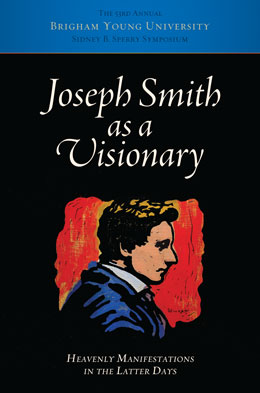
Introduction
Joseph Smith’s nineteenth-century claim that the heavens had been “reopened” was not unique to him or the church he restored. As one historian noted, “Visions and dreams occurred quite regularly among Christians during the Advent Awakening of the 1800s.”[1] Another pointed out, “In the 1830s an epidemic of visions spread”—some in communities like the Shakers, but among other denominations as well, where congregants had visions, angels were seen, and “under spiritual guidance” some even experienced “journeys” to “heavenly places.”[2] Many during the various Great Awakenings[3] claimed spiritual endowments of sorts, some because of their participation in one of the nascent Awakening movements and others specifically because they perceived that they had been called or chosen of God.
The nineteenth century saw the rise of the Restorationism Movement, in which various leaders felt the need to “restore” or “return to” the ancient Christian Church.[4] Some, as part of that movement, claimed remarkable visions, healings, gifts of the Spirit, and heavenly outpourings akin to those recorded in sacred scripture. As one historian notes of the era:
The religious environment in which Joseph Smith resided emerged long before his birth. . . . Spiritual seekers of the time attended religious revivals anticipating that the Holy Spirit’s influence could be felt within such contexts; each hoped, and perhaps even expected, to have a personal experience. . . .
As accounts written by Joseph Smith’s peers demonstrate, he was not alone in his sincere quest as a religious seeker. He was surrounded by women and men who were equally affected by the revivals they encountered. Exposure to such meetings ignited within countless people a sense of curiosity about spiritual possibilities and even “reanimated” the “frequency of and credibility given to dreams and visions” that provided revelatory guidance.[5]
Near contemporaries of Joseph Smith claimed various spiritual encounters that convinced them and their followers that God was with them and that their movement was sanctioned by Him. Ellen G. White,[6] Anne Catherine Emmerich,[7] Mary Baker Eddy,[8] and others enjoyed visions, uttered prophesies, healed and were healed, and were representative of the spirituality of the day. And yet, with all this noted, Joseph Smith was unique. Many of his contemporary visionaries didn’t spawn new religions through their visions, or their movements disappeared entirely. Some remained and thrived, but the visionary or revelatory component of those faiths died with their founders.
In the case of the Prophet Joseph, visions, revelations, healings, and the like were not the foundation of the movement—Christ was. Nonetheless, those that followed Joseph understood these visionary gifts to be a necessary component of the faith tradition restored through him. Importantly, once Joseph was gone, his successors continued to profess the prophetic mantle of their founder, and many spoke of the “visions of eternity”[9] being opened to their minds.[10] Thus, from its inception, The Church of Jesus Christ of Latter-day Saints was a tradition filled with visons and visitations, and that visionary component continues today—quietly received and carefully attested to by those who serve as successors to the Prophet Joseph.
In this volume we explore but a handful of Joseph Smith’s myriad visions and visitations. Scholars from various backgrounds examine topics such as Joseph’s First Vision, the impact of scripture on Joseph’s visionary experience, how those of Joseph’s day perceived his visions, and a number of very specific visions of God, angels, the afterlife, and even visionary dreams experienced by the Prophet of the Restoration. BYU religion professor Robert L. Millet observed that “because of what he had seen,” Joseph Smith was “the preeminent witness of Christ in this final dispensation.”[11] Similarly, Harvard Divinity School professor David F. Holland penned this: “When writing about Joseph Smith, observers almost reflexively invoke the term ‘incomparable.’ The Latter-day Saint prophet can indeed make comparison difficult.”[12] Yes, many in Joseph’s era professed a power to perceive what lies “beyond the veil.” However, Joseph’s visions and visitations have had a staying power unlike those of his contemporaries.
As a committee, it is our sincere hope that the content of this book will stand as a testament to the mantle of the Prophet Joseph Smith as a visionary (in the most literal sense of the word), but also to the truth that the heavens are indeed open in these latter days; that God, through his infinite grace, continues to speak, visions occur, and the ongoing restoration of light and truth is poured out for all who are willing to believe and receive. Through this volume, we add our witness of that sacred truth.
Alonzo L. Gaskill
Stephan D. Taeger
Derek R. Sainsbury
Beverly Yellowhorse
Roger G. Christensen
Brent R. Nordgren
Symposium Committee
Notes
[1] Wilfred T. Adderley, “Historical Examples and Evaluations of Visions and Dreams,” Digital Commons at Andrews University, p. 12, https://
[2] Ronald L. Numbers, Prophetess of Health: Ellen G. White and the Origins of Seventh-Day Adventist Health Reform (Knoxville: University of Tennessee, 1992), 16.
[3] The Great Awakenings are usually divided into four periods: circa 1730–1755, 1790–1840, 1855–1930, and 1960–1980. Joseph Smith lived during the Second Great Awakening.
[4] Milton V. Backman, American Religions and the Rise of Mormonism (Sandy, UT: Leatherwood, 2005), 209–19; Sydney E. Ahlstrom, A Religious History of the American People (New Haven, CT: Yale University, 1972), 212, 387, 449, 822; and Tim Dowley, ed., The History of Christianity (Oxford: Lion, 1977), 664.
[5] Rachel Cope, “The First Vision within the Context of Revivalism,” in Joseph Smith and His First Vision: Context, Place, and Meaning, ed. Alexander L. Baugh et al. (Provo, UT: Religious Studies Center, Brigham Young University; Salt Lake City: Deseret Book, 2021), 66, 70.
[6] Ministerial Association of the General Conference of Seventh-day Adventists, Seventh-day Adventists Believe: A Biblical Exposition of Fundamental Doctrine, 3rd ed. (Silver Spring, MD: Review and Herald, 2018), xiii, xiv, xxxii, lviii, 34, 253, 261–64; and Numbers, Prophetess of Health, 16.
[7] Carl E. Schmöger, The Life of Anne Catherine Emmerich, vol. 1 (Rockford, IL: Tan Books, 1976), 26–38; Anna Katharina Emmerich, The Life of Jesus Christ and Biblical Revelations, vol. 2 (Rockford, IL: Tan Books, 1979), 3, 17–19, 89, 135, 184, 335, 370, 397, 404, 434.
[8] John V. Dittemore and Earnest Sutherland Bates, Mary Baker Eddy: The Truth and the Tradition (New York: Alfred A. Knopf, 1932), 231–32; and Gillian Gill, Mary Baker Eddy (Cambridge, MA: Perseus, 1998), 300, 301, 463, 634.
[9] See Brigham Young, The Complete Discourses of Brigham Young, 5 vols., ed. Richard S. Van Wagoner (Salt Lake City: Smith-Pettit Foundation, 2009), 1:107; John Taylor, The Gospel Kingdom, ed. G. Homer Durham (Salt Lake City: Bookcraft, 1998), 63; and Wilford Woodruff, The Discourses of Wilford Woodruff, ed. G. Homer Durham (Salt Lake City: Bookcraft, 1998), 86.
[10] For a nonexhaustive list of potential examples, see Joseph Smith, Joseph Smith—History 1:17; Doctrine and Covenants 13, 20, 110, 128, 137; Brigham Young, Teachings of Presidents of the Church: Brigham Young (Salt Lake City: The Church of Jesus Christ of Latter-day Saints, 1997), 41; and Wilford Woodruff, The Utah Pioneers (Salt Lake City: Deseret News, 1880), 23; John Taylor, Richard Neitzel Holzapfel and Christopher C. Jones, “‘John the Revelator’: The Written Revelations of John Taylor,” in Champion of Liberty: John Taylor, ed. Mary Jane Woodger (Provo, UT: Religious Studies Center, Brigham Young University, 2009), 273–307; Wilford Woodruff, “Manifesto,” Doctrine and Covenants, Official Declaration 1; and Wilford Woodruff journal, August 19 and 21, 1877, December 31, 1877, and March 1, 1883, in Wilford Woodruff’s Journal, ed. Scott G. Kenney, 9 vols. (Midvale, UT: Signature Books, 1983–85); Lorenzo Snow, Francis M. Gibbons, Lorenzo Snow: Spiritual Giant, Prophet of God (Salt Lake City: Deseret Book, 1982), 213–14, 219–20; Joseph F. Smith, Doctrine and Covenants 138; and Teachings of Presidents of the Church: Joseph F. Smith, 95–96; Heber J. Grant, Gospel Standards (Salt Lake City: Bookcraft, 1998), 194–96, 364–66; George Albert Smith, Teachings of Presidents of the Church: George Albert Smith, xxv–xxvi; Francis M. Gibbons, George Albert Smith: Kind and Caring Christian, Prophet of God (Salt Lake City: Deseret Book, 1990), 74–75; and David Hughes Horne, “If Ye Are Prepared, Ye Shall Not Fear . . .” (website), https://
[11] Robert L. Millet, “Joseph Smith among the Prophets,” Ensign, June 1994, 19.
[12] David F. Holland, “American Visionaries and Their Approaches to the Past,” in Approaching Antiquity: Joseph Smith and the Ancient World, ed. Lincoln H. Blumell, Matthew J. Grey, and Andrew H. Hedges (Provo, UT: Religious Studies Center; Salt Lake City: Deseret Book, 2015), 23.
