
 menu icon in the top, right corner of the screen.
 icon above to close this box.
 icon at the bottom of the screen below the browser—if you don't see it, swipe up to unhide it.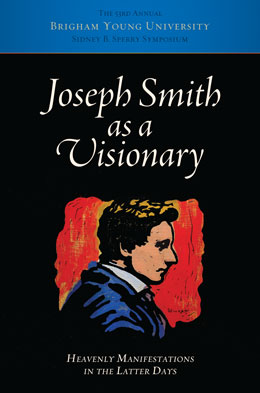
Jared Halverson, "'Covering the Seers': Antivisionary Skepticism in the Days of Joseph Smith," in Joseph Smith as a Visionary: Heavenly Manifestations in the Latter Days, ed. Alonzo L. Gaskill, Stephan D. Taeger, Derek R. Sainsbury, and Roger G. Christensen (Provo, UT: Religious Studies Center, Brigham Young University, 2004), 31–52.
Jared Halverson is an associate professor of ancient scripture at Brigham Young University.
When Joseph Smith emerged from a grove just made sacred, he stepped into a world in which visionary experiences were being hotly contested. Seekers versus skeptics, revivalists versus rationalists—each side questioned the other in a larger “war of words and tumult of opinions” that pitted the Second Great Awakening against the American Enlightenment.[1] Yes, revivalism was ablaze in many of America’s “burned-over districts,” but secular “freethinkers” were forming bucket brigades in hopes of dousing the fires of faith. Thus, claiming visions “in the age of railways,” as Charles Dickens famously scoffed,[2] Joseph Smith was caught squarely within these cultural crosshairs. While much has been written concerning the influence of revivalism and visionary culture on the young Joseph—some to emphasize his uniqueness and some to dismiss him as merely derivative—less attention has been paid to the culture of antivisionary skepticism in which the First Vision occurred.[3]
But ponder this question: What would it have meant for Joseph Smith to be defined as a visionary when visionaries were being defined (in the new American Dictionary no less!) in decidedly negative terms? Even as committed and conservative a Christian as Noah Webster leaned in the skeptical rather than spiritual direction when including visionary in his 1828 dictionary. As an adjective, visionary meant “affected by phantoms; disposed to receive impressions on the imagination”; it described something “imaginary; existing in imagination only; not real; having no solid foundation.” As a noun, it fared no better, for a visionary was “one whose imagination is disturbed; one who forms impracticable schemes; one who is confident of success in a project which others perceive to be idle and fanciful.”[4] Even in an age of religious revivalism, by “continu[ing] to affirm that [he] had seen a vision” (Joseph Smith—History 1:27), Joseph Smith was making a courageous, countercultural claim.
By way of context, consider the experience of Solomon Chamberlin, who, having heard rumors of a “Gold Bible” during his travels through Palmyra, New York, made his way to the home of Joseph Smith Sr., and found Hyrum fretfully “walking the floor.” Sensing Hyrum’s apprehension, the stranger offered a salutation—“Peace be to this house”—intended to calm Hyrum’s fears, followed by a question that revealed Solomon’s own: “Is there anyone here that believes in visions or revelations?” Hyrum’s answer was brief, but direct and reassuring. “Yes,” he said, “we are a visionary house.”[5]
Chamberlin was a visionary himself, having had visions of both hell and heaven—“three heavens, and their glories,” in fact—during his early adulthood, and another vision several years later of Christianity’s apostasy and imminent restoration. Informed by personal experience and his restorationist reading of the Bible, Chamberlin “believed in gifts and miracles,” but he was “much persecuted and called deluded” for his belief, which accounts for his cautious question. Reassured by Hyrum’s answer, Chamberlin shared a pamphlet recounting his visions and then requested, “If you are a visionary house I wish you would make known some of your discoveries, for I think I can bear them.”[6]
Chamberlin proved more than able to bear the Smiths’ “discoveries” and left Palmyra with the first sixty-four pages of the Book of Mormon, then being typeset on E. B. Grandin’s press. He later returned to the area to be baptized and then spent the rest of his life holding true to the visions that had prepared him to embrace the restored gospel. But return to his initial experience. To this spiritual seeker, visions were present realities, not relics of a bygone age, but to most of his contemporaries, they were cause for skepticism and even scorn. Consequently, Chamberlin was both ready and reluctant to share his visions with others. He hoped to find people who were open to the possibility of visions, and with the Smiths he found a “visionary house” indeed. Nevertheless, that he would seek this reassurance is proof that such houses were not easy to find.
Joseph Smith’s own experience further proves the point. When in 1820 he first shared “an account of the vision” he had experienced just a “few days” earlier, he was likewise met with hostile disbelief, and this from a Methodist minister who would have known well the preponderance of visions recorded in the Bible. Scriptural precedent notwithstanding, the minister said with finality that “it was all of the devil” and affirmed that “there was no such thing as visions or revelations in these days.” Such miracles were possible in biblical times, but “all such things had ceased with the apostles,” and “there would never be any more of them” (Joseph Smith—History 1:21).
Beyond this brief account, no records exist of Joseph sharing details of his First Vision with anyone before this chance conversation with a clergyman (the account of Joseph’s conversation with his mother directly following the vision is frustratingly nonspecific). Notably, therefore, the first recorded reaction to Joseph’s recounting of the vision was decidedly skeptical. Joseph himself was “greatly surprised” by this reaction (Joseph Smith–History 1:21), but as I will argue, it should not surprise us, for Joseph’s visionary experience occurred within a culture torn between the spiritual ecstasies of the Second Great Awakening and the antivisionary skepticism of the American Enlightenment. If backwoods revivalists had a hard time believing in visions, Joseph’s story would have been met with even stronger opposition from both the village atheist and the enlightened elite. Although visionaries like Solomon Chamberlin certainly existed (and often found their way into the fledgling Church),[7] Joseph Smith claimed visions in an age that was largely blind to the possibility of spiritual sight. As one preeminent scholar of the First Vision has noted, the “gap” between Joseph’s own experience and what his culture deemed possible “was too wide to reconcile,”[8] leaving Joseph (and those who believed him) to reject their culture’s antivisionary assumptions and leaving critics to reject Joseph’s visionary claims.
In the pages that follow, I will trace the sources of this antivisionary skepticism, which was largely a result of the European Enlightenment that had taken root in American soil. In short, reason was replacing revelation as the preferred source of knowledge, science was displacing spiritual sight, and commonsense realism was being enlisted to police the boundaries of acceptable religious experience. To reprise Isaiah, large swaths of American culture were “say[ing] to the seers, See not” (Isaiah 30:10), and in sorrowful response, God seemed to be “clos[ing the] eyes” of the people and “cover[ing]” the eyes of “the seers” (29:10). That Joseph could hold firm to his experience, and that seekers could accept his account for themselves, evinces a countercultural courage that ought to inspire our own.
“Lightly, [and] with Great Contempt”
A good place to begin searching for overlooked details is Joseph’s negative experience with the Methodist minister. For example, by saying that Joseph’s vision was “of the devil,” the minister implied belief in a devil who could deceive, while casting doubt on a God who could openly reveal himself in postbiblical times. No wonder Ralph Waldo Emerson complained less than two decades later that “the doctrine of inspiration is lost,” with “miracles [and] prophecy . . . exist[ing] as ancient history merely.” Such means of spiritual insight, Emerson lamented, were no longer “in the belief, nor in the aspiration of society; but, when suggested, seem ridiculous.” According to Emerson’s diagnosis, society in his (and Joseph Smith’s) day had become “near-sighted,” with even preachers wearing “bandages over [their] eyes,” rendering them unable or unwilling to entertain the possibility of spiritual sight. Unlike visionaries of the biblical past, moderns “cannot see in secret,” Emerson concluded, leaving them only one other option: “they love to be blind in public.”[9]
Beyond revealing his own “public blindness,” the minister’s negative reaction is also notable for the forms of opposition that took shape, for they suggest (whether intentionally or unintentionally) a two-pronged approach in countering Joseph’s claims. Notice the following pairings in Joseph’s history: the clergyman “treated [the account] not only lightly, but with great contempt”; it excited both intangible “prejudice” as well as visible “persecution.” Joseph felt like Paul before him, of whom “some said he was dishonest, others said he was mad,” and thus “he was ridiculed, and reviled” (Joseph Smith—History 1:21–24).
What each of these pairs suggests is that Joseph’s visionary claims elicited both determined opposition and belittling scorn (recall that Chamberlin was likewise “persecuted and called deluded,” which shows the same dual response). One side of each pair reveals how seriously some people took things, as they opted for “persecution” urged on by “contempt.” The other side suggests that Joseph’s visionary claims needn’t be taken seriously at all, and could instead be treated “lightly” and dismissively “ridiculed.” Recall that Emerson said that such beliefs by his day “seem[ed] ridiculous” and therefore would have been rejected by most people out of hand.
By employing both rhetorical approaches—the strong-armed language of opposition as well as the lighthearted rhetoric of ridicule—Joseph’s critics could simultaneously maximize and minimize the perceived dangers his vision presented, persuading people either to clench their fists or shrug their shoulders, depending on their personality and preference.[10] Either way, Joseph’s visions would be refused a fair hearing. In the case of Paul’s vision, if he were being “dishonest,” he should be openly opposed, but if he were merely “mad,” he could be laughed at and let go, a harmless lunatic rather than a dangerous impostor. In the case of Joseph’s vision, the same possibilities applied: the devil’s delusions must be countered, but boyish imaginings could be ridiculed and quickly dismissed.
Joseph faced both forms of opposition: “great persecution, which continued to increase,” as well as “a great deal of prejudice against me,” which informed every negative response. Prejudice suggests a prejudgment, an opposition that was already inborn by the time Joseph started speaking of his vision, and it was found not only in “professors of religion” of “all the sects,” but in “men of high standing” in society and even in the “public mind” itself (Joseph Smith—History 1:22). What were the contributing sources of this popular antivisionary prejudice?
Losing Sight
Belief (and disbelief) in visions has a long and complex history, and the brevity of this study will not permit a comprehensive account. In broad strokes, however, history shows the currents of culture flowing toward more skeptical assumptions, though with eddies of belief that carried some people in countercultural directions. Ironically, it is today’s doubt, not yesterday’s faith, that is the anomaly. Through most of human history, people considered visions and dreams “a natural part of life, as common as the sun’s life-giving rays. People told their visions to one another around campfires, on pilgrimages. . . . Troubadours sang of visions. Preachers reminded people that visions could touch their lives. . . . Average people experienced visions frequently. The visions healed—and telling them and hearing them healed too.”[11]
Then again, as attested by Joseph Smith’s invocation of Paul, when it comes to claiming visions, skepticism seems as old as belief.[12] Indeed, within a generation of Adam and Eve’s reassuring visions that followed the Fall—through which Adam rejoiced that his “eyes [were] opened” and that “in the flesh [he would] see God” (Moses 5:10)—Satan was going forth commanding people to “believe it not; and they believed it not” (Moses 5:13). Joseph’s dreams (or “visions of the night,” as the Bible often calls them[13]) roused the opposition of his brothers (Genesis 37:5, 8, 19–20), and young Samuel was hesitant to “shew . . . [his] vision,” fearing the reaction it would likely produce (1 Samuel 3:15). When Paul related his vision, Festus responded, “Much learning doth make thee mad” (Acts 26:24), a prelude of criticism yet to come regarding the visions of Joseph Smith.
In postbiblical history, visionaries often fared no better. Polycarp in the second century and Perpetua and Saturus in the third all ended up martyrs at the hands of Rome, and though they were not killed specifically for their visions, spiritual sight was a gift these martyrs each claimed. Irenaeus, Clement, Origen, and Tertullian wrote positively of visions, but typically to defend their beliefs against the skepticism of critics, even as they worked to counter what they considered Gnosticism’s visionary excess.[14] Cyprian, bishop of Carthage in the third century, captured the antivisionary skepticism of his day when he admitted that “to some men dreams seem ridiculous and visions foolish,” yet his faith in these phenomena remained unshaken.[15]
In contrast, Catholicism has a rich history of taking postbiblical visions seriously, with many of its most notable theologians and time-honored saints being visionaries themselves. In fact, from Augustine on, Catholic thought has divided visions into three types: the corporeal, in which “a supernatural manifestation” is perceived by “the eyes of the body”; the imaginative, in which “the sensible representation of an object” is perceptible to the “imagination alone, without the aid of the visual organ”; and the intellectual, in which some divine reality (be it object, personage, or ineffable truth) is perceived “without a sensible image,” but with a knowledge that “exceeds the natural range of the understanding.”[16]
Distinguishing clearly among the three can be difficult, as when Paul related his vision of “the third heaven” but wondered whether it occurred “in the body, or out of the body, I cannot tell: God knoweth” (2 Corinthians 12:2–3). Joseph Smith himself repeated identical language when he “beheld the celestial kingdom of God, and the glory thereof” in a vision within the Kirtland Temple in 1836 (Doctrine and Covenants 137:1). Such visionary experiences go beyond mortal comprehension and often elude verbal explanation. Lehi and Alma used language like “methought I saw” to describe their visions (1 Nephi 1:8; 8:4; Alma 36:22), and other visionaries either lamented over their inability to describe their visions or reported that they had been commanded not even to try (see Ether 12:25; 1 Nephi 14:25; 2 Nephi 4:25; 3 Nephi 26:18; 2 Corinthians 12:4; Revelation 10:4).
The inability to explain visions often led to others’ unwillingness to believe in them, especially when they occurred along sectarian lines. During the Protestant Reformation and Catholic Counter-Reformation of the sixteenth century, church authorities began curtailing the sharing of visions. Catholics condemned Protestant visionaries and Protestants did the same in return, each anathematizing the other whenever a vision seemed to affirm a rival position. Protestantism, with its emphasis on scripture and its rejection of Catholic priesthood, found it easier to condemn postbiblical visions in general, preferring to hold to a more rational biblicism instead. As Martin Luther affirmed, “I have often stated that at the beginning of my cause I always asked the Lord not to send me dreams, visions, or angels” because he couldn’t be sure of their source. Preferring the clarity of scripture, he said at one point, “I care nothing about visions and dreams,” which he elsewhere labeled “monstrous things.”[17]
The Reformation had opened a Pandora’s box of spiritual possibilities, however, and the more moderate forms of Protestantism that took root in England and much of Europe had to distance themselves not only from the “superstition” of institutional Catholicism at one extreme, but from the “enthusiasm” of charismatic offshoots at the other. Enthusiasm, which etymologically means “God within” (en-theos), became an increasingly derogatory term, reserved for the kinds of religious lunatics that would claim that God was inspiring, conversing with, or appearing to them. Since settled authorities could not control visionary experience, they chose to condemn it instead.
If Protestantism was reining in visionary belief out of religious concern, the Enlightenment was weakening it because of intellectual worries. Galileo was having “visions” through his telescope that threatened to overturn religious assumptions, and Isaac Newton, who was born the year of Galileo’s death, began unveiling the mysteries of the universe in ways that Christianity had never imagined. Caught up in this surge of human knowledge, religious belief began divesting itself of its less rational features, until even the clergy began “revising belief to fit the new intellectual style,” which valued reason over revelation and scientific empiricism over divine encounter. The same period witnessed an explosion of Christian mysticism, but even this seemed reactionary, a last desperate gasp of a worldview that lay dying.[18]
Predictably, the waxing of the scientific method mirrored the waning of more spiritual approaches to knowledge, until theology went from the “queen of the sciences” to being little more than court jester bowing before “natural philosophy,” the newly crowned king. In the words of one student of the subject, “Talk of visions went underground, at least in polite company, with the rise of modern science. . . . Intellectuals and opinion makers came to view visions as an embarrassment”—an “extraordinary exception to the rigid ‘laws of nature’”—and began to meet them not with awe or interest, but with skeptical frowns or nervous laughter.[19]
The Rhetoric of Ridicule
Laughter, in fact, began playing a major role in policing the boundaries of what was considered socially acceptable during the Enlightenment, and visions were not immune to its comic attacks. Thomas Hobbes had defined laughter as “sudden glory” taking pride over “some deformed thing in another,” an apt encapsulation of the superiority theory of humor.[20] This was later joined (and largely replaced) by the incongruity theory of humor, in which laughter arises from some unexpected juxtaposition that provides an enjoyable cognitive shift. But whether perceiving a deformity or discovering an absurdity, laughter was not simply reactive; in its weaponized form (ridicule), it could also be proactive, suggesting deformities and implying absurdities, with the contagion of laughter inducing others to signal agreement by laughing along.[21]
Hobbes is worth mentioning here not solely because of his thoughts on laughter, but also because of his largely dismissive approach to visions. Pretending to be more orthodox than he really was, Hobbes conceded God’s ability to “speak to a man, by Dreams, Visions, Voice, and Inspiration,” but affirmed that God “obliges no man to believe he hath so done to him that pretends it; who (being a man), and (which is more) may lie.” After all, Hobbes added, for a man “to say he hath seen a Vision, or heard a Voice, is to say, that he hath dreamed between sleeping and waking: for in such manner a man doth many times naturally take his dream for a vision, as not having well observed his own slumbering.”[22] Thus reducing visions to dreams and calling into question the validity of both, Hobbes left readers wondering why visionary claims should be taken seriously. Far better to laugh them out of countenance instead.
A similar combination of comic theorizing and antivisionary skepticism appeared a century later in the writings of Anthony Ashley Cooper, more commonly known as the Third Earl of Shaftesbury. His famous “Letter Concerning Enthusiasm” and “Essay on Freedom of Wit and Humour” were reprinted in his Characteristics of Men, Manners, Opinions, Times (1711), one of the most popular books of the eighteenth century, and both defended ridicule even when laughter came at religion’s expense. Shaftesbury famously recommended ridicule as an objective test of truth, naively overconfident that charges of absurdity would only adhere to things that common sense deemed deserving of mockery. Of course, in his estimation (and that of many of his Enlightenment peers), supernatural visions should be included in the list of ridiculous things.
Thus Shaftesbury applauded classical Greece and Rome for magnanimously tolerating “visionarys and enthusiasts of all kinds,” but saved his loudest praise for the ancients’ courage to “use all the force of wit and raillery” against them.[23] In speaking of the past, Shaftesbury was actually addressing the present: ancient restraint was a nod to Britain’s own Toleration Act of 1688, and defending Greek and Roman “raillery” was a call for similar comic assaults on the French Prophets and similar enthusiasts in Shaftesbury’s day. Closer to deism than the orthodox Christianity he pretended to defend, Shaftesbury had at one point snapped out of an early brush with divinity by asking himself, “Dost thou, like one of those visionaries, expect to see a throne, a shining light, a court and attendance? Is this thy notion of a presence? . . . —Wretched folly!”[24]
By the eighteenth century (when Shaftesbury was writing), even orthodox clergymen were distancing themselves from claims of visionary interaction with the divine, aiming for a middle way between the opposite excesses of Catholicism and enthusiasm. Anglican Jonathan Swift, for example, lampooned both sides in his satirical Tale of a Tub (1704), where he argued that “cant and vision are to the ear and the eye the same that tickling is to the touch.” And if tickled, why not laugh? Ridicule would help call people back from such reveries, which Swift mocked as being induced by “artificial mediums, false lights, refracted angles, varnish and tinsel.”[25] Elsewhere he warned enthusiasts to keep such absurdities to themselves: “If he hath any new visions of his own, it is his duty to be quiet, and possess them in silence, without disturbing the community by a furious zeal for making proselytes.”[26]
Even religious revivalists were wary of the visionary experiences their zealous emotionalism tended to produce. In the “holy fairs” that affected tens of thousands in mid-eighteenth-century Scotland, participants frequently testified of seeing visions, yet when the manuscripts recounting these revivals were edited, clergymen cut out those visionary portions, afraid of the “charges of enthusiasm and disorder” they would otherwise face. What editors did leave unredacted were the far less frequent disavowals of such experiences, whether the people’s (“I never swarfd nor faintd any Nor had I ever any visions”) or the editors’ own (“There is something Visionary in this mans experiences,” and I “doubt if it be proper to publish them”).[27]
America’s greatest revivalist during this period, Jonathan Edwards, showed similar unease during the spiritual outpourings of the First Great Awakening. He perceived in converts “a new spiritual sense,” but he was careful to affirm that “this new sense is not an ability to have visions, or to gain new information that goes beyond Scripture.”[28] In this Edwards was following the lead of his Puritan ancestors, who lived in what one historian called “a world of wonders” yet largely “dropp[ed] from their histories the visions, cures, and other miracles found in legends of [Catholic] saints.”[29] Even when they did claim visions, they were “very careful in the language they used to describe their visionary experiences, always conscious of the porous line separating faith from superstition.”[30]
Frequently targeted for antireligious ridicule during this period were the Methodists. Mercilessly mocked in London’s popular press and embarrassingly presented in the pictorial satire of William Hogarth, Methodists were the laughingstock of mid-eighteenth-century Great Britain, lampooned in scores of satirical works bearing such titles as The Fanatic Saints, The Spiritual Quixote, A Fine Picture of Enthusiasm, and The Comic Frogs Turned Methodist. The onslaught was so intense that one anti-Methodist satirist had to defend his approach—Shaftesbury-like—by reaffirming that “Irony and Banter seem best adapted to ridicule such Visionarys, who are declared Enemies of all Reason and Learning.” How else might one combat a group of enthusiasts that “go by nothing but puffs, dreams, visions, reveries, voices, &c. &c.”?[31]
John Wesley, the founder of Methodism, was all too aware of the ridicule aimed at his movement and pushed back against it in a variety of ways. One of the most revealing was in a defense of an earlier group of visionaries (the second-century Montanists) who faced opposition similar to what the Methodists were then enduring. “The grand reason why the miraculous gifts were so soon withdrawn,” he argued, comparing biblical to postbiblical days, “was not only that faith and holiness were well nigh lost; but that dry, formal, orthodox men began even then to ridicule whatever gifts they had not themselves, and to decry them all as either madness or imposture.”[32] In defending the Montanists, Wesley defended the Methodists; and in attacking their critics, he targeted his own. Spiritual gifts (including visions) should be a mark of true Christianity; their absence was evidence of a dry formalism devoid of holiness and faith.
Ironically, wrote one observer, “Methodism would eventually acquire cultural and social respectability in the nineteenth century, but not until it distanced itself from the kind of spirituality that gave it its unique character in the eighteenth century.” George Eliot, for example, cast a pair of Methodists as characters in her novel Adam Bede, but they were “not indeed of that modern type which reads quarterly reviews and attends in chapels with pillared porticoes”; rather, “they believed in present miracles, in instantaneous conversions, in revelations by dreams and visions.” In short, they were “of a very old fashioned kind,” the kind that had historically been mocked and marginalized.[33]
What Eliot had perceived was the “allure for respectability” that historian Nathan Hatch named as a nearly irresistible force pulling nineteenth-century American religion closer to an acceptable mainstream.[34] Though not completely free of its less respectable past, the Methodism of Joseph Smith’s day was no longer being ridiculed as intensely, and instead was ridiculing others that resembled its former, more visionary self. There is irony, therefore, and perhaps some embarrassment, in the Methodist minister’s reaction to Joseph’s talk of visions. It seems an example of what Freud called “the narcissism of small differences,” for nineteenth-century American anti-Mormonism bears a striking resemblance to eighteenth-century British anti-Methodism. Wesley’s heirs had moved from spiritual fringe to rational mainstream, opening space that Joseph’s more supernaturally inclined followers were starting to occupy.[35]
Doubting Thomas
Pivoting from Europe to America and from the eighteenth century to the nineteenth, we turn to the history of antivisionary ridicule, which is best embodied by Thomas Paine. Although Paine was rightly honored for his revolutionary pamphlet Common Sense and its rejection of hereditary monarchy, by the end of his life he was excoriated by Christians for his book The Age of Reason, which made revealed religion an object of withering satire and merciless scorn. Arguably the most popular and effective piece of antireligious polemic ever written, it spread across America like wildfire, appearing in more than twenty editions in the decade that passed between its initial appearance and the birth of Joseph Smith. Indeed, as an alarmed local minister fretted, it was “greedily received in Vermont”[36] (Joseph’s birthplace) and was hungrily consumed from the Eastern Seaboard to the rural frontier. One copy even found its way into the hands of a young Joseph Smith (soon-to-be father of a son by the same name) when his own father, a Universalist, angrily threw it at him to keep him from joining the Methodists, which it did.[37]
Throughout The Age of Reason, Paine made a mockery of what he called “the three frauds, mystery, miracle, and prophecy,” which the Christian clergy had long used as evidences to defend the faith. He also took aim at “what is called revelation” and wrote at length to show “the absurd misapplication of that term to the books of the Old Testament and the New.” Visions could fall under any of these headings, but Paine dismissed them all while facetiously allowing for their possibility since “to the Almighty all things are possible.” He forcefully declared, “I totally disbelieve that the Almighty ever did communicate any thing to man, by any mode of speech, in any language, or by any kind of vision, or appearance.”[38]
But what of biblical prophets? In Paine’s framing, they were merely poets and musicians, wandering minstrels and nothing more. It was only fraud, ignorance, and superstition that “elevated those poetical, musical, conjuring, dreaming, strolling gentry, into the rank they have since had.” When it came to visions, anyone “supposed to have a visionary insight into concealed things, was not a prophet but a seer” anyway, a term that “became incorporated into the word prophet” once “the word seer went out of use (which most probably was when Saul banished those he called wizards).” Prophets were thus part minstrel and part magician, but they were all “impostors and liars,” as Paine persuasively framed them.[39]
As for their visionary claims, these men “amused themselves with dreams and visions,” so why not have fun with them as well? As Paine affirmed, these so-called prophets were merely claiming visions for self-protection anyway, “pretend[ing] to have dreamed dreams, and seen visions, because it was unsafe for them to speak facts or plain language.” In this rendering, visions were nothing more than “a disguised mode of correspondence” that “served them as a cypher, or secret alphabet,” which at least gave the prophets a little credit. “If they are not this,” Paine concluded wryly, “they are tales, reveries, and nonsense; or at least a fanciful way of wearing off the wearisomeness of captivity; but the presumption is, they are the former.”[40]
In The Age of Reason and in subsequent antireligious writings, no biblical figure was safe from Paine’s rhetoric of ridicule. He dismissed Ezekiel’s “pretended dreams and visions” and complained that they led to “romantic interpretations and applications” that were as “wild as the dreams and visions they undertake to explain.” He called the author of 1 and 2 Thessalonians either “a visionary enthusiast, or a direct impostor.” Paul’s vision on the road to Damascus was a mere “story” and had “nothing in it miraculous or extraordinary; [Paul] escaped with life, and that is more than many others have done, who have been struck with lightning.” Paine even ridiculed the Resurrection, calling “the story of Jesus Christ appearing after he was dead” nothing more than a “story of an apparition, such as timid imaginations can always create in vision, and credulity believe.” Each postmortal appearance was but “an unsubstantial vision,” a tall tale “told with that strange mixture of the natural and impossible, that distinguishes legendary tale from fact.” The doctrine of the Resurrection was such a “miserable conceit” that only a Christian “visionary” could entertain the thought, and the doctrine of the Atonement was embarrassingly “visionary” as well.[41]
As this last example suggests, visionary in Paine’s hands became a term of derision, a pejorative adjective meant to describe anything he considered so inconsequential as to be automatically dismissed. He used it as such even in nonreligious contexts. In Common Sense, for example, he blasted Great Britain for its political overreach and wrote that “to say they will never attempt it again is idle and visionary.” In The American Crisis, he mocked the ineptitude of General Howe and labeled his military strategy “merely visionary.” In a later Crisis paper Paine laughed at Howe’s “vision of pleasurable delusion” and with a hint of anticlericalism linked it to “the farcical benedictions of a bishop” and “the cringing hypocrisy of a court of chaplains.” In an essay attacking the English financial system, Paine decried “the visionary basis upon which the funding system is built,” just as he derided in The Age of Reason “the wild and visionary doctrine” that had been built upon “the fable of Jesus Christ.” Predictably, Christians eventually branded Paine blasphemous, but he remained completely undisturbed since “the charge of blasphemy” was itself “visionary and groundless” and therefore not to be taken seriously.[42]
To the end of his life, Paine remained unwilling to place any faith in “the authority of books, whether called Bibles or Korans, nor yet on the visionary authority of dreams.” In light of the sublimity and grandeur of the Creation, Paine argued, it seemed unreasonable that God would ever “descend to the expedient of visions and revelations, granted sometimes to boys for the instruction of the elders, and sometimes to women to settle the fashion and length of their veils.” In Paine’s rendering, it seemed ridiculous that God would rely on means “so precarious, unsatisfactory, and inadequate, as the extacies of women and boys, and the visions of interested priests, which were derided at the very time by men of sense to whom they were proposed.”[43]
Here Paine revealed the rhetorical strategy he’d been employing all along: derision by a man of sense (his book proclaimed an age of reason after all). As an heir of the Enlightenment—a man of reason in full possession of God-given common sense—Paine was not so naive as to accept a childish confidence in visions or dreams. Whether waking or asleep, he argued, during such moments “the judgment . . . goes to sleep” and the mind fills with “a riotous assemblage of misshapen images and ranting ideas.” With the rational mind “in a state of absence,” Paine mocked, “the master of the school is gone out and the boys are in an uproar.”[44]
By the time of the First Vision, visions and visionaries had been suffering at the hands of Thomas Paine for a quarter century. Though Paineite skepticism had waned during the Second Great Awakening (lasting roughly from 1800 to 1830 and seen by some as a counteroffensive to reclaim Paine’s spiritual victims), it was soon to have an American renaissance, ushering in a second phase of organized freethought in the United States.[45] It was during these years that the Restoration’s visionary claims found a determined and derisive opposition. From Paine skeptics had learned to mock what they doubted and, in doing so, to shame their opponents into agreement, or at least into embarrassed silence. Stung by this sarcasm and scorn, even erstwhile believers were cowed—or even counseled—to keep such experiences to themselves. As the Connecticut Evangelical Magazine implored in the year of Joseph Smith’s birth, “Have persons remarkable views of the invisible world, in dreams or visions, let them like Mary, keep all these things, and ponder them in their heart . . . but never make them known to any one, as some new revelation from heaven.”[46]
Courage in the Face of Criticism
At the dawn of the nineteenth century, “American revivalism had a tendency to involve dreams, visions, apparitions, and physical manifestations of divine intervention,”[47] wrote a historian of the period, yet clergymen continued to minimize the visionary in order to emphasize the rational instead. Rationalism was gendered masculine while emotionalism was gendered feminine, accounting for the timeworn jokes that religious fanatics were “old women of both sexes” and that clergymen formed a third gender altogether.[48] According to mainstream Protestantism’s manly self-perception, it was Catholicism, enthusiasm, and feminism that were “indulgently visionary,” an insult no self-respecting American could dispassionately abide.[49]
It was often the ridicule of skeptics that people most feared. As one expert observed, “We can hear the snickers of a large but invisible audience of readers and writers, those who made it a popular pastime in Britain and the United States to satirize religious enthusiasm as an embarrassing holdover from a more primitive age.”[50] In a telling example, one early nineteenth-century visionary published an account of his visions only to have a subsequent vision that informed him that people had “shamefully abused the books” that had just been printed. Sure enough, when he returned to the bookseller he found a copy in which a skeptical reader had scribbled, “In my opinion the author of this pamphlet is deranged, and is full of notions as a horse is of hay, and I think he had better keep his dreams to himself than to publish them to the world.” Initially embarrassed, the man eventually mustered the courage to write another volume of Visionary Thoughts, but this time he braced himself for what he knew was coming, writing, “He that is disposed to laugh, let him laugh.”[51]
Against this backdrop of antivisionary ridicule, the Restoration burst forth with Joseph Smith’s vision of the Father and the Son. Visions of angels and resurrected beings followed in fairly rapid succession, and later came visions of God as well as Satan, sons of perdition as well as degrees of heavenly glory, repeated openings of the heavens that invited the opening of every spiritually blind eye. As an Ohio minister reported in 1836, “The fundamental principle of Mormonism is, that God continues to hold intercourse with the saints on earth by visions and revelations, as freely and familiarly as he has done in any age of the world.”[52]
Unusual in his general objectivity, this clergyman avoided the sensationalism and sarcasm that characterized most of the antivisionary rhetoric of his day. Most people were not so restrained, and they ridiculed the thought of visions occurring in the rational light of an enlightened age. One critic held that it was only “ignorant and visionary people” that accepted the Book of Mormon.[53] Another remarked that if anyone predicted that Smith’s movement would ever be taken seriously, “we should have thought him a visionary enthusiast.”[54] Yet another dismissed one of Smith’s followers as one who “had always been a firm believer in dreams, and visions, and supernatural appearances, such as apparitions and ghosts, and therefore was a fit subject for such men as Smith and his colleagues to operate upon.”[55]
By the time of the Restoration, skeptics, rationalists, and even respectable Christians had grown accustomed to reducing visions to the absurd. As Joseph’s brother William reported, “Owing to the persecution of the religious world in consequence of Joseph’s visions, . . . our neighbors conceived an antipathy against us, calling us all manner of names, such as . . . ‘angel-believers,’ . . . ‘visionary men,’ etc.” Cultural assumptions were such that “we were all very much scoffed at and persecuted during all this time, while Joseph was receiving his visions.”[56]
These negative reactions were as surprising to William as those of the Methodist minister had been to Joseph, for as William affirmed, “Bible believers should know that the whole Scripture Revelation is founded upon visions and dreams, and angel visits to man. And why should not God send angels to deliver messages to his servants in these latter days, as well as in olden times.”[57] Such was the feeling of those believers who found their way into the Church, but this was a decidedly countercultural stance, and it took courage to embrace it amid the sneers of a skeptical public. As one cynical witness said of a visit from a Latter-day Saint missionary, when the elder mentioned that Joseph Smith had seen an angel, he “looked around him apparently to see if the credulity of the people in this enlightened age could be thus imposed upon.”[58]
The sources of skepticism examined here made Joseph’s sharing of his visions an act of courage and the early Saints’ belief in those visions an act of faith. The Reformation had largely sealed visions into a biblical box, the Enlightenment had enthroned reason over revelation, and secular scoffers had enlisted nonsense to police the porous borders of a culturally contingent common sense. Antivisionary doubt had become society’s default position, as it largely remains in the modern world today.
Conclusion
If conclusions allow authors to become slightly more personal, may I relate that over the past decade in my countless conversations with people in faith crisis, visions are still often questioned, but in a particular way. Many, for example, raise legitimate concerns about what they perceive as discrepancies between the multiple accounts of the First Vision Joseph Smith recorded or related during his lifetime, a matter that Latter-day Saint historians—and the institutional Church itself—have been addressing for decades.[59] Occasionally, when speaking with people who openly criticize the existence of multiple and ostensibly contradictory accounts, and after acknowledging their concerns, I ask if they believe in the possibility of visions in the first place. In most cases they admit that they do not, which means that their real issue is not that Joseph Smith gave multiple accounts of the First Vision, but that he gave any account at all.
In other words, doubts over details in the reports of Joseph’s visions often mask a more general skepticism regarding the possibility of visions to begin with, which, as this study has shown, is understandable given our post-Enlightenment cultural context. With this understanding comes the realization that before addressing these legitimate a posteriori questions, we must first interrogate the a priori assumptions that incline the person toward antivisionary doubt.[60] As President Dallin H. Oaks has counseled, when discussing our differences it is better to identify underlying premises than to argue over subsequent conclusions. While “this won’t elicit agreement from persons who don’t share our faith, . . . it can move the discussion away from arguing over conclusions to identifying the real source of disagreement.”[61]
By understanding the antivisionary skepticism that Joseph Smith and the early Saints had to overcome in their day, modern Saints can better understand how to navigate similar skepticism in our own. To borrow from President Oaks, ours is a different premise, informed not only by our belief in the visionary accounts recorded in ancient scripture, but by our faith in the promise that the heavens remain open today. Among other spiritual gifts we continue to proclaim, a belief in visions remains explicit in the seventh of our thirteen canonized articles of faith.
When Joseph Smith finally began publishing the account of his early visions in 1838, he did so, in part, “to disabuse the public mind” (Joseph Smith—History 1:1) not only of its flawed impressions concerning his reputation, but also of its false assumptions regarding the possibility of visions. He held to Joel’s prophecy that in the last days God would “pour out [his] spirit upon all flesh; and your sons and your daughters shall prophesy, your old men shall dream dreams, your young men shall see visions” (Joel 2:28). He had been one of those “young men,” and he refused to allow threats of persecution, let alone the rhetoric of ridicule, to scare him or shame him into denying his own experience. As he later said to Josiah Quincy in the face of skepticism of a different sort, “Remember, I am a prophet!” Joseph knew what people thought, but he knew what he was and what he had experienced. Struck by Joseph’s confidence, Quincy praised him for his “keen sense of the humorous aspects of his position.” His bold declaration, Quincy recalled, as anachronistic and impossible as it seemed, was “spoken in a rich, comical aside, as if in hearty recognition of the ridiculous sound they might have in the ears of a Gentile.”[62]
Ridiculous perhaps, but Joseph held to it nonetheless. Despite the backdrop of antivisionary skepticism and in the face of a shame-inducing rhetoric of ridicule, “Joseph Smith never bowed to the dominant culture’s idols of respectability.”[63] Instead, he bowed before the God he had seen in vision, and continued to affirm that fact. “I have actually seen a vision,” Joseph declared, “and who am I that I can withstand God, or why does the world think to make me deny what I have actually seen? For I had seen a vision; I knew it, and I knew that God knew it, and I could not deny it, neither dared I do it; at least I knew that by so doing I would offend God, and come under condemnation” (Joseph Smith—History 1:25). Instead, Joseph chose to offend his neighbors’ sensibilities and come under the condemnation of his Enlightenment age. Courageously and counterculturally, in the face of skepticism “both religious and irreligious,” Joseph not only “continued to affirm that [he] had seen a vision” (v. 27) but helped others embrace a visionary faith of their own. To the end of his life, he made it his “meditation all the day & more than [his] meat & drink to know how [he should] make the saints of God to comprehend the visions that roll[ed] like an overflowing surge before [his] mind.”[64]
Notes
[1] See Henry F. May, The Enlightenment in America (New York: Oxford University Press, 1976); Robert A. Ferguson, The American Enlightenment, 1750–1820 (Cambridge, MA: Harvard University Press, 1997); Leigh Eric Schmidt, Hearing Things: Religion, Illusion, and the American Enlightenment (Cambridge, MA: Harvard University Press, 2000); Jonathan I. Israel, Radical Enlightenment: Philosophy and the Making of Modernity, 1650–1750 (New York: Oxford University Press, 2001); and Christopher Grasso, Skepticism and American Faith: From the Revolution to the Civil War (New York: Oxford University Press, 2018).
[2] Charles Dickens, “In the Name of the Prophet—Smith!,” Household Words 3, no. 69 (July 19, 1851): 385.
[3] On the historical context of the First Vision, see, for example, Rachel Cope, “The First Vision within the Context of Revivalism,” in Joseph Smith and His First Vision: Context, Place, and Meaning, ed. Alexander L. Baugh et al. (Provo, UT: Religious Studies Center, Brigham Young University; Salt Lake City: Deseret Book, 2021); Richard Lyman Bushman, “The Visionary World of Joseph Smith,” BYU Studies 37, no. 1 (1997–98): 183–204; and Samuel Alonzo Dodge and Steven C. Harper, eds., Exploring the First Vision (Provo, UT: Religious Studies Center, Brigham Young University; Salt Lake City: Deseret Book, 2012). On skeptical responses to the spiritual claims of Joseph Smith and the early Latter-day Saints (including the First Vision), see J. Spencer Fluhman, “A Peculiar People”: Anti-Mormonism and the Making of Religion in Nineteenth-Century America (Chapel Hill: University of North Carolina Press, 2012), 49–78.
[4] Noah Webster, An American Dictionary of the English Language (New York: S. Converse, 1828), s.v. “visionary,” https://
[5] Solomon Chamberlin autobiography, circa 1858, MS 5886, Church History Library, The Church of Jesus Christ of Latter-day Saints, Salt Lake City, UT, 8.
[6] Chamberlin autobiography, 2, 5, 9–10. For more on Solomon Chamberlin, see Larry C. Porter, “Solomon Chamberlin’s Missing Pamphlet: Dreams, Visions, and Angelic Ministrants,” BYU Studies 37, no. 2 (1997–98): 113–40.
[7] See Steven C. Harper, “Infallible Proofs, Both Human and Divine: The Persuasiveness of Mormonism for Early Converts,” Religion and American Culture: A Journal of Interpretation 10, no. 1 (Winter 2000): 99–118.
[8] Steven C. Harper, First Vision: Memory and Mormon Origins (New York: Oxford University Press, 2019), 10.
[9] Ralph Waldo Emerson, “An Address delivered before the Senior Class in Divinity College, Cambridge, July 15, 1838,” in Ralph Waldo Emerson, Nature, Addresses, and Lectures, rev. ed. (Boston: Houghton, Mifflin, 1886), 127, 142–43.
[10] Similar dichotomies are often employed in racist rhetoric, in which the targeted group is presented simultaneously as being both cunning and stupid, thus both an enemy to be feared and a joke to be laughed at. See Christie Davies, “Ethnic Jokes, Moral Values and Social Boundaries,” British Journal of Sociology 33, no. 3 (September 1982): 383–403. In scripture this dual approach often appears when prophets (or others) are both persecuted (the maximizing tactic) and mocked (the minimizing tactic); see, for example, Mosiah 15:5; Alma 5:30; Helaman 13:24; Ether 7:24; Mark 15:20.
[11] Eddie Ensley, Visions: The Soul’s Path to the Sacred (Chicago: Loyola Press, 2000), 11.
[12] See Jennifer Michael Hecht, Doubt: A History (New York: HarperCollins, 2004).
[13] See, for example, Genesis 46:2; Job 4:13; 33:15; Daniel 2:19; 7:2.
[14] For a compilation of statements on visions and dreams from various thinkers throughout Christian history, see appendix F of Mark and Patti Virkler, Dialogue with God: Opening the Door to Two-Way Prayer, rev. ed. (Alachua, FL: Bridge-Logos, 2005).
[15] Cyprian of Carthage, “Epistle to Florentius Pupianus, on Calumniators,” in Alexander Roberts, James Donaldson, and A. Cleveland Coxe, eds., Ante-Nicene Fathers, vol. 5 (Buffalo, NY: Christian Literature Publishing Co., 1886); https://
[16] Lucien Roure, “Visions and Apparitions,” in The Catholic Encyclopedia, vol. 15 (New York: Robert Appleton Company, 1912); https://
[17] Luther’s Works (Saint Louis: Concordia, 1955–1986), 7:119–20; 26:28.
[18] James Turner, Without God, without Creed: The Origins of Unbelief in America (Baltimore, MD: Johns Hopkins University Press, 1985), 23–24.
[19] Ensley, Visions, 8, 12.
[20] R. E. Ewin, “Hobbes on Laughter,” Philosophical Quarterly 51, no. 202 (January 2002): 29.
[21] On theories of humor, see Rod A. Martin, The Psychology of Humor: An Integrative Approach (Burlington, MA: Elsevier Academic, 2007); and Michael Billig, Laughter and Ridicule: Towards a Social Critique of Humour (London: SAGE, 2005).
[22] Thomas Hobbes, Leviathan, ed. C. B. MacPherson (New York: Penguin, 1985), 411.
[23] Anthony Ashley Cooper, Characteristics of Men, Manners, Opinions, Times, ed. Lawrence E. Klein (Cambridge: Cambridge University Press, 1999), 11.
[24] Anthony Ashley Cooper, “The Philosophical Regimen,” in The Life, Unpublished Letters, and Philosophical Regimen of Anthony, Earl of Shaftesbury, ed. Benjamin Rand (New York: Macmillan, 1900), 22.
[25] The Works of Jonathan Swift (Edinburgh: A. Donaldson, 1768), 1:134–35.
[26] Jonathan Swift, “Sermon upon the Martyrdom of King Charles I,” in The Works of Jonathan Swift (London: Henry Washbourne, 1841), 2:153.
[27] Leigh Eric Schmidt, Holy Fairs: Scotland and the Making of American Revivalism, 2nd ed. (Grand Rapids, MI: Eerdmans, 2001), 146–48.
[28] George M. Marsden, Jonathan Edwards: A Life (New Haven, CT: Yale University Press, 2003), 157.
[29] David D. Hall, Worlds of Wonder, Days of Judgment: Popular Religious Belief in Early New England (New York: Alfred A. Knopf, 1989), 75.
[30] Susan Juster, Doomsayers: Anglo-American Prophecy in the Age of Revolution (Philadelphia: University of Pennsylvania Press, 2003), 116.
[31] Albert M. Lyles, Methodism Mocked: The Satiric Reaction to Methodism in the Eighteenth Century (London: Epworth, 1960), 15–16, 21, 42, 172–83.
[32] John Wesley, Journals and Diaries, III (1743–54), vol. 20 of The Works of John Wesley, ed. W. Reginald Ward and Richard P. Heitzenrater (Nashville: Abingdon, 1991), 356.
[33] Brett C. McInelly, Textual Warfare and the Making of Methodism (New York: Oxford University Press, 2014), 145.
[34] Nathan O. Hatch, The Democratization of American Christianity (New Haven, CT: Yale University Press, 1989), 195.
[35] On this movement from periphery to center as a general trend in American religion, see Roger Finke and Rodney Stark, The Churching of America, 1776–2005: Winners and Losers in Our Religious Economy (New Brunswick, NJ: Rutgers University Press, 2005).
[36] Diary of Thomas Robbins, D.D. 1796–1854, vol. 1, 1796–1825 (Boston: Beacon, 1887), 17.
[37] Lucy Mack Smith, Lucy’s Book: A Critical Edition of Lucy Mack Smith’s Family Memoir, ed. Lavina Fielding Anderson (Salt Lake City: Signature, 2001), 291–92.
[38] Thomas Paine, The Age of Reason, vol. 4 of The Writings of Thomas Paine, comp. Moncure Daniel Conway (New York: G. P. Putnam’s Sons, 1893–1908), 183–84.
[39] Writings of Thomas Paine, 4:139–41.
[40] Writings of Thomas Paine, 4:143–45.
[41] Writings of Thomas Paine, 4:145–46, 347, 176, 169, 285, 320.
[42] Writings of Thomas Paine, 1:92, 223, 249; 3:302; 4:152, 224.
[43] Writings of Thomas Paine, 4:317, 409–10.
[44] Writings of Thomas Paine, 4:362.
[45] The first period of religious skepticism in America lasted from roughly 1750 to 1809 (the year of Thomas Paine’s death), with the second period beginning about 1825 and lasting until the Civil War. See Marshall G. Brown and Gordon Stein, Freethought in the United States: A Descriptive Bibliography (Westport, CT: Greenwood, 1978), ix.
[46] Connecticut Evangelical Magazine, March 1805, 349; cited in David F. Holland, Sacred Borders: Continuing Revelation and Canonical Restraint in Early America (New York: Oxford University Press, 2011), 128.
[47] Jon Butler, Awash in a Sea of Faith: Christianizing the American People (Cambridge, MA: Harvard University Press, 1990), 222.
[48] Juster, Doomsayers, 191; and Saba Holland, A Memoir of the Reverend Sydney Smith, ed. Sarah Austin (London: Longman, Brown, Green, and Longmans, 1855), 313.
[49] Jenny Franchot, Roads to Rome: The Antebellum Protestant Encounter with Catholicism (Berkeley: University of California Press, 1994), 71, 79.
[50] Juster, Doomsayers, 3.
[51] Juster, Doomsayers, 2.
[52] See Milton V. Backman Jr., “Truman Coe’s 1836 Description of Mormonism,” BYU Studies 17, no. 3 (Spring 1977): 353.
[53] Clericus, “Mormonism,” Christian Register (Boston) 15, no. 52 (December 24, 1936): 1; reprinted from the Hampshire Gazette, circa December 1836.
[54] “Mormonism,” Protestant Episcopalian and Church Register (Philadelphia) 5, no. 1 (January 1834): 8; reprinted from Maine Inquirer, circa January 1834.
[55] John A. Clark, “Gleanings by the Way. No. VI,” Episcopal Recorder (Philadelphia), September 5, 1840, 94.
[56] William Smith, William Smith on Mormonism: A True Account of the Origin of the Book of Mormon (Lamoni, IA: Herald Steam Book and Job Office, 1883), 12–13.
[57] William Smith on Mormonism, 4.
[58] “The Mormonites,” Christian Intelligencer and Eastern Chronicle (Gardiner, ME), November 18, 1831; reprinted from the Illinois Patriot (Jacksonville, IL), September 16, 1831.
[59] See, for example, James B. Allen, “Eight Contemporary Accounts of Joseph Smith’s First Vision—What Do We Learn from Them?,” Improvement Era, April 1970, 4–13; Dodge and Harper, Exploring the First Vision; Harper, First Vision: Memory and Mormon Origins; “First Vision Accounts,” Gospel Topics Essays, www.churchofjesuschrist.org/
[60] Historian Steven C. Harper raises the same issue in his essay “Evaluating Three Arguments against Joseph Smith’s First Vision,” in Dodge and Harper, Exploring the First Vision, 307–23.
[61] Dallin H. Oaks, “As He Thinketh in His Heart” (address to religious educators, February 9, 2013); www.churchofjesuschrist.org/
[62] Josiah Quincy, Figures of the Past, from the Leaves of Old Journals (Boston: Roberts Brothers, 1883), 397.
[63] Hatch, Democratization of American Christianity, 68.
[64] Joseph Smith, Journal, December 1842–June 1844, Book 2, 10 March 1843–14 July 1843, p. 144, www.josephsmithpapers.org. JSP transcription symbols have been omitted, and bracketed text is mine.
