
 menu icon in the top, right corner of the screen.
 icon above to close this box.
 icon at the bottom of the screen below the browser—if you don't see it, swipe up to unhide it.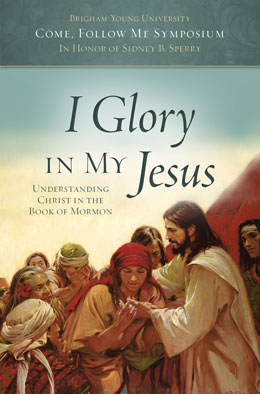
Jennifer C. Lane, "The Redeemer: Taking upon Him the Sins of the World," in I Glory in My Jesus: Understanding Christ in the Book of Mormon, ed. John Hilton III, Nicholas J. Frederick, Mark D. Ogletree, and Krystal V. L. Pierce (Provo, UT: Religious Studies Center, Brigham Young University; Salt Lake City: Deseret Book), 169–86.
Jennifer C. Lane is a Neal A. Maxwell Research Associate at the Maxwell Institute for Religious Scholarship and a professor emerita at Brigham Young University–Hawaii.
The biblical identification of the Lord Jehovah as the Redeemer of Israel and the redemption of Israel in the event of the Exodus are foundational for Book of Mormon prophets.[1] They knew that the covenant between Jehovah and the patriarchs created a family relationship in which he became the gōʾēl, or kinsman-redeemer, of Israel (see Exodus 6:3–6). [2] They knew that because the Lord remembered his covenant, he redeemed the Israelites from slavery to the Egyptians (see 1 Nephi 17:40; Deuteronomy 7:8). Their covenant identity gave them confidence that the Lord would remember them when they were in trouble or were separated from God.[3] They knew that covenants bound them to the Lord and his redeeming power.
In the Exodus, the redemption of Israel came after the destruction of the firstborn, the last of the plagues of Egypt and the one that finally persuaded Pharaoh to let the children of Israel leave their bondage (see Exodus 13:14–16). This redemption was connected to the blood of the lambs that were slain, providing protection for those Israelites who applied that blood to their doorposts and lintels (see Exodus 12:3–7, 12–13). While the Exodus pattern and covenant redemption have been explored, I believe that the connection between redemption and the blood of the Lamb in Book of Mormon teaching needs additional attention. Given the consistent language relating to applying the blood of the Lamb, or Christ, in the Book of Mormon, I believe that the Exodus Passover and then the temple sacrifices as a way for Israel to be redeemed, cleansed, and restored to God’s presence was a formative metaphor by which Lehi’s descendants understood redemption and the role of the Redeemer, primarily in terms of spiritual redemption.
The Book of Mormon brings together the identity of Christ both as Jehovah, the kinsman-redeemer of Israel, and as the prophesied suffering servant who would act to bring about a new exodus to allow for a redemption of the world from the bondage of sin. The writings of Isaiah, particularly Isaiah 40–55, look ahead to a new, larger scale exodus. These prophecies were critical for the early Christian understanding of Christ, and I believe we see the same understanding in the Book of Mormon prophets.[4]
In the Book of Mormon, the Passover image of applying the blood of the Lamb is understood to have cleansing power. The cleansing made possible by the blood of the Lamb is part of the prophets’ understanding of how this spiritual redemption would take place. We will see that they bring in the language of Isaiah 53 to see Christ’s redemption coming in his “taking upon himself” the sins of the world, allowing those who applied that sacrifice, his atoning blood, to become clean through him. In this paper I will explore the shift in understanding to a spiritual redemption and survey different phases of this teaching, including early Book of Mormon teachings, Abinadi’s witness, Alma and Amulek’s witness, and Christ’s own witness, and then consider implications for what this redemption imagery can tell us about how to think about Christ’s atonement.
Spiritual Reframing of Redemption
In the Book of Mormon, the past redemption of the children of Israel from Egypt was important in shaping their confidence in God’s power and disposition to help and is referred to on many occasions (see 1 Nephi 17:23–44; Mosiah 7:19–20; Helaman 8:11–12). But while there are times that people call upon their memory of the Redeemer’s acts of deliverance in the past to seek for deliverance from physical bondage, it is striking that the Book of Mormon prophets’ teaching about redemption is primarily forward-looking and universal in its effects. Most often the bondage from which people seek redemption is spiritual, characterized as the chains or bonds of hell, of death, of iniquity, or of Satan (see 2 Nephi 1:13; 9:45; 28:19; Mosiah 23:13; 27:29; Alma 5:7; 12:6; 13:30; 26:14; 36:18; 41:11; Mormon 8:31; Moroni 8:14). Sin is bondage, a way of being that we need redemption from to be able to leave.
The Book of Mormon model for redemption draws on the prophecy of Isaiah in which we learn that, as God himself coming to redeem his people, Christ willingly takes upon himself the sins and transgressions of the world: “The Lord hath laid on him the iniquity of us all” (Isaiah 53:6). Their understanding of the cleansing power of his blood seems to be tied to his willing intervention to absorb the bitterness of sin that sickens us all. Alma testified, “The Son of God suffereth according to the flesh that he might take upon him the sins of his people, that he might blot out their transgressions according to the power of his deliverance” (Alma 7:13; emphasis added). This seems to quote Psalm 51:1–2: “Have mercy upon me, O God, according to thy lovingkindness [ḥesed]: according unto the multitude of thy tender mercies blot out my transgressions. Wash me throughly from mine iniquity, and cleanse me from my sin” (emphasis added). It is the Lord’s ḥesed, his covenant love and covenant faithfulness, that the Psalmist relies on to be restored, to be redeemed.[5]
The expression “blotting out” appears many times in the Old Testament and its root has to do with wiping.[6] The verb for “atone” (kpr) likewise has at its root the action of wiping off and cleansing.[7] Wiping a liquid with a cloth can erase the liquid, but it is erased only as it is absorbed. The idea that the consequences of what we have done, our sins and transgressions, can be wiped away and erased is a powerful concept, but the verb “blot out” reminds us how that erasing is made possible. Through his vicarious sacrifice, Christ has power to absorb, to “take upon him the sins of his people, that he might blot out their transgressions according to the power of his deliverance” (Alma 7:13). On the Day of Atonement, the blood sprinkled by the high priest on the mercy seat had a cleansing power, redeeming Israel from their uncleanness and separation from God (see Leviticus 16:14–19). In the teachings of Book of Mormon prophets, the blood of the Lamb is shown to have redemptive power for those who choose to apply it through making and keeping covenants.
In the Book of Mormon, the redemption from sin through the blood of the Lamb is tied to the remission of sins. Sinfulness as a state of being is a bondage that we are freed from. This suggests more than just a forgiving nature on God’s part, but rather remission of our sins being tied to our leaving the state of sin. “Remission” in the New Testament is aphesin, which can be translated as forgiveness but means release from bondage or imprisonment—redemption. As the Messiah, Christ came to fulfill the messianic prophesy, “to proclaim liberty to the captives, and the opening of the prison to them that are bound” (Isaiah 61:1) as he “set at liberty [aphesin] them that are bruised” (Luke 4:18).
We see the power of Christ’s redeeming blood in the remission of sin in Moroni’s closing statement of the Book of Mormon: “If ye by the grace of God are perfect in Christ, and deny not his power, then are ye sanctified in Christ by the grace of God, through the shedding of the blood of Christ, which is in the covenant of the Father unto the remission of your sins, that ye become holy, without spot” (Moroni 10:33; emphasis added). As part of his covenant relationship with us, we can experience this redemption from sin as, with faith and repentance, we choose to apply the blood of the Lamb and leave the bondage of sin.
Early Book of Mormon Teachings on Christ as the Redeemer of the World
The message that there would come a Redeemer of the world is one of the earliest teachings in the Book of Mormon. In 1 Nephi 1 we learn that Lehi “manifested plainly of the coming of a Messiah, and also the redemption of the world” (1 Nephi 1:19). The term Messiah is, of course, the Hebrew equivalent of Christ, both meaning “Anointed One.” Lehi preaches that this Messiah would be the Redeemer of the world (see 1 Nephi 10:5–6, 14).
Lehi testified of the global need for the Redeemer Messiah, that “all mankind were in a lost and in a fallen state, and ever would be save they should rely on this Redeemer” (1 Nephi 10:6). This frames our condition without a Redeemer as a state of being that is lost and fallen, but we can choose to rely on him to experience a change of state. The Messiah is also described as “the Lamb of God, who should take away the sins of the world” (1 Nephi 10:10). As the Lamb of God, he offers redemption from the bondage of sin. Just as the children of Israel applied the blood of the lamb and could leave their bondage, as we rely on our Redeemer and choose to leave a sinful state we are redeemed from sin. We also learn that this Redeemer-Messiah would be slain and rise from the dead (see 1 Nephi 10:11).
At this point Lehi described the Messiah as “the Lord,” whose way would be prepared by a prophet who “should baptize the Messiah with water” (1 Nephi 10:9). We do not yet, however, have as full a sense of the Anointed One’s relationship to Deity. Later in the chapter, written decades after these events, Nephi explains that his father “spake by the power of the Holy Ghost, which power he received by faith on the Son of God—and the Son of God was the Messiah who should come” (1 Nephi 10:17). Nephi had come to understand that the Redeemer-Messiah of whom his father testified was the Son of God. We can see this revelation coming to Nephi in his own vision recorded in the next chapter.
As Nephi sought to understand his father’s teachings, he received further revelation and clarification of who this Redeemer-Messiah would be. While the title Redeemer is not used in the vision recorded in 1 Nephi 11–14, Lehi’s language of the Redeemer-Messiah who would be slain informs Nephi’s vision of the Lamb of God and the meaning of his death. The Spirit who spoke to him asked him if he believed, and then told Nephi that he is blessed “because thou believest in the Son of the most high God” (1 Nephi 11:6). Nephi is told after he beholds the tree that bore the fruit his father tasted that he shall “behold a man descending out of heaven, and him shall ye witness; and after ye have witnessed him ye shall bear record that it is the Son of God” (1 Nephi 11:7). Nephi is given a vision of Christ as an infant and told, “Behold the Lamb of God, yea, even the Son of the Eternal Father!” (1 Nephi 11:21).
Significantly, in the original manuscript and the 1830 edition, the connection between the Lamb of God and Jehovah (the Eternal Father) is even clearer: “Behold the Lamb of God, yea, even the Eternal Father!” This builds on Lehi’s teaching that the Messiah would be “the Lamb of God, who should take away the sins of the world” (1 Nephi 10:10). We start to see a vision of Jehovah himself coming down as the Son of God and as the Lamb of God–Redeemer of the world to take away the sins of the world.
After seeing the components of Lehi’s dream that Nephi came to understand as representations of the love of God, the angel says, “Look and behold the condescension of God!” (1 Nephi 11:26). The language of “the condescension of God” reinforces the message of the coming down of Jehovah, the Eternal God, to be with his people. At this point Nephi sees Christ going to be baptized, and Nephi beholds him as “the Redeemer of the world, of whom my father had spoken” and repeats the title of “Lamb of God” (1 Nephi 11:27). Given Nephi’s personal experience with Jerusalem temple sacrifices and the Passover festival, the cultic resonance of the title Lamb of God for the Redeemer is striking.
Nephi articulates a relationship between the “condescension of God” and the redemption of the world that resonates with the redemption model contained in the story of Passover and the temple sacrifices. Throughout this vision, Nephi consistently refers to Christ as “the Lamb of God.” It is “the Lamb of God [who goes] forth among the children of men,” and the people “were healed by the power of the Lamb of God” (1 Nephi 11:31). Then, finally, Nephi beholds “the Lamb of God, that he was taken by the people; yea, the Son of the everlasting God was judged of the world; and I saw and bear record. And I, Nephi, saw that he was lifted up upon the cross and slain for the sins of the world” (1 Nephi 11:32–33).
Nephi sees in vision what his father had taught. Lehi had testified that the Messiah was “the Lamb of God, who should take away the sins of the world” (1 Nephi 10:10) and that he would be slain and rise from the dead (see 1 Nephi 10:11). Lehi gave the critical doctrinal background to see the need for spiritual redemption: that “all mankind were in a lost and in a fallen state, and ever would be save they should rely on this Redeemer” (1 Nephi 10:6).
Lehi’s language of the Redeemer-Messiah who would be slain explains the redemption made possible by the Lamb of God being “lifted up upon the cross and slain for the sins of the world” (1 Nephi 11:33). Nephi also learns from the angel that application of the blood of the Lamb makes one’s garments white, representing a righteous state: “Because of their faith in the Lamb of God their garments are made white in his blood” (1 Nephi 12:10; see also verse 11). In Nephi’s vision we see a Redeemer-Messiah who is both the Eternal Father and the Son of God. As the Lamb of God, he is “slain for the sins of the world,” and we learn that the blood of the Lamb has a cleansing effect. This model of the blood of the Lamb as the means for redemption from sin will be part of the ongoing revelations in the Book of Mormon.
Understanding these critical truths, Nephi works to persuade his brothers to “remember the Lord their Redeemer” (1 Nephi 19:18). Seeking to “more fully persuade them to believe in the Lord their Redeemer [Nephi] did read unto them that which was written by the prophet Isaiah” (1 Nephi 19:23). In these chapters from Isaiah, the Lord is repeatedly referred to as the Redeemer, the Holy One of Israel (see 1 Nephi 20:17; 21:7, 26). While neither Nephi nor Jacob quote Isaiah 53, that chapter’s vision of how the Redeemer offers redemption from sin will be particularly important for later prophets. Nephi explains that as the Lord God fulfills his covenants, the house of Israel “shall be brought out of obscurity and out of darkness; and they shall know that the Lord is their Savior and their Redeemer, the Mighty One of Israel” (1 Nephi 22:12; emphasis added). Knowing that the Lord is the Redeemer is key to understanding the importance of the witness that “Jesus is the Christ, the Eternal God” (Book of Mormon title page).
Both Lehi and Nephi testify of the Redeemer of the world who would come. Lehi says he knows that Jacob is “redeemed, because of the righteousness of thy Redeemer; for thou hast beheld that in the fulness of time he cometh to bring salvation unto men” (2 Nephi 2:3). The Redeemer comes to bring salvation and that salvation includes redemption from sin to those who trust and repent, even before his coming. Lehi teaches Jacob, “Redemption cometh in and through the Holy Messiah; for he is full of grace and truth. Behold, he offereth himself a sacrifice for sin, to answer the ends of the law, unto all those who have a broken heart and a contrite spirit; and unto none else can the ends of the law be answered” (2 Nephi 2:6–7).[8] The Redeemer’s sacrifice is the means for redemption from sin, if received and applied.
By framing the redemption offered by the Holy Messiah as him offering himself as a sacrifice for sin, Lehi reinforces the sacrificial identification of the Redeemer-Messiah as the Lamb of God. Lehi emphasizes redemption’s global reach: “The Messiah cometh in the fulness of time, that he may redeem the children of men from the fall. And because that they are redeemed from the fall they have become free forever, knowing good from evil; to act for themselves and not to be acted upon, save it be by the punishment of the law at the great and last day, according to the commandments which God hath given” (2 Nephi 2:26). As the Redeemer of the world, Christ reverses the effects of the Fall and puts all in a position to choose for themselves.
The redemption from the Fall is universal, but redemption from sin is to be sought out personally. Nephi seeks for redemption from his own sins: “O Lord, wilt thou redeem my soul? Wilt thou deliver me out of the hands of mine enemies? Wilt thou make me that I may shake at the appearance of sin?” (2 Nephi 4:31). Redemption here is equated with deliverance, with a particular focus on a change of nature. “May the gates of hell be shut continually before me, because that my heart is broken and my spirit is contrite!” (2 Nephi 4:32). By the end of his writings, Nephi can say, “I glory in my Jesus, for he hath redeemed my soul from hell” (2 Nephi 33:6).
Abinadi’s Witness
Some of the Book of Mormon’s most striking statements about the Redeemer as the condescending God coming to redeem his covenant people by providing an offering for sin are found in the teachings of Abinadi.[9] His teachings are spurred by the question of the priests of King Noah about the meaning of the passage in Isaiah 52 referring to the Lord comforting his people and redeeming Jerusalem (see Mosiah 12:20–24).
Abinadi first emphasizes the need for keeping covenants to receive the blessings of redemption from sin, something that the priests and King Noah were not doing. After repeating the covenant expectations laid out in the Decalogue, Abinadi stresses that the law alone could not save. He testifies of the condescension of God to come as the Redeemer: “Were it not for the atonement, which God himself shall make for the sins and iniquities of his people, . . . they must unavoidably perish, notwithstanding the law of Moses” (Mosiah 13:28). God shall make atonement with an offering as the priests do, but he himself shall be the offering. He himself shall bear the sins and iniquities of his people.
Abinadi argues that Moses and the prophets have said, “God himself should come down among the children of men, and take upon him the form of man, and go forth in mighty power upon the face of the earth” (Mosiah 13:34; emphasis added). At this point, Abinadi quotes Isaiah 53 to explain how redemption from sin comes: “He has borne our griefs, and carried our sorrows; yet we did esteem him stricken, smitten of God, and afflicted. But he was wounded for our transgressions, he was bruised for our iniquities; the chastisement of our peace was upon him; and with his stripes we are healed” (Mosiah 14:4–5; emphasis added); the Lord shall “make his soul an offering for sin” (Mosiah 14:10; emphasis added), “he shall bear their iniquities,” and he “bore the sins of many” (Mosiah 14:11–12; emphasis added).
After quoting Isaiah 53, Abinadi interprets this passage, declaring, “I would that ye should understand that God himself shall come down among the children of men, and shall redeem his people” (Mosiah 15:1; emphasis added). Using the language of Isaiah 53, Abinadi looks ahead to see the redemption of the covenant people, that the Lord had “taken upon himself their iniquity and their transgressions, having redeemed them” (Mosiah 15:9; emphasis added). Abinadi’s connection between the Lord taking upon himself transgressions and the redemption that this makes possible are reiterated later by both Alma and Amulek (see Alma 7:11–13; Alma 11:40; Alma 34:8).
Redemption as release from bondage can be seen in Abinadi’s teaching that Christ took upon him human sin to allow people to leave the bondage of sin: “these are they whose sins he has borne; these are they for whom he has died, to redeem them from their transgressions” (Mosiah 15:12). Abinadi emphasizes that redemption only happens for those who choose to leave the bondage of sin through making and keeping covenants, for “he that persists in his own carnal nature, and goes on in the ways of sin and rebellion against God, remaineth in his fallen state . . . [and] is as though there was no redemption made” (Mosiah 16:5).
Alma Teaching the People of Shiblon
Like Abinadi, Alma draws from the language of Isaiah 53 to explain the scope of the redemption that Christ offers. Alma explains, “He will take upon him the pains and the sicknesses of his people. And he will take upon him death, that he may loose the bands of death which bind his people; and he will take upon him their infirmities, that his bowels may be filled with mercy, according to the flesh, that he may know according to the flesh how to succor his people according to their infirmities” (Alma 7:11–12; emphasis added). Christ’s suffering was not just for sin.
In giving this witness, Alma testifies that Christ “shall go forth, suffering pains and afflictions and temptations of every kind, . . . that the word might be fulfilled which saith he will take upon him the pains and the sicknesses of his people” (Alma 7:11; emphasis added). The prophetic “word” that Christ fulfills seems to be Isaiah 53. A closer translation from the Hebrew gives us the exact language of Alma’s expression: “It was our sicknesses that He Himself bore, and our pains that He carried” (Isaiah 53:4 NASB).[10] Just as we saw in Abinadi’s teaching, this language from Isaiah about the messianic suffering servant bearing and carrying our sicknesses and pains provides a scriptural root for Alma’s language of Christ taking upon him our pains and sicknesses.
This language of taking upon him not only emphasizes the beautiful truth that Christ understands our pain and sickness but can also help us see how God provides a way for the redemption of humans from the bondage of sin. Alma states some results as certain: “He will take upon him death,” and “he will take upon him their infirmities” (Alma 7:12). In addition to the things that he will take upon him, Alma also testifies that “the Son of God suffereth according to the flesh that he might take upon him the sins of his people, that he might blot out their transgressions according to the power of his deliverance” (Alma 7:13; emphasis added). The conditional nature of redemption from sin is a consistent aspect of the Book of Mormon redemption model. One must choose to apply the blood of the Lamb to leave the captivity of one’s fallen state to become righteous, prepared to enter God’s presence.
Amulek Teaching the People of Ammonihah and the Zoramites
Amulek uses the same language connected to Isaiah 53. He teaches Zeezrom that the Son of God “is the very Eternal Father of heaven and of earth, and all things which in them are; he is the beginning and the end, the first and the last; and he shall come into the world to redeem his people; and he shall take upon him the transgressions of those who believe on his name” (Alma 11:39–40; emphasis added). Like Abinadi and Alma, Amulek stresses that redemption from sin is conditional. It is tied to both Christ taking transgressions upon himself and individuals believing on his name, choosing to exercise faith and repent. “Therefore the wicked remain as though there had been no redemption made, except it be the loosing of the bands of death” (Alma 11:41).
Amulek later uses the same Isaiah-influenced language while teaching the Zoramites. He refers to Alma’s quoting of Zenos, “that redemption cometh through the Son of God” (Alma 34:7; emphasis added), and confirms this, saying, “I do know that Christ shall come among the children of men, to take upon him the transgressions of his people, and that he shall atone for the sins of the world; for the Lord God hath spoken it” (Alma 34:8; emphasis added). Just as Isaiah taught that Christ would be “an offering for sin” (or asham, guilt offering), Amulek witnesses that Christ will come to “atone for the sins of the world” and that this infinite atonement is possible because “that great and last sacrifice will be the Son of God, yea, infinite and eternal” (Alma 34:14). The condition of humans is that “all are fallen and are lost, and must perish except it be through the atonement which it is expedient should be made” (Alma 34:9).
Amulek stresses that the gift of Christ’s atoning blood is offered to all: “it must be an infinite and eternal sacrifice” (Alma 34:10), but he explains that while Christ atones for the sins of the world, he takes “upon him the transgressions of his people,” those who choose to become his through covenant. The purpose of this sacrifice of Jehovah’s own self will be to “bring salvation to all those who shall believe on his name; this being the intent of this last sacrifice, to bring about the bowels of mercy, which overpowereth justice, and bringeth about means unto men that they may have faith unto repentance” (Alma 34:15; emphasis added). Christ’s vicarious atonement provides the means for all humans to have faith unto repentance and unto redemption, leaving the bondage of sin. Whether people use these means and apply his atoning blood is left to each to decide.
Alma’s Teaching to the Zoramites
Alma also speaks to a people who did not believe in Christ and the need for redemption through him. Alma responds to their question about “in what manner they should begin to exercise their faith” (Alma 33:1) by quoting scriptures that emphasized the role of the Son in God’s mercy: “It is because of thy Son that thou hast been thus merciful unto me, therefore I will cry unto thee in all mine afflictions, for in thee is my joy; for thou hast turned thy judgments away from me, because of thy Son” (Alma 33:11).
Alma then clearly lays out the Redeemer as the Son of God as the seed or word that they should plant in their hearts: “Begin to believe in the Son of God, that he will come to redeem his people, and that he shall suffer and die to atone for their sins; and that he shall rise again from the dead, which shall bring to pass the resurrection, that all men shall stand before him, to be judged at the last and judgment day, according to their works” (Alma 33:22; emphasis added).[11] Alma emphasizes that the Son of God “will come to redeem his people” and “shall suffer and die to atone for their sins.” The redemption of his covenant people is made possible by his atoning suffering and death.
Christ’s Witness of His Redeeming Sacrifice
When Christ appeared at the temple in Bountiful, he echoes the language from Isaiah that we have seen throughout the Book of Mormon. He declares that he “glorified the Father in taking upon me the sins of the world” (3 Nephi 11:11; emphasis added). This exact phrase appears elsewhere in the Book of Mormon, and again it comes directly from the voice of Jehovah. To Alma he taught, “It is I that taketh upon me the sins of the world” (Mosiah 26:23).
I believe that this first-person witness of his taking upon himself the sins of the world is a crucial lens through which we can understand the apostolic witness that “He gave His life to atone for the sins of all mankind. His was a great vicarious gift in behalf of all who would ever live upon the earth.”[12] Christ took our sins upon himself. On our behalf, he was a victor over sin and death. He gave his life to atone for the sins of all people so we can repent and be redeemed as we receive that gift.
As Lehi taught, “All mankind were in a lost and in a fallen state, and ever would be save they should rely on this Redeemer” (1 Nephi 10:6). Christ is the Redeemer of Israel. He is “the God of Israel, and the God of the whole earth,” who was “slain for the sins of the world” (3 Nephi 11:14). As a faithful Son, accomplishing the Father’s plan of redemption, Christ drank out of the bitter cup. Rather than leaving us to suffer the bitterness of our choices, in his atoning sacrifice Christ absorbed the consequences that belonged to us as well as the injustices that never should have been ours. All that we have done that we regret creates a very bitter cup. He says to us, in the words of Isaiah: “Thus saith thy Lord the Lord, and thy God that pleadeth the cause of his people, Behold, I have taken out of thine hand the cup of trembling, even the dregs of the cup of my fury; thou shalt no more drink it again” (Isaiah 51:22). He was willing to absorb that immensity of sin and iniquity by taking it upon himself, drinking our bitter cup to give us a fresh start, to wipe our slate clean.
Redemption through Applying Christ’s Atoning Blood
With this perspective on how Christ redeems us by taking upon himself our sins, we can better understand the other statements about his atoning sacrifice throughout the Book of Mormon. The additional prophetic witnesses in the Book of Mormon that he atones for the sins of the world, takes away the sins of the world, and is slain for the sins of the world can best be understood in light of the redemption he offers as the Lamb of God.
Because redemption is deliverance from captivity through the payment of a ransom price, only those who choose to receive this ransom price and leave sin behind are freed. His was a great vicarious gift on behalf of all who would ever live upon the earth, but we must choose to receive that gift through our faith, repentance, and making and keeping covenants.
Understanding Christ’s death as a sacrificial offering that can free us by his taking upon himself our sins helps us see the purpose and meaning of him being “lifted up upon the cross and slain for the sins of the world” (1 Nephi 11:32–33; emphasis added). The importance of this doctrine that his death was for the sins of the world can be seen in its denial by Korihor: “Ye say also that he shall be slain for the sins of the world” (Alma 30:26; emphasis added). Christ himself emphasizes that his death was for our redemption: “I am the God of Israel, and the God of the whole earth, and have been slain for the sins of the world” (3 Nephi 11:14; emphasis added). By applying his atoning blood, we can become clean and experience redemption from the bondage of a state of sin.
Conclusion: Our Need to Be Willing to Be Redeemed
With its powerful witness of Christ as our Redeemer, the Book of Mormon gives a vision of sin as bondage and stresses that Christ took our sins upon him so that we could be cleansed and sanctified, leaving the captivity of sin. His atoning sacrifice is universal, but our individual redemption is conditional on our willingness to accept and apply his redeeming blood. While providing for those who do not fully have personal accountability, the Book of Mormon redemption model consistently emphasizes personal agency in applying the atoning blood of Christ (see 2 Nephi 9:25–26; Mosiah 3:11, 16; Moroni 8:8–12).
Many Book of Mormon prophets stress the need to have our garments be made white through the application of the blood of the Lamb. This imagery may point to how the high priest dressed in white, carrying the blood of the sacrificial offering, could enter the presence of the Lord in the Holy of Holies on the Day of Atonement (see Leviticus 16:4–19; Hebrews 9:7). Likewise, through the blood of the Lamb, one’s state can be changed from fallen to righteous so that one can enter God’s presence (see Alma 13:11–12; 34:36; Mormon 9:6; Ether 13:10–11). The consistent message is that as an offering for sin, Christ took upon him the sins of the world so that we can have faith, repent, and make and keep covenants, to be redeemed and enter the Lord’s presence.
Without the change and cleansing made possible by applying Christ’s atoning blood, we are in the condition described by Lehi: “All mankind were in a lost and in a fallen state, and ever would be save they should rely on this Redeemer” (1 Nephi 10:6). Sin is a state of being that prophets compare to captivity and bondage. Lehi warns his sons to leave this state of captivity: “Awake from a deep sleep, yea, even from the sleep of hell, and shake off the awful chains by which ye are bound, which are the chains which bind the children of men, that they are carried away captive down to the eternal gulf of misery and woe” (2 Nephi 1:13).
Alma describes his own repentance as redemption from a state of bondage: “My soul hath been redeemed from the gall of bitterness and bonds of iniquity” (Mosiah 27:29). He shares that the Lord told him that redemption refers to a change of state: “Marvel not that all mankind, yea, men and women, all nations, kindreds, tongues and people, must be born again; yea, born of God, changed from their carnal and fallen state, to a state of righteousness, being redeemed of God, becoming his sons and daughters” (Mosiah 27:25; emphasis added). Our need for redemption from a state of bondage is stressed, as Alma explains to Corianton that “all men that are in a state of nature, or I would say, in a carnal state, are in the gall of bitterness and in the bonds of iniquity; they are without God in the world, and they have gone contrary to the nature of God; therefore, they are in a state contrary to the nature of happiness” (Alma 41:11).
Christ took our sins upon him so that we could be free to choose to leave the captivity of that way of being. Being sinful intrinsically separates us from God’s presence and by its nature is a state of suffering. As Elder Dale G. Renlund has taught, “In the scriptures, getting off the path is referred to as sin, and the resultant decrease in happiness and forfeited blessings is called punishment. In this sense, God is not punishing us; punishment is a consequence of our own choices, not His.”[13] What Elder Renlund describes is exactly what we see in the Book of Mormon. Sin is a state of bondage and separation from God. Christ’s suffering offers a redemption from that state of sin. Christ takes our sins upon him so that we can leave them behind, being redeemed from sin.
Many contemporary atonement theories argue that there is no need for Christ to suffer for God to forgive us.[14] The Book of Mormon helps to show how God’s forgiving us alone would not be enough to solve our problem because that would not change our state. We need redemption through the blood of the Lamb, to become “saint[s] through the atonement of Christ the Lord” (Mosiah 3:19). King Benjamin’s witness is summarized in Helaman’s teachings to his sons: “There is no other way nor means whereby man can be saved, only through the atoning blood of Jesus Christ, who shall come; yea, remember that he cometh to redeem the world” (Helaman 5:9).
We experience redemption as we choose to apply the atoning blood of Christ. Our garments are made clean, and our souls become pure as we leave behind the bondage of a sinful state. Helaman taught this as he reiterated Amulek’s teaching, “The Lord surely should come to redeem his people, but that he should not come to redeem them in their sins, but to redeem them from their sins” (Helaman 5:10). Redemption requires the atoning blood of Christ, but it also requires our agency. We choose redemption when we choose to exercise faith and repent. Christ “hath power given unto him from the Father to redeem them from their sins because of repentance” (Helaman 5:11). Knowing that Christ has taken upon him our sins and iniquities can give us the faith and the desire to leave sin behind. This faith will lead to our making and keeping covenants, through which we leave the bondage of sin and become prepared to enter the presence of the Lord.
Starting with Lehi’s teaching of a Redeemer of the world who could deliver humans from their lost and fallen state (see 1 Nephi 10:5–6), the Book of Mormon has a consistent redemption model that focuses on being redeemed from sin. From Nephi’s vision to Moroni’s closing remarks, the means of that redemption is shown to be the application of the blood of the Lamb. People must choose to apply it to themselves to have “their garments . . . made white in his blood” (1 Nephi 12:10) and to be “sanctified in Christ . . . through the shedding of the blood of Christ” (Moroni 10:33).
In the words of President Gordon B. Hinckley, “He has done for each of us and for all mankind that which none other could have done. God be thanked for the gift of His Beloved Son, our Savior, the Redeemer of the world, the Lamb without blemish who was offered as a sacrifice for all mankind.”[15] The Redeemer has power to redeem, having taken upon him “the sins of the world” (3 Nephi 11:11), but we must individually choose to receive that redemption by applying his atoning blood.
Notes
[1] Important studies of Exodus imagery in the Book of Mormon include George S. Tate, “The Typology of the Exodus Pattern in the Book of Mormon,” in Literature of Belief: Sacred Scripture and Religious Experience, ed. Neal E. Lambert (Provo, UT: Religious Studies Center, Brigham Young University, 1981), 245–62, and S. Kent Brown, “The Exodus Pattern in the Book of Mormon,” in From Jerusalem to Zarahemla: Literary and Historical Studies of the Book of Mormon (Provo, UT: Religious Studies Center, Brigham Young University, 1998), 75–98.
[2] I discuss this background in more depth in “The Lord Will Redeem His People: Adoptive Covenant and Redemption in the Old Testament,” in Sperry Symposium Classics: The Old Testament, ed. Paul Y. Hoskisson (Provo, UT: Religious Studies Center, Brigham Young University; Salt Lake City: Deseret Book, 2005), 298–310. Benjamin Spackman also gives a helpful development of the kinship dimension of covenant and redemption with references to more recent scholarship in “The Israelite Roots of Atonement Terminology,” BYU Studies Quarterly 55, no. 1 (2016): 51–57.
[3] It may be argued that this is a key thesis of the Book of Mormon: “Which is to show unto the remnant of the house of Israel what great things the Lord hath done for their fathers; and that they may know the covenants of the Lord, that they are not cast off forever” (title page; see also 1 Nephi 15:14, 19:15). As Nephi says, “But behold, I, Nephi, will show unto you that the tender mercies of the Lord are over all those whom he hath chosen, because of their faith, to make them mighty even unto the power of deliverance” (1 Nephi 1:20).
[4] See Richard Bauckham, Jesus and the God of Israel: God Crucified and Other Studies on the New Testament’s Christology of Divine Identity (Grand Rapids, MI: Eerdmans, 2008), 52, and N. T. Wright, The Day the Revolution Began: Reconsidering the Meaning of Jesus’s Crucifixion (New York: HarperOne, 2016), 326–27.
[5] We see the covenant love and loyalty that Jehovah, as the kinsman-redeemer, has towards his people in his actions of redemption. Redemption is an act of ḥesed, “which [ḥesed acts] may be described as a beneficent action performed, in the context of a deep and enduring commitment between two persons or parties, by one who is able to render assistance to the needy party who in the circumstances is unable to help him- or herself.” Gordon R. Clark, The Word Hesed in the Hebrew Bible, Journal for the Study of the Old Testament Supplement Series 157. (Sheffield, England: JSOT Press, 1993), 267.
[6] Francis Brown, S.R. Driver, and Charles Briggs, “machah wipe or wipe out,” in A Hebrew and English Lexicon of the Old Testament (Oxford: Clarendon Press 1996), 562.
[7] “The lid of the Ark was called kapporet, a noun that derives from the verb k-p-r, ‘to wipe clean, purify,’ hence ‘to expiate,’ because it was God’s seat of mercy whence atonement was granted.” Baruch A. Levine, The JPS Torah Commentary: Leviticus (Philadelphia: Jewish Publication Society, 1989), 100.
[8] Lehi frames this atoning sacrifice for our redemption as stemming from the very essence of who God is, full of “grace and truth,” very likely a translation of ḥesed v emmet, covenant love and faithfulness, the way in which Jehovah described himself to Moses when he appeared to him in Exodus 34:6. See Anthony Hanson, “John i.14–18 and Exodus xxxiv,” New Testament Studies 23 (1976): 90–101.
[9] An excellent contextualization of Abinadi’s teachings and his use of Isaiah 52 and 53 is offered in Daniel L. Belnap, “The Abinadi Narrative, Redemption, and the Struggle of Nephite Identity,” in Abinadi: He Came Among Them in Disguise, ed. Shon D. Hopkin (Provo, UT: Religious Studies Center; Salt Lake City: Deseret Book, 2018), 27–66. He notes, “Having placed the context of Isaiah 52 in line with all other prophets, including Moses, Abinadi now establishes what redemption really is—the granting of eternal life” (44).
[10] I am grateful to Matthew Bowen for this insight.
[11] A helpful examination of this expression as the summary of the Nephite profession of faith in Alma’s day is found in John W. Welch, “Ten Testimonies of Jesus Christ from the Book of Mormon” in A Book of Mormon Treasury: Gospel Insights from General Authorities and Religious Educators (Provo, UT: Religious Studies Center, Brigham Young University, 2003), 316–42.
[12] “The Living Christ: The Testimony of the Apostles,” Ensign, April 2000, 2.
[13] Dale G. Renland, “Choose You This Day,” Ensign, November 2018, 105–6.
[14] See, for example, Brad Jersak and Michael Hardin, eds., Stricken by God? Nonviolent Identification and the Victory of Christ (Grand Rapids, MI: Eerdmans, 2008).
[15] Gordon B. Hinckley, “A Season for Gratitude,” Ensign, December 1997, 4.
