
 menu icon in the top, right corner of the screen.
 icon above to close this box.
 icon at the bottom of the screen below the browser—if you don't see it, swipe up to unhide it.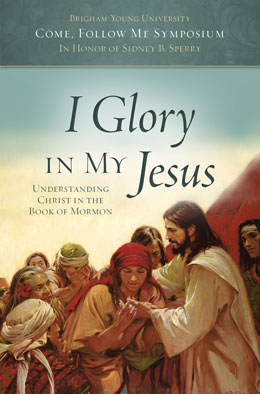
Reyna I. Aburto, "The Book of Mormon's Relevance for Us: Promises for Our Time," in I Glory in My Jesus: Understanding Christ in the Book of Mormon, ed. John Hilton III, Nicholas J. Frederick, Mark D. Ogletree, and Krystal V. L. Pierce (Provo, UT: Religious Studies Center, Brigham Young University; Salt Lake City: Deseret Book), 1–18.
Reyna I. Aburto is a former second counselor in the Relief Society General Presidency.
We live in a world similar to the one in which Joseph Smith lived in 1820, a world filled with “stir and division amongst the people,” “great confusion and bad feeling,” “a strife of words,” “a contest about opinions,” a “war of words,” and a “tumult of opinions.”[1] We could even compare the current commotion in the world with the environment surrounding Lehi and Sariah’s family in Jerusalem, as well as the Nephites and Lamanites in the American continent during the centuries before Christ visited them. There was disobedience to God’s commandments, wickedness, abominations, secret combinations, conflicts, wars, and divisiveness, among other things. “Knowing the calamity which should come upon the inhabitants of the earth, [the Lord] called upon [his] servant Joseph Smith, Jun., and spake unto him from heaven, and gave him commandments; and also gave commandments to others, that they should proclaim these things unto the world; and all this that it might be fulfilled, which was written by the prophets.”[2]
In His infinite wisdom and mercy, God provided a way for a record to be kept by many prophets, preserved by valiant hands, brought to light by divine means and translated into English by the gift and power of God. The Book of Mormon is another testament of Jesus Christ written for our day and full of promises about Him and from Him that have significant relevancy for us in our time.
President Russell M. Nelson has said, “Prophets have foreseen our day, when there would be wars and rumors of wars and when the whole earth would be in commotion. . . . [The] gospel of Jesus Christ has never been needed more than it is today. . . . I love the Lord Jesus Christ and testify that His gospel is the only enduring solution for peace. His gospel is a gospel of peace.”[3]
Because the Book of Mormon “contains the fulness of the everlasting gospel,”[4] it can be a constant source of peace for us, the peace that only Jesus Christ can give through His redeeming atonement. President Nelson has also proclaimed, “When I think of the Book of Mormon, I think of the word power. The truths of the Book of Mormon have the power to heal, comfort, restore, succor, strengthen, console, and cheer our souls.”[5]
As we embark together in studying the Book of Mormon, we can find relevance and solace in the promises it contains about and from Jesus Christ, particularly in the promises concerning our day, and, together with Nephi, we can say, “I glory in my Jesus, for he hath redeemed my soul from hell.”[6]
We Are All Gospel Teachers
As covenant members of the Church, we all have opportunities to be gospel teachers everywhere we go, from our homes to our Church callings and gatherings, our schools, our jobs, our circles of friends and our communities. One of the beauties of being a gospel teacher is that as we invite others to get closer to Christ by studying and searching the Book of Mormon individually, with their families, with their friends, and in Church gatherings, we can also take that learning journey with them. Together we can express our feelings, our longings, our questions, our hope, our faith, and our testimony of the gospel of Jesus Christ to encourage, comfort, and inspire each other as we all come to our Savior to receive of His redeeming grace. Together we can realize how relevant the truths and promises taught and given by Jesus Christ and His disciples are for our salvation in our day and how we can apply them in our daily life. The Book of Mormon is full of those relevant truths and promises through which we can receive the Lord’s strength to endure the vicissitudes of this world with joy.
Having the Desire to Know
After hearing the things that his father had seen, Nephi “desired to know” them, and he believed “that the Lord was able to make them known unto [him].”[7] Similarly, Enos’s “soul hungered” because “the words which [he] had often heard [his] father speak concerning eternal life, and the joy of the saints, sunk deep into [his] heart.”[8]
As we prepare to teach the Book of Mormon, we can ask ourselves this question, “What can I do to inspire my learners to have the desire to know the things concerning eternal life in a way that is relevant to them and their soul hungers?”
A key part of sparking desire in learners is to help them see the relevance of what we are teaching to their lives. As one researcher wrote, “Making lessons meaningful for learners is one of the key elements of successful learning, and relevance is a vital contributor to learner engagement. If we feel that what we are learning is relevant to our lives, we become emotionally invested in the lesson and the content, and are more motivated to engage.”[9]
Similarly, a document prepared by Brigham Young University says, “Students are more likely to engage when they perceive the value of what they are learning for their personal growth, professional growth, and for the people, communities, and causes they care about.”[10]
As gospel teachers we can pray for revelation on how to prepare lessons that are relevant to our learners and help them receive the divine guidance they need in their lives.
How Relevant Is the Book of Mormon in Our Day?
Years ago a group of Brigham Young University students embarked in what was called the Book of Mormon Experiment. “Piggybacking on a round-the-globe field study experience already in the works, the group set up displays [in several cities of the world], and asked passersby to participate in an experiment: read a single page from a Christian book and highlight mentions of deity. The students then asked participants for their impressions.”[11]
This is how they described that effort: “One of the most criticized texts in religion history often by people who have not read a single page. The Book of Mormon is another testament of Jesus Christ, but instead of having us tell you that, we asked the world in London, Chicago, Cape Town, Sydney, Las Vegas, Atlanta, Honolulu. We gave all 531 pages of the Book of Mormon to 531 non-members [of The Church of Jesus Christ of Latter-day Saints]. We asked them to look for references of God and Jesus Christ. As they read, they saw a lot, they each became a witness that their individual page testifies of Christ.”[12]
Here are some of the reflections they received from the people who participated in the experiment:
“It was one of the first pages of scripture I have ever read. And I think that a book like this one can help people find answers in their life when they feel like they are in darkness. I’m so grateful to have been part of this experiment. I’ve been in the dark and needed a little more light in my life.” —Kate, Australian, nonreligious, read page 184.
“This is the first time that I have ever read a page of Christian scripture. I think the page was good; it’s definitely good. It shows that God is a God of miracles, not a God of punishment. He’s merciful, He does miracles, and He wants to help us. I believe that God is that way—He wants to help us. Reading this book has helped me. I love it!” —Rafi, United Kingdom, Muslim, read page 430.[13]
If the Book of Mormon had such a powerful and inspiring impact on people who have not heard of it or read it before, as gospel teachers we can pray for ways to help our learners discover and rediscover the truths from this divine book every time they read it.
How Can We Find Relevance in the Book of Mormon?
One thing that we can do is to realize that each of us can find answers to questions of the soul in the Book of Mormon and that the truths it contains are relevant to us.
As we help our family and class members this year, we can follow Jesus Christ’s example of teaching in a way that is relevant to them. What did He do to help His followers learn about truths in a relevant way? He used parables, He asked questions, He beheld people, He listened to them, He prophesied and showed how some prophecies had already been fulfilled, and He extended promises. As we try to follow Jesus Christ’s example, we can, like Nephi, “liken all scriptures unto us, that it might be for our profit and learning.”[14] We can invite each other to find promises about and from Jesus Christ for us in these latter days. We can help each other discover how relevant those promises are for us. And we can encourage each other to find ourselves in the scriptures so that we understand who we are and what our purpose is in our Father’s divine plan of salvation.
I asked some young adult friends to share with me how relevant the Book of Mormon is for them. This is what they said:
Toshi: “The Book of Mormon is a short amount of relief from the chaos of my life. Even when I haven’t read the book in a long time (many months), I’ll still have relief given to me. Even though I don’t always feel worthy or feel like it’s been too long, as soon as I read it, I’m given the promised blessings from the Book of Mormon.”
Mike: “I was a missionary striving for greater faith and testimony of Christ. I prayed and studied God's words as intentionally and intensively as ever. But I didn't feel like I was growing. Definitely not as much as I wanted to. I was reading in Mosiah 26:15–16, which impacted me. It reads, ‘Blessed art thou, Alma, and blessed are they who were baptized in the waters of Mormon. Thou art blessed because of thy exceeding faith in the words alone of my servant Abinadi. And blessed are they because of their exceeding faith in the words alone which thou hast spoken unto them.’ . . . It felt like those two verses were just for me. God was telling me that I was blessed for my faith. While I still didn't grow in the ways I had wanted to, it was the first time the scriptures felt personalized just to me. Like God was talking to me specifically with those verses.”
Brooke: “I’ve been rereading First Nephi this week and I kind of feel like we all have to go through the wilderness at some point and for some of us dating is that wilderness. We need to hold on even when the bow breaks. I honestly really feel like God has been guiding my life this far, so why do I lose faith in this one aspect of life? I’ve got to stay positive and hold on. The Book of Mormon had endless examples of this. Times where the wilderness or trial seems to have no end. But we learn that God is still with us in those times and that if we hold on, He always fulfills His promises.”
Glen: “One of the ways the Book of Mormon has been relevant in my personal life is that I can feel connected to the people in it, and that helps me feel less alone. For example, Nephi in 1 Nephi 4 spends a whole verse describing how Laban's sword is cool. Jacob, before telling everyone off is basically like, ‘Ugh, I wish you all were better and I didn't have to tell you all to shape up.’ Nephi (son of Helaman) in Helaman 7 wishes he could have lived in the days of First Nephi. Mormon wishes his people would repent but realizes he has no control over them and is able to find some joy despite living in horrible times. Basically, they all express feelings that I've felt (and probably lots of people) and that helps me feel connected to them.”
Elena: “As a missionary, we had a district meeting where we were asked to come with a question in mind—a question about something we were struggling with personally. At the meeting, together we read a chapter from the Book of Mormon. We decided to read the chapter on Lehi's vision. It was incredible to see how every one of us could testify that our personal questions were answered in reading that chapter. The Book of Mormon is more meaningful to me when I turn to it with something specific in mind, whether it’s a problem I’m dealing with or a question of how I can help someone else specifically or even just, ‘What does God want me to hear today?’ When I turn to the Book of Mormon sincerely seeking revelation and application to my personal life, I always find it. No matter what stage of my life I am in, there is always a way to relate the Book of Mormon to my personal life.”[15]
These examples show that the truths found in the Book of Mormon can speak to our souls and bring comfort to us. The Book of Mormon is certainly another testament of Jesus Christ. This book was “written by the hand of Mormon upon plates taken from the plates of Nephi,” brought “forth by the gift and power of God” and translated by Joseph Smith “by the gift of God.” We have received the promise that through the Book of Mormon we can know the “great things the Lord [has] done for [our] fathers” and “the covenants of the Lord,” that we can also be convinced “that Jesus is the Christ, the Eternal God, manifesting himself unto all nations.”[16]
The Book of Mormon Was Written for Our Day and for Us
From beginning to end, this sacred book of scripture testifies of Jesus Christ and of His divine mission. It was written for us and for our time, and in it we find guidance specific for the latter days. President Ezra Taft Benson explained that one
great reason why we must make the Book of Mormon a center focus of study is that it was written for our day. The Nephites never had the book; neither did the Lamanites of ancient times. It was meant for us. Mormon wrote near the end of the Nephite civilization. Under the inspiration of God, who sees all things from the beginning, he abridged centuries of records, choosing the stories, speeches, and events that would be most helpful to us.
Each of the major writers of the Book of Mormon testified that he wrote for future generations. Nephi said, “The Lord God promised unto me that these things which I write shall be kept and preserved, and handed down unto my seed, from generation to generation” (2 Ne. 25:21). His brother Jacob, who succeeded him, wrote similar words: “For [Nephi] said that the history of his people should be engraven upon his other plates, and that I should preserve these plates and hand them down unto my seed, from generation to generation” (Jacob 1:3). Enos and Jarom both indicated that they too were writing not for their own peoples but for future generations (see Enos 1:15–16, Jarom 1:2).
Mormon himself said, “Yea, I speak unto you, ye remnant of the house of Israel” (Mormon 7:1). And Moroni, the last of the inspired writers, actually saw our day and time. “Behold,” he said, “the Lord hath shown unto me great and marvelous things concerning that which must shortly come, at that day when these things shall come forth among you.
“Behold, I speak unto you as if ye were present, and yet ye are not. But behold, Jesus Christ hath shown you unto me, and I know your doing (Mormon 8:34–35).”[17]
As I read the Book of Mormon, I love finding those passages that are written specifically for each of us. I like to call them “parentheses” because they are parenthetical reflections made by the writers on what they learned from the accounts they chose to write about and the relevance that they would have for us in the latter days.
For example, from the very beginning, in the first chapter of the First Book of Nephi, in the last verse of that chapter, Nephi wrote, “But behold, I, Nephi, will show unto you that the tender mercies of the Lord are over all those whom he hath chosen, because of their faith, to make them mighty even unto the power of deliverance.”[18] When he says, “I . . . will show unto you,” whom is he speaking to? To you! To me! That is how personal the Book of Mormon is. That is how personal the scriptures are. That is how personal the gospel of Jesus Christ is. It is for you! It is for me! It is for each of us! It is for each of our learners!
Mormon uses similar wording when he says, “And I will show unto you hereafter that this record is true.”[19] Moroni also proclaimed, “I will show unto you a God of miracles, even the God of Abraham, and the God of Isaac, and the God of Jacob; and it is that same God who created the heavens and the earth, and all things that in them are.”[20]
And, yes, it is true! As we read the Book of Mormon, we can see, we can feel, and we can know for ourselves that the tender mercies of the Lord are over all of those whom He has chosen, because of their faith, to make them mighty, even unto the power of deliverance. We can acknowledge the miracles that we have witnessed in our lives and in the lives of others. We can see how those promises have been manifest in our life. We can look back and realize how blessed we have been because of our faith. We can know for ourselves the truthfulness of these sacred records and have a closer relationship with our Heavenly Father and Jesus Christ.
The Book of Mormon prophets saw our day and saw us. Nephi testified, “And it came to pass that I, Nephi, beheld the power of the Lamb of God, that it descended upon the saints of the church of the Lamb, and upon the covenant people of the Lord, who were scattered upon all the face of the earth; and they were armed with righteousness and with the power of God in great glory.”[21] Nephi saw in a vision that in our day, we would be making covenants with Heavenly Father through Jesus Christ, and that through those covenants and our righteousness in keeping them, we would be “endowed with power from on high.”[22] The blessings of that divine power that we can receive include guidance for our lives; inspiration to know how to serve family members and others; strength to endure and overcome challenges; gifts of the Spirit to magnify our abilities; revelation to know how to fulfill the work we are ordained, set apart, or assigned to do; and help and strength to become more like Jesus Christ and Heavenly Father.[23]
The Scriptures Were Written in Retrospective
The scriptural records we have, including the Book of Mormon, were written in retrospective. Often the events depicted in them were written years after the facts happened, as the writers reflected on their experiences and on what they learned from them.
The same thing can happen to us. Even though it may be hard to stop and think about the lessons we are learning as we are in the middle of our trials, we can try to pause and reflect on what we have learned up to that point and who we are becoming because of that learning. We can even go further back and remember the tender mercies we have received from the Lord in the past and that can give us comfort, hope, and strength as we endure our current circumstances.
Also, we may not see the answers to our prayers immediately, but the answers come. As we look back, we can see how our prayers have been answered in miraculous ways, even though we may not have noticed them at the moment. We can see how the Lord has been our light and how He has prepared the way before us all along.[24]
Promises of Prosperity
I joined The Church of Jesus Christ of Latter-day Saints when I was twenty-six years old after “having seen many afflictions in the course of my days,”[25] like Nephi. I was going through a difficult period in my life. I had just separated from my first husband, had a three-year old-son, and was hungry for peace and comfort. When I followed the missionaries’ invitation to start reading the Book of Mormon, a recurrent promise found in the book stood out to me: “And inasmuch as ye shall keep my commandments, ye shall prosper, and shall be led to a land of promise.”[26] I had never heard that concept before in my life! I thought, “What a beautiful promise!”
I highlighted those words, and as I kept reading, I found that same promise again and highlighted it again. Soon I realized that it was found all over the book and stopped highlighting it. Now I know that maybe it was a mistake from my part. However, with my limited knowledge of the gospel of Jesus Christ, I hung on to that promise. I clung to it, I believed it, and it made a big difference in my life. Somehow I knew that it did not necessarily mean that I would become wealthy. I felt that it had to do with blessings that were more eternal and significant. The Lord is assuring us that if we are obedient to His commandments, we will be blessed and prosper, both temporally and eternally.
Elder Quentin L. Cook taught, “Prospering and being wealthy are not necessarily synonymous. A much better gospel definition of prospering in the land is having sufficient for our needs while having the abundant blessing of the Spirit in our lives. When we provide for our families and love and serve the Savior, we will enjoy the reward of having the Spirit and prospering in the land.”[27]
We can continually ask ourselves these questions: “How have I seen the promises of prosperity come true in my life?” and “How can I help my learners look back into their life and reflect on the holistic prosperity they have received because of their honest efforts to keep God’s commandments?” As we do that, we could all say, “I glory in my Jesus, for he hath redeemed my soul from hell.”[28]
Promises of Knowledge of the Gospel of Jesus Christ
For me, having found the gospel of Jesus Christ at a dark moment of my life is a fulfilling of the prophecy and promise found in 1 Nephi 15:14, “And at that day shall the remnant of our seed know that they are of the house of Israel, and that they are the covenant people of the Lord; and then shall they know and come to the knowledge of their forefathers, and also to the knowledge of the gospel of their Redeemer, which was ministered unto their fathers by him; wherefore, they shall come to the knowledge of their Redeemer and the very points of his doctrine, that they may know how to come unto him and be saved.”
A similar promise was given by Jesus Christ Himself when He visited the Nephites on the American continent. He said, “Behold, because of their belief in me, saith the Father, and because of the unbelief of you, O house of Israel, in the latter day shall the truth come unto the Gentiles, that the fulness of these things shall be made known unto them. . . . And then will I remember my covenant which I have made unto my people, O house of Israel, and I will bring my gospel unto them. I will remember my covenant unto you, O house of Israel, and ye shall come unto the knowledge of the fulness of my gospel.”[29]
The Savior also gave this promise: “And verily, verily, I say unto you, that when [the words of Isaiah] shall be fulfilled then is the fulfilling of the covenant which the Father hath made unto his people, O house of Israel. And then shall the remnants, which shall be scattered abroad upon the face of the earth, be gathered in from the east and from the west, and from the south and from the north; and they shall be brought to the knowledge of the Lord their God, who hath redeemed them.”[30]
I came to the knowledge of the gospel of my Redeemer and of His doctrine when I needed it most. I was shown the iron rod that would lead me to the tree of life that represents the love of God. Because of that, I have tasted of that fruit that is the most desirable, and I can certainly declare that “I glory in my Jesus, for he hath redeemed my soul from hell.”[31]
Promises of Redemption through Jesus Christ’s Atonement
I know personally that the truths found in the Book of Mormon have the power to change us, the power to draw us closer to Jesus Christ, the power to help us overcome the tribulations we may face in our lives, and the power to bring joy to us as we obey divine laws.
When he was nine years old, my husband Carlos joined The Church of Jesus Christ of Latter-day Saints in Mexico, together with his family. Due to various circumstances, most of his family did not remain active in the Church. However, Carlos did not forget how he felt when the missionaries visited his childhood home and taught him and his family about Jesus Christ and His gospel.
Years later at age twenty-three, he moved to the United States and lived with his brother. They were occasionally visited by members and missionaries, and they kept in their apartment a copy of the Book of Mormon, which, for a long time, basically just gathered dust.
When Carlos was twenty-seven years old, he broke up with a girlfriend and felt devastated. He then remembered how he had felt in his childhood when the Holy Ghost testified of the truth of the gospel of Jesus Christ to his young heart. He finally reached up to the Book of Mormon and opened it. As he started reading, something amazing happened: he could not stop. Back then, he had two jobs and not much spare time, but instead of eating during his breaks, he continued reading the Book of Mormon.
An interesting detail about Carlos’s story is that all of this happened when the soccer extravaganza of the 1990 FIFA World Cup was going on. Those who know my husband well know how much he loves and enjoys soccer and how important this every-four-year event is to him. Nevertheless, he completely ignored the World Cup because he was captivated by the Book of Mormon so much that he finished reading it in two weeks with the little spare time he had.
Carlos has described his feelings this way: “As I started reading about Nephi and his family, I immediately related to him because I always tried to be the peacemaker in my family whenever there were conflicts (which, by the way, happen in every family). Nephi had a sincere desire to know the things that his father had seen, and he believed that the Lord was able to make them known to him. Because of that honest desire, Nephi received his own witness of the reality of the Lord Jesus Christ and saw a vision that prepared him for what lay ahead. Somehow, I knew that the same thing could happen to me.”
Carlos continued, “I felt that every invitation to repent was given to me personally. The words of Nephi, Jacob, King Benjamin, Mosiah, Abinadi, and all the prophets in the Book of Mormon, and their witness of the divine mission of Jesus Christ, touched my heart in a profound way. As I read how Alma the Younger described his anguish as he remembered his sins, I felt the same way. My soul was tormented with pain. Similarly, when I read of the joy that Alma felt as he remembered ‘to have heard [his] father prophesy unto the people concerning the coming of one Jesus Christ, a Son of God, to atone for the sins of the world’ (Alma 36:17), I was overwhelmed with joy and the hope that I could also be forgiven.”
As Carlos read the Book of Mormon, he had a change of heart and became a new man. He came back to church every Sunday, again renewing the covenant he had made in his childhood. By that simple act of faith of reaching up to the Savior by reading the Book of Mormon, he discovered a whole universe of truth and light in his life.
A Declaration of Our Divine Identity
After being a member of the Church for a few years and realizing the wonderful blessings I was receiving because of the covenants I had made with God, many times I would feel that I did not deserve the overflowing amount of goodness I was enjoying. Many times, I would think that there was a reason beyond my knowledge that allowed me to be so greatly blessed.
When I finally read the Book of Mormon from cover to cover for the first time, I received a personal witness about the implications that our righteousness may have in future generations as I read the account of the Anti-Nephi-Lehies. They made a covenant with God that they would not shed the blood of their brethren and buried their weapons of war deep in the earth as a testimony of their covenant.[32] When I read the passage in Alma 24:20–22, where these faithful covenant keepers did not show any resistance and prostrated themselves before their enemies, who slayed thousands of them, an overwhelming feeling came upon me. At that moment, I felt that someone in that group of brave, humble, and peaceful men was my ancestor. I then understood that it was because of his righteousness in keeping his covenants, so much that he preferred to die rather than break his promise to God, that I have been a recipient of the fulfilling of the promises given by Jesus Christ to the covenant children of God.
In the Book of Mormon, we learn of our true identity. Explaining who we are, Jesus Christ said,
And behold, ye are the children of the prophets; and ye are of the house of Israel; and ye are of the covenant which the Father made with your fathers, saying unto Abraham: And in thy seed shall all the kindreds of the earth be blessed.
The Father having raised me up unto you first, and sent me to bless you in turning away every one of you from his iniquities; and this because ye are the children of the covenant. . . .
And I will remember the covenant which I have made with my people; and I have covenanted with them that I would gather them together in mine own due time, that I would give unto them again the land of their fathers for their inheritance, which is the land of Jerusalem, which is the promised land unto them forever, saith the Father.
And it shall come to pass that the time cometh, when the fulness of my gospel shall be preached unto them;
And they shall believe in me, that I am Jesus Christ, the Son of God, and shall pray unto the Father in my name.”[33]
We are witnessing the fulfilling of the Savior’s promises as He continues to gather us in these latter days. As we study the Book of Mormon, we can see how the Lord “suit[s] his mercies according to the conditions of the children of men [and women].”[34] We can also see how simple and powerful the gospel of Jesus Christ is and echo the words of Nephi, when he said, “For my soul delighteth in plainness; for after this manner doth the Lord God work among the children of men. For the Lord God giveth light unto the understanding; for he speaketh unto men according to their language, unto their understanding.”[35] We can also see how relevant the promises about and from Jesus Christ contained in the Book of Mormon are for us, in our day.
The Fulfillment of the Father’s Covenant
The coming forth of the Book of Mormon is a sign that the Father is fulfilling His covenant with the house of Israel, as explained by Jesus Christ:
And when these things come to pass that thy seed shall begin to know these things—it shall be a sign unto them, that they may know that the work of the Father hath already commenced unto the fulfilling of the covenant which he hath made unto the people who are of the house of Israel. . . .
For in that day, for my sake shall the Father work a work, which shall be a great and a marvelous work among them; and there shall be among them those who will not believe it, although a man shall declare it unto them.[36]
He also gave a warning and a promise:
For it shall come to pass, saith the Father, that at that day whosoever will not repent and come unto my Beloved Son, them will I cut off from among my people, O house of Israel;
And I will execute vengeance and fury upon them, even as upon the heathen, such as they have not heard.
But if they will repent and hearken unto my words, and harden not their hearts, I will establish my church among them, and they shall come in unto the covenant and be numbered among this the remnant of Jacob, unto whom I have given this land for their inheritance; . . .
And then shall they assist my people that they may be gathered in, who are scattered upon all the face of the land, in unto the New Jerusalem.
And then shall the power of heaven come down among them; and I also will be in the midst.[37]
I conclude with Nephi’s words:
And now, my beloved brethren, and also Jew, and all ye ends of the earth, hearken unto these words and believe in Christ; and if ye believe not in these words believe in Christ. And if ye shall believe in Christ ye will believe in these words, for they are the words of Christ, and he hath given them unto me; and they teach all men that they should do good.
And if they are not the words of Christ, judge ye—for Christ will show unto you, with power and great glory, that they are his words, at the last day; and you and I shall stand face to face before his bar; and ye shall know that I have been commanded of him to write these things, notwithstanding my weakness.[38]
Notes
[1] Joseph Smith—History 1:5–6, 10.
[2] Doctrine and Covenants 1:17–18.
[3] Russell M. Nelson, “Preaching the Gospel of Peace,” Liahona, May 2022, 6.
[4] Book of Mormon introduction.
[5] Russell M. Nelson, “The Book of Mormon: What Would Your Life Be Like without It?,” Ensign, November 2017, 62; emphasis in original.
[6]2 Nephi 33:6.
[7]1 Nephi 11:1.
[8] Enos 1:3–4.
[9] Jade Blue, “What’s It Got to Do with Me? The Role of Relevance in Learner Engagement,” cambridge.org/
[10]“Relevance, Teach Anywhere,” teachanywhere.byu.edu/
[11]“An Experiment upon the Word,” BYU Magazine, Spring 2018, magazine.byu.edu/
[12]Book of Mormon Experiment video, churchofjesuschrist.org/
[13]Book of Mormon Experiment video.
[14]1 Nephi 19:23.
[15] These quotations come from personal correspondence.
[16] Book of Mormon title page.
[17] Ezra Taft Benson, “The Book of Mormon—Keystone of Our Religion,” Ensign, October 2011, 55–56.
[18]1 Nephi 1:20; emphasis added.
[19]3 Nephi 18:37; emphasis added.
[20] Mormon 9:11; emphasis added.
[21]1 Nephi 14:14.
[22] Doctrine and Covenants 38:32.
[23] See General Handbook: Serving in The Church of Jesus Christ of Latter-day Saints, 3.5.
[24] See 1 Nephi 17:13.
[25]1 Nephi 1:1.
[26] For example, 1 Nephi 2:20.
[27] Quentin L. Cook, “Reaping the Rewards of Righteousness” (Brigham Young University Women’s Conference, May 2, 2014).
[28]2 Nephi 33:6.
[29]3 Nephi 16: 7, 11–12.
[30]3 Nephi 20:12–13.
[31]2 Nephi 33:6.
[32] See Alma 24:17–19.
[33]3 Nephi 20:25–26, 29–31; see also 3 Nephi 29.
[34] Doctrine and Covenants 46:15.
[35]2 Nephi 31:3.
[36]3 Nephi 21:7, 9.
[37]3 Nephi 21:20–22, 24–25.
[38]2 Nephi 33:10–11.
