Preludes to Jesus's Last Week
Setting the Stage for the Passion
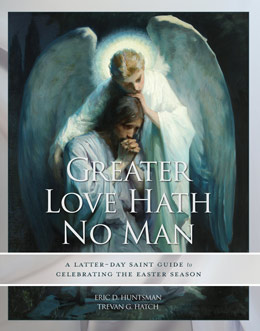
Eric D. Huntsman and Trevan G. Hatch, "Preludes to Jesus's Last Week: Setting the Stage for the Passion," in Greater Love Hath No Man: A Latter-Day Saint Guide to Celebrating the Easter Season (Provo, UT: Religious Studies Center, Brigham Young University; Salt Lake City: Deseret Book), 13‒34.
And he began to teach them, that the Son of man must suffer many things, and be rejected of the elders, and of the chief priests, and scribes, and be killed, and after three days rise again. (Mark 8:31)
Michael Coleman, Road to Jerusalem. Used by permission.
In the time just before the Savior’s last week, he gave some powerful teachings that help us better understand his atoning sacrifice. The earliest account of these teachings can be found in Mark, which most scholars feel was the first Gospel to have been written. Mark can be seen as a three-act drama with the first, longer act consisting of Jesus’s authoritative ministry in Galilee (1:14‒8:21); the second, a shorter act covering his journey to Jerusalem (8:22‒10:52); and the third, culminating act portraying his momentous final week in Jerusalem (11:1‒16:8).[1] These divisions are geographic and thematic, not chronological—ignoring any previous visits by Jesus to Jerusalem, Mark’s structure makes Jerusalem the culmination and focus of Jesus’s entire mortal ministry. While the third act provides the basic framework for our discussion of Holy Week, the relatively short second act prepares us for what Jesus would accomplish in Jerusalem even as Jesus tried to prepare his disciples for what was coming. It begins with the story of Jesus’s healing of a blind man in stages, in which the healed man can represent the disciples’ imperfect understanding of who Jesus was and what he came to do. After Peter’s powerful but incomplete confession, the rest of the act is built around three important “passion predictions,” where Jesus prophesies of his coming betrayal, suffering, and death before concluding with another healing story, this time of a man whose sight is completely restored, representing coming to a fuller knowledge of Jesus and his salvific work.
Just as the passion predictions in Mark precede and anticipate Jesus’s final week, in John, the story of the death and miraculous raising of Lazarus, together with a celebratory dinner afterward in which Mary of Bethany anoints Jesus, provides both the proximate cause of the Jerusalem leadership’s resolve to have Jesus killed even as it provides anticipations of Jesus’s coming death and resurrection. Christian tradition produced customs and observances that helped believers prepare for the Passion in a similar way. One of the better known of these observances is Lent, a liturgical period common throughout much of traditional Christendom and a time of fasting and spiritual preparation based on Jesus’s own forty-day preparation in the wilderness. Perhaps less well known is the custom of “Lazarus Saturday,” common in Eastern Orthodoxy. With or without borrowing from any of these traditions, reading and reflecting upon Mark 8:22‒10:52 and John 11:1‒12:11 can help Latter-day Saints prepare themselves and their families for a more meaningful experience during Holy Week.
Texts: Mark 8:22–38; 9:30–37; 10:32–52
The second act of Mark begins with Jesus healing an unnamed blind man near Bethsaida in the northern part of the Holy Land (Mark 8:22‒26). It concludes with the healing of a second blind man, a beggar named Bartimaeus, as Jesus and his disciples leave Jericho on the last stage of their journey up to Jerusalem (10:46‒52; parallels Matt 20:29‒34; Luke 18:35‒43). This type of literary framing is called an inclusio, by which an author begins and ends a discrete portion of his or her text with the same term, motif, image, or theme. Prominent between these two healings are Peter’s confession that Jesus was the Christ (8:27‒30) and the three passion predictions (8:31‒38; 9:30‒37; 10:32‒45) that prepared his disciples—and by extension us—for the events of Passion Week.
Mark
822And he cometh to Bethsaida; and they bring a blind man unto him, and besought him to touch him. 23And he took the blind man by the hand, and led him out of the town; and when he had spit on his eyes, and put his hands upon him, he asked him if he saw ought. 24And he looked up, and said, “I see men as trees, walking.” 25After that he put his hands again upon his eyes, and made him look up: and he was restored, and saw every man clearly. 26And he sent him away to his house, saying, “Neither go into the town, nor tell it to any in the town.” 27And Jesus went out, and his disciples, into the towns of Caesarea Philippi: and by the way he asked his disciples, saying unto them, “Whom do men say that I am?” 28And they answered, “John the Baptist:” but some say, “Elias;” and others, “One of the prophets.” 29And he saith unto them, “But whom say ye that I am?” And Peter answereth and saith unto him, “Thou art the Christ.” 30And he charged them that they should tell no man of him.
31And he began to teach them, that the Son of man must suffer many things, and be rejected of the elders, and of the chief priests, and scribes, and be killed, and after three days rise again. 32And he spake that saying openly. And Peter took him, and began to rebuke him.
33But when he had turned about and looked on his disciples, he rebuked Peter, saying, “Get thee behind me, Satan: for thou savourest not the things that be of God, but the things that be of men.” 34And when he had called the people unto him with his disciples also, he said unto them, “Whosoever will come after me, let him deny himself, and take up his cross, and follow me. 35For whosoever will save his life shall lose it; but whosoever shall lose his life for my sake and the gospel's, the same shall save it. 36For what shall it profit a man, if he shall gain the whole world, and lose his own soul? 37Or what shall a man give in exchange for his soul? 38Whosoever therefore shall be ashamed of me and of my words in this adulterous and sinful generation; of him also shall the Son of man be ashamed, when he cometh in the glory of his Father with the holy angels.”
930And they departed thence, and passed through Galilee; and he would not that any man should know it. 31For he taught his disciples, and said unto them, “The Son of man is delivered into the hands of men, and they shall kill him; and after that he is killed, he shall rise the third day.” 32But they understood not that saying, and were afraid to ask him.
33And he came to Capernaum: and being in the house he asked them, “What was it that ye disputed among yourselves by the way?” 34But they held their peace: for by the way they had disputed among themselves, who should be the greatest. 35And he sat down, and called the twelve, and saith unto them, “If any man desire to be first, the same shall be last of all, and servant of all.” 36And he took a child, and set him in the midst of them: and when he had taken him in his arms, he said unto them, 37”Whosoever shall receive one of such children in my name, receiveth me: and whosoever shall receive me, receiveth not me, but him that sent me.”
1032And they were in the way going up to Jerusalem; and Jesus went before them: and they were amazed; and as they followed, they were afraid. And he took again the twelve, and began to tell them what things should happen unto him, 33Saying, “Behold, we go up to Jerusalem; and the Son of man shall be delivered unto the chief priests, and unto the scribes; and they shall condemn him to death, and shall deliver him to the Gentiles: 34And they shall mock him, and shall scourge him, and shall spit upon him, and shall kill him: and the third day he shall rise again.”
35And James and John, the sons of Zebedee, come unto him, saying, “Master, we would that thou shouldest do for us whatsoever we shall desire.” 36And he said unto them, “What would ye that I should do for you?” 37They said unto him, “Grant unto us that we may sit, one on thy right hand, and the other on thy left hand, in thy glory.” 38But Jesus said unto them, “Ye know not what ye ask: can ye drink of the cup that I drink of? and be baptized with the baptism that I am baptized with?” 39And they said unto him, “We can.” And Jesus said unto them, “Ye shall indeed drink of the cup that I drink of; and with the baptism that I am baptized withal shall ye be baptized: 40But to sit on my right hand and on my left hand is not mine to give; but it shall be given to them for whom it is prepared.” 41And when the ten heard it, they began to be much displeased with James and John. 42But Jesus called them to him, and saith unto them, “Ye know that they which are accounted to rule over the Gentiles exercise lordship over them; and their great ones exercise authority upon them. 43But so shall it not be among you: but whosoever will be great among you, shall be your minister: 44And whosoever of you will be the chiefest, shall be servant of all. 45For even the Son of man came not to be ministered unto, but to minister, and to give his life a ransom for many.”
46And they came to Jericho: and as he went out of Jericho with his disciples and a great number of people, blind Bartimaeus, the son of Timaeus, sat by the highway side begging. 47And when he heard that it was Jesus of Nazareth, he began to cry out, and say, “Jesus, thou Son of David, have mercy on me.” 48And many charged him that he should hold his peace: but he cried the more a great deal, “Thou Son of David, have mercy on me.” 49And Jesus stood still, and commanded him to be called. And they call the blind man, saying unto him, “Be of good comfort, rise; he calleth thee.” 50And he, casting away his garment, rose, and came to Jesus. 51And Jesus answered and said unto him, “What wilt thou that I should do unto thee?” The blind man said unto him, “Lord, that I might receive my sight.” 52And Jesus said unto him, “Go thy way; thy faith hath made thee whole.” And immediately he received his sight, and followed Jesus in the way.
On the Road to Jerusalem
Interpretation and Application
By beginning and ending the second act with stories of Jesus healing blind men, Mark establishes the restoration of sight as a motif that helps us interpret much of what happens on the road to Jerusalem. These miracles are not only about the blind men whose sight Jesus restored. They are also about his original disciples not initially seeing, or fully understanding, who Jesus was and what he came to do.[2] The first, the story of the blind man healed in a village near Bethsaida, is an unusual miracle story because Jesus does not restore the man’s sight completely and at once. Instead, he heals the man’s blindness in stages, something that was troubling enough to Matthew and Luke that they left this episode out of their Gospels. The surprising details of how Jesus healed the man—such as applying his saliva and laying on his hands—are rather typical features of Mark’s writings, since this Gospel regularly makes miracles more magical and interesting than do Matthew and Luke. After Jesus’s initial efforts, the man can see the basic outlines of people and discern their movements, but he cannot make them out clearly, leading Jesus to touch the man’s eyes again, which finally allows him to see correctly. Rather than seeing this stepwise healing as an indication that Jesus lacked the ability to heal the man correctly, Mark seems to have been using the story as a symbol of the incomplete understanding and testimony of the disciples, with the blind man’s healing in stages representing how they progressively come to know what his saving work was to be.[3]
Map, road to Jerusalem. Eric D. Huntsman, used by permission.
In the next episode Jesus leads his disciples farther north to the region around Caesarea Philippi, where he begins to ask his followers who people thought he was (Mark 8:27‒30; parallels Matt 16:13‒20; Luke 9:18‒21). His ministry up to that point had reminded many of John the Baptist, a fearless preacher of repentance, and Elijah, a great miracle worker, but Jesus was more than that, his persistent questioning leading Peter to declare boldly, “You are the Christ!” (Mark 8:29, authors’ translation). Significantly, this is the first time in Mark since the Gospel began with the words “The beginning of the gospel of Jesus Christ, the Son of God” (Mark 1:1) that the title Christ had been used by anyone in that text. Literally meaning “the anointed one” (Hebrew, māšîaḥ, hence “Messiah”; Greek, Christos),[4] the title had usually been used for the anointed king of Israel or the similarly anointed high priest. Although the prophecies of Isaiah had introduced the idea of a suffering servant, messianic expectations at the time of Jesus focused primarily on the idea of a great king in the mode of David who would redeem Israel from her enemies (for further background, see Appendix C: Messianism and Jewish Messiahs in the New Testament period). Indeed, Jesus’s subsequent conversations with Peter and the other disciples on the road to Jerusalem quickly reveal that they seem to have shared this expectation. The fuller version of Peter’s confession known from Matthew puts a more complete Christological confession on Peter’s lips, with the chief apostle proclaiming, “Thou art the Christ, the Son of the living God” (Matt 16:16; emphasis added), and Matthew’s account provides additional teaching about revelation and a promise of the keys of the kingdom. Yet even in Matthew’s version, although it was revealed to Peter who Jesus was, he did not yet really understand what Jesus had come to do. Instead, Peter was like the blind man who had begun to see but not clearly; he did not yet fully understand what he saw.
This becomes very clear in the next episode, in which Jesus’s prophecy of what would befall him in Jerusalem is met with resistance by Peter, leading Jesus to deliver corrective teaching to him and the other disciples (Mark 8:31‒38; parallels Matt 16:21‒28; Luke 9:22‒27). This is the first of the three passion predictions foretelling the coming suffering that Jesus will soon endure: “The Son of Man must undergo much suffering, be rejected by the elders, and chief priests, and the experts on the law, be put to death, and after three days rise again” (Mark 8:31, authors’ translation).[5] The image of a suffering Messiah, however, is not one that Peter is yet prepared to accept. Having just made a bold, faith-filled declaration that Jesus was the Christ, he now rebukes Jesus, apparently sharing the contemporary idea that the Messiah would be a political king who could not be defeated by his enemies. This misconception was, in fact, in line with the kind of earthly dominion with which Satan had tempted Jesus (Matt 4:8‒10; Luke 4:5‒8), but the KJV’s translation of Mark 8:33, “Get thee behind me, Satan,” though similar to Jesus’s earlier rebuke of the devil, “Get thee hence, Satan” (Matthew 4:10), may convey the wrong idea. Rather than rejecting Peter completely, Jesus’s rebuke, which we have rendered as “Get behind me,” literally “fall in behind me” (Greek hypage opisō mou), seems to suggest that Jesus was calling upon Peter to resume his proper place following Jesus rather than trying to get ahead of him, endeavoring to tell him what to do and keep him from accomplishing his sacrificial death.[6]
Jesus then broadens his correction to all his disciples, and by extension to us, teaching that those who follow him must be willing to deny themselves and take up their crosses. While “taking up a cross” is an easily understood metaphor for taking up a difficult, even dangerous, burden today, it was a graphic, terrifying image in a society where the sight of this cruel form of capital punishment was common. On the one hand, Jesus is preparing his followers for how he will die. On the other, he is calling upon all of us to be willing to sacrifice everything, no matter how painful that is, for him and the kingdom. Trying to save our physical lives is an exercise in futility; we will all die someday. But when we lose our lives in the sense of subsuming them in the service of the Master and in the joy of the gospel, there will be the promise of eternal life when Jesus returns in glory.
The next two passion predictions follow the same pattern,[7] with the additional detail that the Son of Man will be delivered into the hands of men (Mark 9:31) and to the chief priests and scribal experts at the law (10:33). While conventionally translated as “delivered” or even “betrayed,” both these passages use forms of the Greek word paradidōmi, which literally means “handed over,”[8] the implications of which become apparent during the passion narrative proper when Jesus is handed over first by Judas to the Jewish authorities (Mark 14:10‒11, 21), then by the Jewish leaders to the Roman governor Pilate (15:1, 10), and finally by Pilate to the Roman soldiers to crucify him (15:15).[9] The second passion prediction (Mark 9:30‒37; parallels Matt 17:22‒23, 18:1‒5; Luke 9:43‒48) is followed by strife among the disciples as to who will be the greatest among them, presumably because they want to know who will take Jesus’s place when he is gone. The third (Mark 10:32–34; parallels Matt 20:17–19; Luke 18:31–34) is followed by a seemingly impertinent request from the brothers James and John to sit on the right and left hands of Jesus when he comes into his kingdom. In both cases the misunderstanding or misbehavior on the part of Jesus’s disciples is followed by corrective teaching, calling upon them—and us—to be willing to be a servant to others and model the kind of humility exemplified by a child. This third and final prediction is also the most explicit, adding details about the abuse, spitting, and scourging that Jesus will endure and making it clear that the purpose of his death was to be a ransom for us.
This full, clear spiritual understanding of the mission of Jesus Christ is symbolized by the story of blind Bartimaeus that ends Mark’s second act. Unlike the man healed near Bethsaida, who had his sight restored in stages, this beggar, recognizing Jesus as the Son of David, or Messiah, cries out to him, pleading unreservedly for mercy. Throwing aside his cloak, which was probably the means by which he collected the alms that he begged, the blind man comes to Jesus and pleads for his sight. Jesus complies, stating that the man’s faith not only led to his healing, because it also allows him to see Jesus for who he really is, but it also saved him (Greek, sesōken se) in a deeper, spiritual sense.[10] Bartimaeus then follows Jesus “in the way,” which in this case meant going with him from Jericho up the road to Jerusalem, where Jesus was about to begin his Passion Week. Bartimaeus’s willingness to cast aside his means of earning his living also connects this scene with the first passion prediction, when Jesus had enjoined Peter and the other disciples who wanted to follow him to be willing lose their lives for his sake (see Mark 8:34‒35). Likewise, we need to be willing to give up everything and open our eyes, not just to know that “Jesus is the Christ” but also to understand what it meant that he suffered, died, and rose for us, celebrating it not just each year at Easter but every week. Are we, in fact, willing to follow Jesus “in the way”?
Celebrating Ash Wednesday and Lent in the Christian Tradition
Shutterstock.
Lent is a season of Christian observance that prepares believers for Holy Week. Among the many traditional Christian groups, forty days of fasting is observed over six, seven, or eight weeks, with Sundays excluded in Western Christianity and Saturdays and Sundays excluded in Eastern Orthodox Christianity. The origins of pre–Holy Week fasting date to at least the second century, with forty days (Latin, quadragesima) of fasting being firmly in place by the late fourth century in both the East and West, as is documented by Egeria in her account of the preparations for Easter that she observed in her visit to Jerusalem.[11] While Romance languages still use words based upon the Quadragesima for this period, English and other Germanic languages use variations of the word Lent, signifying “season of spring” or “springtime.”
In Roman Catholicism and among some Anglicans, Lutherans, and Methodists, Lent begins on Ash Wednesday and ends during Holy Week on Maundy Thursday. In Eastern Christianity, Lent begins on Clean Monday, the seventh Monday before Easter. Both Ash Wednesday and Clean Monday function similarly. These are days of confessing, seeking forgiveness, and committing to an attitude adjustment of forsaking sins. On Ash Wednesday, a priest or minister places ashes on the foreheads of Christians in the shape of a cross while uttering some version of “From dust you came and to dust you will return.” The ashes come from the prior year’s palm branches, which we will see in our discussion of Palm Sunday below were used to commemorate Jesus’s triumphal entry. This ritual comes from ancient Israelite practice, where ash was a symbol of mourning and penance (see Job 42:6; Jonah 3:5–6; Esth 4:1; Dan 9:3; Matt 11:21).
The observances in Lent are symbolic of Jesus’s forty-day wilderness retreat. Jesus’s fast and abstinence during this time is the model for Christians as they prepare for Holy Week. Three areas of discipleship come into focus during Lent: (1) righteousness toward God, as manifested through prayer and repentance, (2) righteousness toward neighbors as manifested through almsgiving and charity, and (3) righteousness toward oneself as manifested in fasting and avoidance of sins and luxuries. This last area of focus includes abstinence from various carnal passions, weaknesses, or gluttony—individuals may choose to forgo meat, sugary foods, alcohol, profane speaking, gambling, laziness, video games, frivolous spending, or the like. In addition, many increase personal prayer and devotional scripture reading in their daily schedule. The practice of fasting during preparations of Holy Week are based on Matthew 9:15: “The days will come when the bridegroom is taken away from them, and then they will fast” (NRSV). In addition, to be successful while contending with evil and even casting out demons, Jesus said, “This kind can come forth by nothing, but by prayer and fasting” (Mark 9:29 KJV).[12] Fasting comes in different forms. Many Christians fast by eating one meal per day, allowing some flexibility for additional smaller meals for those who require it.
In some cultures, pre-Lenten festivities provide opportunities for merriment and indulging of pleasures before the beginning of the fast (and, at times, have devolved into sexual promiscuity and debauchery). The most well-known of these festivities is Carnival, or Mardi Gras, which ends the day before Ash Wednesday on “Fat Tuesday,” also called Shrove Tuesday. Although these somewhat wild celebrations might have negative connotations to us, marking a clean division between normal time and the special period of preparation for Easter is important. During the week before the beginning of Lent, Christians eliminate all animal products from their homes. This might include foods containing eggs and milk. Consequently, eating pancakes on the last day of festivities before Ash Wednesday became a widespread tradition in England, just as eating king cake became a tradition during Mardi Gras in Louisiana. Some participants bake a little baby Jesus doll into the cake, and the person who receives the piece with the doll is destined for a prosperous year and might be required to make next year’s cake. Discussions during this last festive meal typically center on what pleasures each participant plans to sacrifice during Lent.
Over the generations pretzels have become another popular Lenten tradition. One origin myth is that while preparing food for Lent, a seventh-century monk folded dough in the shape of crossed arms, representing prayer. This showed three holes in the bread, which came to symbolize Father, Son, and Holy Spirit. The German word for “little arms” is bretzel, later forming the word pretzel. This simple tradition illustrates that preparing for Holy Week is not only manifested in the hearts but even in the food people eat and the traditions they observe. The purpose of Lent is not only to commemorate Jesus’s road to Holy Week but to walk with Jesus in preparation for his last visit to Jerusalem. The expectation is that love for the Savior will increase during this pre–Holy Week season.[13]
Text: John 11:1–12:11
The Bethany episodes, consisting of the story of the death and miraculous raising of Lazarus followed by a feast that Martha and Mary held for Jesus and their brother afterward, occupy a pivotal position in the Gospel of John, overlapping with and serving as a bridge between “The Book of Signs,” which narrates the miraculous signs and the doctrinal discourses of Jesus’s ministry (John 2:1‒11:57), and “The Book of Glory,” which chronicles Jesus’s final days and resurrection (12:1‒20:31). Just as these “bridge episodes” prepare the reader for the coming passion narrative, they can help us in our preparation for Holy Week. The problematic Johannine expression “the Jews” (Greek, hoi Ioudaioi) appears several times in this selection. As we discuss further in our explanation below, we have placed it in quotations to signal to readers that John seems to be using it to refer to a specific group and not to all Jewish people.
111Now a certain man was sick, named Lazarus, of Bethany, the town of Mary and her sister Martha. 2(It was that Mary which anointed the Lord with ointment, and wiped his feet with her hair, whose brother Lazarus was sick.) 3Therefore his sisters sent unto him, saying, “Lord, behold, he whom thou lovest is sick.” 4When Jesus heard that, he said, “This sickness is not unto death, but for the glory of God, that the Son of God might be glorified thereby.” 5Now Jesus loved Martha, and her sister, and Lazarus. 6When he had heard therefore that he was sick, he abode two days still in the same place where he was. 7Then after that saith he to his disciples, “Let us go into Judæa again.” 8His disciples say unto him, “Master, ‘the Jews’ of late sought to stone thee; and goest thou thither again?” 9Jesus answered,
“Are there not twelve hours in the day?
If any man walk in the day, he stumbleth not,
because he seeth the light of this world.
10But if a man walk in the night, he stumbleth,
because there is no light in him.”
11These things said he: and after that he saith unto them, “Our friend Lazarus sleepeth; but I go, that I may awake him out of sleep.” 12Then said his disciples, “Lord, if he sleep, he shall do well.” 13Howbeit Jesus spake of his death: but they thought that he had spoken of taking of rest in sleep. 14Then said Jesus unto them plainly, “Lazarus is dead. 15And I am glad for your sakes that I was not there, to the intent ye may believe; nevertheless let us go unto him.” 16Then said Thomas, which is called Didymus, unto his fellow disciples, “Let us also go, that we may die with him.”
17Then when Jesus came, he found that he had lain in the grave four days already. 18Now Bethany was nigh unto Jerusalem, about fifteen furlongs off: 19And many of “the Jews” came to Martha and Mary, to comfort them concerning their brother. 20Then Martha, as soon as she heard that Jesus was coming, went and met him: but Mary sat still in the house. 21Then said Martha unto Jesus, “Lord, if thou hadst been here, my brother had not died. 22But I know, that even now, whatsoever thou wilt ask of God, God will give it thee.” 23Jesus saith unto her, “Thy brother shall rise again.” 24Martha saith unto him, “I know that he shall rise again in the resurrection at the last day.” 25Jesus said unto her,
“I am the resurrection, and the life:
he that believeth in me,
though he were dead,
yet shall he live:
26And whosoever liveth and believeth in me
shall never die.
Believest thou this?” 27She saith unto him, “Yea, Lord: I believe that thou art the Christ, the Son of God, which should come into the world.”
28And when she had so said, she went her way, and called Mary her sister secretly, saying, “The Master is come, and calleth for thee.” 29As soon as she heard that, she arose quickly, and came unto him. 30Now Jesus was not yet come into the town, but was in that place where Martha met him. 31“The Jews” then which were with her in the house, and comforted her, when they saw Mary, that she rose up hastily and went out, followed her, saying, “She goeth unto the grave to weep there.”
32Then when Mary was come where Jesus was, and saw him, she fell down at his feet, saying unto him, “Lord, if thou hadst been here, my brother had not died.” 33When Jesus therefore saw her weeping, and “the Jews” also weeping which came with her, he groaned in the spirit, and was troubled, 34And said, “Where have ye laid him?” They said unto him, “Lord, come and see.” 35Jesus wept. 36Then said the Jews, “Behold how he loved him!” 37And some of them said, “Could not this man, which opened the eyes of the blind, have caused that even this man should not have died?”
38Jesus therefore again groaning in himself cometh to the grave. It was a cave, and a stone lay upon it. 39Jesus said, “Take ye away the stone.” Martha, the sister of him that was dead, saith unto him, “Lord, by this time he stinketh: for he hath been dead four days.” 40Jesus saith unto her, “Said I not unto thee, that, if thou wouldest believe, thou shouldest see the glory of God?” 41Then they took away the stone from the place where the dead was laid. And Jesus lifted up his eyes, and said,
“Father, I thank thee
that thou hast heard me.
42And I knew that thou hearest me always:
but because of the people which stand by I said it,
that they may believe that thou hast sent me.”
43And when he thus had spoken, he cried with a loud voice, “Lazarus, come forth.” 44And he that was dead came forth, bound hand and foot with graveclothes: and his face was bound about with a napkin. Jesus saith unto them, “Loose him, and let him go.”
45Then many of the Jews which came to Mary, and had seen the things which Jesus did, believed on him. 46But some of them went their ways to the Pharisees, and told them what things Jesus had done.
47Then gathered the chief priests and the Pharisees a council, and said, “What do we? for this man doeth many miracles. 48If we let him thus alone, all men will believe on him: and the Romans shall come and take away both our place and nation.” 49And one of them, named Caiaphas, being the high priest that same year, said unto them, “Ye know nothing at all, 50Nor consider that it is expedient for us, that one man should die for the people, and that the whole nation perish not.” 51And this spake he not of himself: but being high priest that year, he prophesied that Jesus should die for that nation; 52And not for that nation only, but that also he should gather together in one the children of God that were scattered abroad. 53Then from that day forth they took counsel together for to put him to death.
54Jesus therefore walked no more openly among “the Jews”; but went thence unto a country near to the wilderness, into a city called Ephraim, and there continued with his disciples.
55And the Jews’ passover was nigh at hand: and many went out of the country up to Jerusalem before the passover, to purify themselves. 56Then sought they for Jesus, and spake among themselves, as they stood in the temple, What think ye, that he will not come to the feast? 57Now both the chief priests and the Pharisees had given a commandment, that, if any man knew where he were, he should shew it, that they might take him.
121Then Jesus six days before the passover came to Bethany, where Lazarus was which had been dead, whom he raised from the dead. 2There they made him a supper; and Martha served: but Lazarus was one of them that sat at the table with him.
3Then took Mary a pound of ointment of spikenard, very costly, and anointed the feet of Jesus, and wiped his feet with her hair: and the house was filled with the odour of the ointment. 4Then saith one of his disciples, Judas Iscariot, Simon’s son, which should betray him, 5“Why was not this ointment sold for three hundred pence, and given to the poor?” 6This he said, not that he cared for the poor; but because he was a thief, and had the bag, and bare what was put therein. 7Then said Jesus, “Let her alone: against the day of my burying hath she kept this. 8For the poor always ye have with you; but me ye have not always.”
9Much people of “the Jews” therefore knew that he was there: and they came not for Jesus’ sake only, but that they might see Lazarus also, whom he had raised from the dead. 10But the chief priests consulted that they might put Lazarus also to death; 11Because that by reason of him many of the Jews went away, and believed on Jesus.
The Raising of Lazarus and the Supper at Bethany
Interpretation and Application
Map of Jericho, Bethany, and Jerusalem. Eric D. Huntsman, used by permission.
The Bethany episodes focus on characters who accompany or otherwise encounter Jesus in ways that help them either follow him more fully or, in one case, lead them to work against him. While John 11 begins with Jesus being accompanied by his disciples, presumably the Twelve, the story soon focuses on three siblings who are depicted as close, personal friends of the Lord. Along with the anonymous figure of the Beloved Disciple, the source or author of the Gospel who has traditionally been identified as the apostle John,[14] Martha, Lazarus, and Mary are the only characters that the text explicitly described as being individuals whom Jesus loved (see John 11:5). As such, they serve as types for all of us, who should likewise be beloved disciples of the Lord.[15] A final, collective group consists of “the Jews” (Greek, hoi Ioudaioi), a phrase in John that is problematic. Of course, Jesus and his disciples were themselves Jewish, but the expression seems to refer to a different group, one that is often arrayed against Jesus and depicted negatively. Although this phrase is sometimes rendered as “the Judeans,” contrasting Jews in Judea with Galileans such as Jesus and many of his followers, or “the Jewish leaders,” we suggest that they represent the upper classes more broadly who were often, though not always, opposed to Jesus.[16] Accordingly, we have rendered “the Jews” in quotation marks as a visual cue to remind modern readers that they represent a specific faction and not all Jewish people at the time of Jesus. In this episode, members of this group are friendly to Lazarus’s family and divided in their response to Jesus, some even coming to believe in him but others spurring the Jerusalem leadership to seek to have him killed.
When Jesus learns that his friend Lazarus is sick, he is in the Perea, part of the tetrarchy of Herod Antipas, where Jesus had withdrawn after he had left Jerusalem to escape the efforts of some of “the Jews” to threaten his life, trying to stone him (see John 10:22‒42). After delaying two days after receiving the news of Lazarus’s illness, Jesus proposes that he and his followers go to Bethany, which was just over the Mount of Olives from Jerusalem. His disciples, worried that Jesus’s opponents in Judea may try to kill him again, try to dissuade him (11:6‒8). Although it appears that Jesus has delayed his journey to Bethany long enough for Lazarus to die and, in fact, lie dead for four days in order to set up the extraordinary context of his miraculous raising of Lazarus, his willingness to risk his own life by returning to Judea is a foreshadowing of his later statement after the Last Supper, “Greater love hath no man than this, that a man lay down his life for his friends” (15:13), which we have used in the title of this book. Significantly, Thomas, who is perhaps unfairly remembered mostly for his momentary doubt following the Resurrection (20:24‒29), is here a model of love for Jesus, as he declares, “Let us also go, that we may die with him!” (11:16; author’s translation).
Carl Heinrich Bloch, Raising of Lazarus. Artepics/
When Jesus arrives in Bethany, he is met first by Martha, who is sometimes viewed less positively because of her portrayal in Luke 10:38‒42, where she, busy and distracted by all the preparations attendant to making dinner, suffers by comparison to her sister, Mary, who chose “that good part” by sitting at the feet of Jesus and drinking in his teachings. Still, by emphasizing her household responsibilities, Luke’s portrayal depicts Martha in a position of authority that might suggest property ownership. Further, in John’s portrayal Martha clearly understood the teachings of Jesus well and was full of faith. Going to meet Jesus outside of the town, she falls at his feet and exclaims, “Lord, if you had been here, my brother would not have died” but follows it with the affirmation, “But even now I know that whatever you ask God, God will grant it to you” (11:21‒22). When Jesus assures her that Lazarus will rise again, she responds by expressing her faith in the future resurrection, which leads Jesus to make a well-known but not always fully understood declaration: “I am the resurrection and the life. Whoever believes in me, even if he dies, he will live. And whoever lives and believes in me will not ever die” (11:25‒26). The first part of Jesus’s pronouncement is easily understood as a reference to the future resurrection, but the second, suggesting that those who believe in Jesus “will not ever die,” is perhaps better understood in terms of spiritual death. Lazarus had presumably believed in Jesus, yet he had died, as countless believers continue to do. Yet regardless of what happens to us physically, those who have faith in Christ will never need to experience spiritual death, or separation from God.[17] When Jesus asks Martha whether she believes this, she responds with one of the strongest confessions in John, one that echoes versions of Peter’s apostolic confession: “I have come to believe that you are the Christ, the Son of God who is coming into the world” (11:27; cf. Matt 16:16; John 6:69).[18]
The response of Mary, Lazarus’s other sister, contrasts markedly. When Martha summons her to come meet Jesus, Mary is sitting in the family home, surrounded by many of “the Jews” who had come to console the sisters, suggesting perhaps the social prominence and possible wealth of the family, who seem to have had a prosperous home and owned their own rock-hewn tomb.[19] Running to Jesus, Mary falls at his feet, repeating the same initial cry of Martha that if Jesus had been there, Lazarus would not have died. Yet whereas Martha dealt with her grief with faith and took consolation in gospel knowledge, at this moment Mary is completely overwhelmed with sorrow. In fact, the word used for her response and that of her fellow mourners (Greek, klaiō; literally, “bewail, lament”), which we have rendered “mourning deeply,” suggests loud, uncontrolled crying, even wailing, rather than the traditional translation of “weeping.” Her pain, and perhaps the excessive display of sorrow, deeply troubles Jesus, leading him to weep gently (Greek, edakrysen, as opposed to Mary’s klaiousan).[20] Even though he knows full well he is about to raise Lazarus from the dead, Jesus’s compassion at this moment provides a powerful example of the importance of mourning with those who mourn (see Mosiah 18:9).[21]
Because Bethany was on the eastern slope of the Mount of Olives, it shared in the eschatological, or final days, associations of the mountain with the future resurrection, an association that was significant for the miraculous sign that Jesus was about to perform.[22] After Jesus arrives at the tomb and directs that the stone be removed from its opening, Martha responds with worry about the inevitable stench, given that Lazarus has been dead for four days. The significance of the period seems to reflect Jewish belief at the time that the spirit of someone who had died lingered near the body for up to three days, so four days would indicate that Lazarus was irrevocably dead,[23] making Jesus’s calling forth from the tomb a greater miracle than the raising of the son of the widow of Nain (Luke 7:11‒17) or the daughter of Jairus (Mark 5:35‒43; parallels Matt 9:23‒25; Luke 8:49‒56) recorded in the Synoptics. A powerful demonstration of Jesus’s power over death, it foreshadows his own coming forth from the tomb, recalling his earlier words, “No man taketh [my life] from me, but I lay it down myself. I have power to lay it down, and I have power to take it up again” (John 10:18). Additionally, the geographic proximity of Bethany to Jerusalem and the miracle’s occurrence connect it closely to Jesus’s own death and resurrection, making it an important prelude to Holy Week.[24]
The reaction of “the Jews” who had come to comfort Martha and Mary to the raising of Lazarus is divided. On the one hand, many of them begin to believe in Jesus (see John 11:45; 12:9‒11). On the other, some of them go and tell the Pharisees, who in John are almost always the leaders of that faction who are part of the Jerusalem establishment. Together with the chief priests, they call the Sanhedrin into session to debate what should be done about Jesus. Their concern is twofold. First, a growing number of the upper classes, as represented by the expression “the Jews,” was starting to believe in Jesus, undermining their authority. Second, they worry that if more and more of the people begin to accept Jesus as Messiah, this may be seen as a sign of a revolt against the Roman occupation, resulting in the loss of their position and the temple (both possible meanings of “our place” in 11:48) and their destruction as a nation. Thus, in John, the raising of Lazarus is the proximate cause of final opposition to Jesus and, according to Latter-day Saint scholar John Welch, might have provided a legal basis in the form of charges of necromancy, or magical dealings with the dead.[25] At the climax of the Sanhedrin session, Caiaphas, the sitting high priest, thinking that he is justifying their condemnation of Jesus, inadvertently “prophesies” that Jesus will, in fact, die for the people (11:49‒52).[26]
After spending some time out of sight with his disciples, shortly before Passover Jesus and his disciples return to Bethany, where he joins a special dinner hosted by Martha. During the feast, Mary enters the room and pours a large amount of costly, perfumed ointment on the feet of Jesus, which she then dries with her hair (12:1‒3). While her actions might have been partly motivated by gratitude for what Jesus had done for Lazarus, the scene scandalizes Judas, who rebukes the waste of the precious ointment. Jesus, however, insists that Mary’s actions are prophetic: this act of anointing in fact is anticipating his coming death and burial (12:7). This anointing scene parallels in many ways an episode midway through the Passion Week when an unnamed woman anoints Jesus’s head (Mark 4:3‒9; parallel Matt 26:6‒23), leading many scholars to believe they are based upon the same event. However, in addition to the differences as to where Jesus was anointed (feet in John, head in Mark and Matthew) and who performed the anointing (Mary of Bethany in John and unnamed woman in the house of Simon the leper in Mark and Matthew), the different timing (before the Triumphal Entry in John and midweek in Mark and Matthew) allows us, from a literary perspective at least, to view the two events separately. Because rightful kings and priests were anointed in ancient Israel, these two anointings can serve as pivot points in our experience of Holy Week, with the anointing in John preceding the kingly portion of Jesus’s last week and the later anointing in Mark and Matthew representing a shift to Jesus fulfilling a more priestly role.[27] Additionally, having both of these anointings performed by women brings all women into the saving, exalting work of Christ. Thus anointed, Jesus is prepared to enter Jerusalem as its true king.
Celebrating Lazarus Saturday in the Christian Tradition
Lazarakia, or braided spice rolls made to look like a shrouded figure, about to be baked. Eric D. Huntsman, used by permission.
Egeria mentions that by the end of the fourth century, services were held at the church associated with the tomb of Lazarus on the day before Palm Sunday.[28] Today Lazarus Saturday is a minor holiday in Eastern Orthodox (Greek, Russian, and so forth) and Oriental Orthodox churches (Armenian, Ethiopic, Coptic, Syriac, and so forth). The celebration remembers the account of Jesus raising Lazarus from the dead, and church services on Lazarus Saturday usually include a reading of John 11:1–45. While the details about the origins of Lazarus Saturday observance are unknown, its traditions go back at least a few centuries. In some parishes, children make a procession around the church on Lazarus Saturday. In prior generations in Bulgaria, girls donned bridal dresses and sang songs from house to house. The custom, called “Lazarines,” is ongoing in Greece, where children might carry a picture of the biblical scene or represent Lazarus in a decorated doll. Families often gather to make palm crosses. In Cyprus, Romania, and other Eastern European countries, boys dress up as Lazarus and girls command him to “Come out!” at which the boy arises. Throughout Greece, the tradition of baking figures resembling Lazarus is widespread. These Lazarakia (literally, “Little Lazaruses”) are small, spiced figurines made without dairy or eggs. The dough is commonly shaped to resemble a burial shroud. These traditions are usually brief and fun for children that serve as a pleasant precursor to Holy Week, which starts the next day on Palm Sunday.[29]
Suggestions for Latter-day Saints
Latter-day Saints do not have a history of preparing for Holy Week and Easter through practices such as Lent and Lazarus Saturday, but just as we love to get ready for the Christmas season each year, we can more intentionally prepare ourselves and our families through scriptures, music, decorating, and other traditions that we can choose for ourselves. Because Jesus’s entire ministry was a prelude for his great saving work, one thing we can do is to make his ministry one of the focuses of our study in the time between our celebrations of Christmas and Easter. For instance, after studying Matthew 1‒2, Luke 1‒2, and the Book of Mormon prophecies about Jesus’s coming in the month leading up to Christmas, we could then supplement our other personal and family scripture study by also reading about Jesus’s ministry from one of the Gospels.[30] While Latter-day Saints do not generally observe any kind of formal Lenten fast, we could certainly use our monthly fast before Easter to express gratitude for the life and mission of our Lord Jesus Christ and to pray for deeper, richer testimonies as we approach Easter. Being mindful of what we are preparing to celebrate can also encourage more personal devotion, greater charity, and more selfless ministering. For instance, in his 2017 Ash Wednesday homily, the late Father Peter Van Hook, pastor of St. Mary’s Episcopal Church in Provo, encouraged his congregation not only to think of what they were giving up for Lent but also to think of what they could do more of during that preparatory period—he encouraged renewed, more frequent prayer, richer scripture study, and more service to others.[31]
Just as we decorate for Christmastime, as the Easter season approaches, we can make a concerted effort to fill our homes with spring flowers; display prints of art depicting the ministry of Jesus, such as vignettes by traditional painters such as Heinrich Hofmann (1824‒1911), Carl Bloch (1834‒1890), Jacques (James) Joseph Tissot (1836–1902), Frans Schwartz (1850‒1917), and Harry Anderson (1906‒1996), as well as Latter-day Saint artists such as Minerva Teichert (1888‒1976), Simon Dewey, Greg Olsen, Walter Rane, J. Kirk Richards, and Liz Lemon Swindle;[32] and shift the music we play, perhaps gradually listening to more religious and classical music. Just as many families gather many evenings in December for family devotionals to prepare for Christmas by enjoying Christmas stories, reading scriptures, and singing carols, many Latter-day Saint families might find that holding daily devotionals in the week or two before Easter can become another treasured tradition. For instance, the texts from Mark and John that we have discussed could be studied individually or read together with our families or with groups of interested friends, forming the heart of daily devotionals that could also involve hymn singing.
An Easter wreath with a purple candle representing Jesus' kingship, a red candle His priesthood, and a white candle His resurrection. Eric D. Huntsman, used by permission.
Just as Latter-day Saint families can add restoration scripture and our own hymns and children’s songs to our Holy Week devotionals, we can also create new traditions to help focus ourselves and our children on what we are commemorating this sacred week. For instance, borrowing from the old Christian tradition of gathering around an Advent wreath for the four weeks before Christmas to light a new candle each Sunday and hold a devotional, the Huntsman family started their own new Holy Week tradition that might be attractive to some readers. We have created a flowery “Easter wreath” surrounding a purple candle, a red candle, and a white candle. Starting with Lazarus Saturday, when we recall Mary’s anointing of Jesus, we light the purple candle that night and then, on Palm Sunday, Monday, and Tuesday, use this lit candle to remember the kingly phase of Holy Week in each of our daily devotionals. Then on Wednesday, Thursday, and Good Friday we light the red candle as well, recalling that Jesus is also our priest. Finally, Easter morning, we add the white candle to celebrate Resurrection morning, which is reminiscent of the old Christian tradition of lighting a special paschal candle at the end of the vigil the night before Easter. Just as the lighting of Advent candles and discussing their symbolism helped make each Christmas devotional more meaningful for the Huntsman children, especially their special-needs son, this Easter wreath and its candles have become a way to focus attention and add to the solemnity of their Easter Week devotionals.[33]
While the greater part of this book concentrates on how to use the week leading up to Easter to prepare ourselves to fruitfully celebrate the atoning work of Jesus Christ, the scriptural preludes to Jesus’s last week in this chapter might be used to set the stage for our own journey through Passion Week. After starting with the story of the blind man healed in stages near Bethsaida on Sunday, family home evening the next day might focus on Peter’s confession, taking the opportunity to discuss the importance of a fuller, deeper testimony of the person and work of Jesus Christ. This could be supplemented with a conference talk such as the October 2004 address “Pure Testimony” by President M. Russell Ballard, a member of the Quorum of the Twelve Apostles since 1985 and that quorum’s acting president since 2018.[34] Because music can invite the spirit in a powerful way, consider singing a hymn such as “Testimony” or a selection from the Children’s Songbook such as “Search, Ponder, and Pray.”[35] Then, after reading the passion predictions over the course of the next three days, the story of Bartimaeus could be the topic for Friday. Then the next day could cover the Bethany episodes, discussing the symbolism of the raising of Lazarus and Mary’s anointing of Jesus and how they were preludes to Jesus’s final week. Families with young children might even enjoy baking Lazarakia together or having some other treat that would make the pattern of daily family gatherings to read, sing, and pray a fun as well as spiritual experience. These and other ideas for each of the days of Holy Week have been gathered together in Appendix H: Celebrating Holy Week—A Family Resource Guide.
Preparing for Holy Week
Studying these scriptural passages individually, reading and discussing them with our families and friends, and making other intentional efforts can prepare us for a truly rich experience as we prepare to commemorate Holy Week. Like Bartimaeus, our eyes can be fully opened so that we, seeing Jesus for who he is and understanding better what he has done for us, can join with him on a scriptural journey to Gethsemane, Golgotha, and the Garden Tomb. Elder Jeffrey R. Holland, a member of the Quorum of the Twelve Apostles since 1994, has taught, “As we approach this holy week—Passover Thursday with its Paschal Lamb, Atoning Friday with its cross, Resurrection Sunday with its empty tomb—may we declare ourselves more fully to be disciples of the Lord Jesus Christ, not in word only and not only in the flush of comfortable times but in deed and in courage and in faith, including when the path is lonely and when our cross is difficult to bear.”[36] §
For Further Reading
Borg and Crossan. The Last Week, 91‒103.
Brown. The Death of the Messiah, 1468–82.
Hatch, Trevan. A Stranger in Jerusalem: Seeing Jesus as a Jew, 97–133. Eugene, OR: Wipf and Stock, 2019.
Holzapfel. A Lively Hope, 24‒28.
Huntsman, Eric D. The Miracles of Jesus, 91–96. Salt Lake City: Deseret Book, 2014.
———. “Friends of Jesus.” In Becoming the Beloved Disciple: Coming unto Christ through the Gospel of John, 89–105. Springville, UT: Cedar Fort, 2018.
Smith, Julie M. The Gospel according to Mark, 485–510, 533–39, 577–97. BYU New Testament Commentary. Provo, UT: BYU Studies, 2018.
Strathearn, Gaye. “Mary, Martha, and Lazarus.” In From the Transfiguration through the Triumphal Entry, edited by Richard Neitzel Holzapfel and Thomas A. Wayment, 152–75. Vol. 2 of The Life and Teachings of Jesus Christ. Salt Lake City: Deseret Book, 2006.
Welch, John W. “The Legal Cause of Action against Jesus in John 18:29–30.” In Celebrating Easter, edited by Thomas A. Wayment and Keith J. Wilson, 157–75. Provo, UT: Religious Studies Center, Brigham Young University, 2007
Notes
[1] France, Gospel of Mark, 11‒15. See also Smith, Gospel according to Mark, 20‒23.
[2] Marcus J. Borg and John Dominic Crossan, The Last Week: A Day-by-Day Account of Jesus’s Final Week in Jerusalem (New York: HarperCollins, 2006), 91‒93.
[3] France, Gospel of Mark, 321–26; Eric D. Huntsman, The Miracles of Jesus (Salt Lake City: Deseret Book. 2014), 91‒96.
[4] Francis Brown, S. R. Driver, and Charles A. Briggs, “mšḥ,” The Brown-Driver-Briggs Hebrew and English Lexicon (Peabody, MA: Hendrickson, 1906, repr. 2017), 602–3; Ferdinand Hand, “Christos,” EDNT 3.478‒82, 84‒86; France, Gospel of Mark, 326–29.
[5] Borg and Crossan, Last Week, 93‒95.
[6] See Ben Witherington, The Gospel of Mark: A Socio-Rhetorical Commentary (Grand Rapids, MI: Eerdmans, 2001), 243‒44. Interestingly, in the temptation scene in Luke, Jesus’s rebuke of the devil (Luke 4:8) parallels Mark’s account of the correction of Peter in the first passion prediction.
[7] Borg and Crossan, Last Week, 95‒101.
[8] Wiard Popkes, “paradidōmi,” EDNT 3.18‒20.
[9] Brown, Death of the Messiah, 210‒12.
[10] Walter Radly, “sōizō,” EDNT 3:319‒21; Huntsman, Miracles of Jesus, 100‒103.
[11] Itinerarium Egeriae 27.1–29.2 = McGowan and Bradshaw, Pilgrimage of Egeria, 160–65.
[12] The earliest, most secure manuscript traditions only read “by prayer,” omitting fasting. Variant readings appear in the textual apparatus of the Nestle-Aland Novum Testamentum Graece, 28th edition, a critical text used by most scholars. For a useful summary of the decisions made by the committee in selecting readings and a discussion of the most prominent variants, see Bruce M. Metzger, A Textual Commentary on the Greek New Testament, 2nd ed. (Stuttgart: United Bible Societies, 1994), 85. We will cite Textual Commentary in subsequent discussions of variant readings.
[13] Gulevich, “Lent,” Encyclopedia of Easter, Carnival, and Lent, 346–55; Don Yoder, “Lent,” Encyclopedia of Food and Culture, ed. Solomon H. Katz, 3 vols. (New York: Scribner, 2003), 2:373–74; Meredith Gould, The Catholic Home: Celebrations and Traditions for Holidays, Feast Days, and Every Day (New York: Image/
[14] The Fourth Gospel never explicitly names its author, though it attributes its “witness” to “the disciple whom Jesus loved” (see John 21:24). While early Christian tradition quickly identified this Beloved Disciple with the apostle John, scholars have continued to debate both this identification and to what extent the Beloved Disciple actually wrote an early version of the Gospel or only provided its material in the form of his testimony of Jesus and his work. See the summary and discussion of Eric D. Huntsman, “The Gospel of John,” in The New Testament History, Culture, and Society: A Background to the Texts of the New Testament, ed. Lincoln Blumell (Provo, UT: Religious Studies Center, Brigham Young University; Salt Lake City: Deseret Book, 2019), 305‒9, 313‒15.
[15] Eric D. Huntsman, Becoming the Beloved Disciple: Coming unto Christ with the Gospel of John (Springville, UT: Cedar Fort, 2018), 9‒11, 89‒91.
[16] While some Johannine scholars maintain they actually refer to mainstream Jews later in the first century who were opposed to Christian Jews in the synagogues, others maintain that, historically, they represent members of the upper classes whose ancestors had returned from the Babylonian exile, championing a reformed, more careful living of Jewish law. Reimposing themselves upon the peasants and other commoners who had not gone into exile, their descendants became the Sadducees, Pharisees, and local aristocracy. In addition to the references in our introduction (see note 13), see also David G. Burke, “Translating hoi Ioudaioi in the New Testament,” Explorations (American Interfaith Institute) 9 (1995): 1–7; Daniel Boyarin, “The Ioudaioi in John and the Prehistory of ‘Judaism,’” in Pauline Conversations in Context, ed. Janice Capel Anderson, Philip Harl Sellew, and Claudia Setzer (Sheffield, UK: Continuum, 2002), 216–40; Craig S. Keener, The Gospel of John: A Commentary, 2 vols. (Peabody, MA: Hendrickson, 2003), 214‒28; Cornelis Bennema, “The Identity and Composition of ΟΙ ΙΟΥΔΑΙΟΙ in the Gospel of John,” Tyndale Bulletin 60, no. 2 (2009): 239–63.
[17] Brown, Gospel according to John, 425nn25‒26, 434.
[18] Huntsman, Miracles of Jesus, 114‒16, and Becoming the Beloved Disciple, 92‒94. The earliest manuscripts of John 6:69 actually read somewhat differently than the KJV, giving a translation of “We have come to believe and know that you are the Holy One of God” (emphasis added; see Metzger, Textual, 184).
[19] Ben Witherington, John’s Wisdom: A Commentary on the Fourth Gospel (Louisville, KY: Westminster John Knox Press, 1995), 200.
[20] Horst Balz, “klaiō,” EDNT 2:293‒94; Gerhard Schneider, “dakryō,” EDNT 1:274.
[21] Huntsman, Becoming the Beloved Disciple, 95‒96.
[22] Hatch, Stranger in Jerusalem, 188.
[23] m. Yebam. 16:3; y. Šabb. 151b. See the discussion of Brown, Gospel according to John, 424, and Hatch, Stranger in Jerusalem, 188.
[24] Beyond these obvious connections with Jesus’s own imminent resurrection, the symbolism of the Lazarus story has continuing implications for believers. The immediate, more obvious symbolism is that Lazarus’s raising anticipates or symbolizes our own future liberation from the grave. Jesus’s earlier words to Martha, however, that “whoever lives and believes in me will not ever die,” which we have interpreted in terms of spiritual death, suggest that an additional interpretation of the Lazarus story is that we are all, even while alive, living in a state of spiritual death, cut off from God and his spirit. Yet, when we hearken to the call of Jesus and come unto him, we begin to enjoy an element of eternal life (see John 17:3) here and now. For a discussion of what is called “realized eschatology,” see Huntsman, Miracles of Jesus, 116, 119, 152n29; Becoming the Beloved Disciple, 93.
[25] John W. Welch, “Miracles, Maleficium, and Maiestas in the Trial of Jesus,” in Jesus and Archaeology, ed. James H. Charlesworth (Grand Rapids, MI: Eerdmans, 2006), 358‒63, and “The Legal Cause of Action against Jesus in John 18:29–30,” in Celebrating Easter, ed. Thomas A. Wayment and Keith J. Wilson (Provo, UT: Religious Studies Center, Brigham Young University, 2007), 164–72.
[26] See Frank F. Judd Jr., “Interpreting Caiaphas’s ‘Prophecy’ of the Savior’s Death,” in Behold the Lamb of God: An Easter Celebration, ed. Richard Neitzel Holzapfel, Frank F. Judd Jr., and Thomas A Wayment (Provo, UT: Religious Studies Center, Brigham Young University, 2008), 87‒104; Kenner, Gospel of John, 856‒57.
[27] Huntsman, God So Loved the World, 44‒45, and especially 133‒35; Becoming the Beloved Disciple, 98‒100; Julie M. Smith, “‘She Hath Wrought a Good Work’: The Anointing of Jesus in Mark’s Gospel,” Studies in the Bible and Antiquity 5 (2013): 32–33.
[28] Itinerarium Egeriae 29.3–6 = McGowan and Bradshaw, Pilgrimage of Egeria, 91–92, 166–67.
[29] Gulevich, “Lazarus Saturday,” Encyclopedia of Easter, Carnival, and Lent, 343–46; Helene Henderson, “Lazarus Saturday,” Holidays Symbols and Customs, 4th ed. (Detroit: Omnigraphics, 2009), 495–497; “Lazarus Saturday,” Greek Orthodox Archdiocese of America, https://
[30] See, for instance, Eric D. Huntsman, Good Tidings of Great Joy: An Advent Celebration of the Savior’s Birth (Salt Lake City: Deseret Book, 2011), esp. 136‒37, 143‒47.
[31] Personal recollection of Father Van Hook’s 2017 Ash Wednesday homily (Journals and Correspondence of Eric D. Huntsman, vol. 31, no. 1, March 1, 2017, 1).
[32] For collections and discussions, see Dawn C. Pheysey and Richard Neitzel Holzapfel, The Master’s Hand: The Art of Carl Heinrich Bloch (Provo, UT: Brigham Young University Museum of Art; Salt Lake City: Deseret Book, 2010); Ashlee Whitaker et al., Sacred Gifts: The Religious Art of Carl Bloch, Henrich Hofmann, and Frans Schwartz (Provo, UT: Brigham Young University Museum of Art, 2014); Judith F. Dolkart, David Morgan, and Amy Sitar, James Tissot, The Life of Christ: The Complete 350 Watercolors, ed. Judith F. Dolkart (New York: Brooklyn Museum/
[33] Gulevich, “Paschal Candle,” Encyclopedia of Easter, Carnival, and Lent, 451‒55.
[34] M. Russell Ballard, “Pure Testimony,” Ensign, November 2004, 40‒43.
[35] Hymns of The Church of Jesus Christ of Latter-day Saints (Salt Lake City: The Church of Jesus Christ of Latter-day Saints, 1985), no. 137; Children’s Songbook of The Church of Jesus Christ of Latter-day Saints (Salt Lake City: The Church of Jesus Christ of Latter-day Saints, 1989), 109.
[36] Jeffrey R. Holland, “None Were with Him,” Ensign, May 2009, 88.