
 menu icon in the top, right corner of the screen.
 icon above to close this box.
 icon at the bottom of the screen below the browser—if you don't see it, swipe up to unhide it.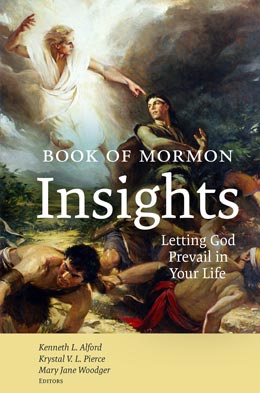
Staying by the Tree of Life
Byran B. Korth
Byran B. Korth, "Staying by the Tree of Life," in Book of Mormon Insights: Letting God Prevail in Your Life, ed. Kenneth L. Alford, Krystal V. L. Pierce, Mary Jane Woodger (Provo, UT: Religious Studies Center, Brigham Young University; Salt Lake City: Deseret Book), 14–26.
Byran B. Korth is an associate professor in the Department of Church History and Doctrine at Brigham Young University.
 When his two rebellious sons refused to partake of the fruit of the tree of life, Lehi faithfully remained by the tree, holding fast to the everlasting covenant that entitled his family to a special kind of divine mercy and love. Courtesy of Intellectual Reserve, Inc.
The labor required of parents concerning their divinely appointed responsibilities for the spiritual rebirth of their children[1] brings with it some of the greatest trials of faith that parents experience in this mortal journey. Elder David A. Bednar affirms that “one of the greatest heartaches a valiant parent in Zion can suffer is a child who strays from the gospel path.”[2] Such trials can diminish a parent’s faith in Jesus Christ and his redemptive power. Overwhelmed by the darkness of doubt, despair, and hopelessness, these times of parental anguish can weaken a parent’s resolve to keep covenants and diligently persuade his or her children to believe in Christ. Elder Neal A. Maxwell taught, “Just as doubt, despair, and desensitization go together, so do faith, hope, and charity. The latter, however, must be carefully and constantly nurtured, whereas despair, like dandelions, needs so little encouragement to sprout and spread.”[3] Faithful yet disheartened parents can nurture this pattern of faith, hope, and charity by following the example of Lehi in his vision of the tree of life to stay by the tree—firmly planted in God’s everlasting covenant of love and mercy as they let God prevail.
The Vision of the Tree of Life: Simultaneous Parental Joy and Anguish
Lehi’s vision of the tree of life is recorded in the small plates of Nephi,[4] a record that Nephi was commanded to make “for a wise purpose” (1 Nephi 9:5) some thirty years after he and his family left Jerusalem (see 2 Nephi 5:28–32). Part of this wise purpose[5] was to preserve for future generations, including today, the “plain and most precious” parts of the gospel of Jesus Christ, including “many covenants” that would be lost during the apostasy of the early Christian church (1 Nephi 13:26). Nephi carefully selected and included only those things that would be “for the profit of [his] people” and “pleasing unto God” (2 Nephi 5:30, 32 [28–33]). As part of this summative and selective reflection, Nephi felt he “must speak somewhat of the things of my father, and also of my brethren” (1 Nephi 10:1; see also 9:2–6; 10:1; 19:2–4).
To that end, he begins his record declaring, “I, Nephi, having been born of goodly parents, . . . will show unto you that the tender mercies of the Lord are over all those whom he hath chosen, because of their faith, to make them mighty even unto the power of deliverance” (1 Nephi 1:1, 20). This purposeful message of faith, mercy, and deliverance for those whom the Lord has chosen, including those who have accepted and entered into a covenantal relationship with God, is reflected in Lehi’s dream of the tree of life as he experienced the parental anguish of wayward children while relying on the covenantal promises of redemption.
In this dream that he recounts to his family, Lehi explains that he found himself in “a dark and dreary wilderness,” followed a man “dressed in a white robe . . . for the space of many hours in darkness,” and then prayed “unto the Lord that he would have mercy on me, according to the multitude of his tender mercies” (1 Nephi 8:4–8). He was then shown “a tree, whose fruit was desirable to make one happy” and proceeded to partake of the fruit (vv. 10–11). The tree and fruit symbolize the love of God in a promised Savior: “For God so loved the world, that he gave his only begotten Son, that whosoever believeth in him should not perish, but have everlasting life” (John 3:16). After partaking of the fruit of the tree—experiencing the redemptive love that was “most sweet” and “filled [his] soul with exceedingly great joy”—Lehi desired that his “family should partake of it also” (1 Nephi 8:11–12).
While remaining by the tree, Lehi invited his family to partake of the fruit. Sariah, Nephi, and Sam chose to heed his beckoning to come to the tree “and partake of the fruit” (1 Nephi 8:15). Looking for Laman and Lemuel, hoping they would heed his invitation, Lehi found them, “but they would not come unto [him] and partake of the fruit” (v. 18). Thus, at the same time that his soul experienced great joy, being filled with God’s redeeming love and mercy, he experienced the parental anguish of his children choosing not to join him at the tree.
Consequently, Lehi “feared for Laman and Lemuel; yea, he feared lest they should be cast off from the presence of the Lord” (1 Nephi 8:36). Overcome with joy and overwhelmed by sorrow, Lehi did not leave the tree to pursue his sons to force them to eat the fruit. He did not leave the tree in shame as he’d seen others do. Nor did he despairingly collapse with hopelessness and do nothing. In his dream Lehi continued to look for his children while staying by the tree. In so doing he saw “a rod of iron” that led to the tree. The rod of iron is a symbol of both the word of God found in holy scripture and the Word of God, Jesus Christ.[6] He was shown that in God’s merciful plan, the means (see John 14:6) was provided for all God’s children to have everlasting life and experience this redeeming love, while also honoring the agency of his children to choose whether to believe in Christ and partake of the fruit of the tree of life. In turn, at the conclusion of his dream, Nephi described his father exhorting his brothers “with all the feeling of a tender parent, . . . preach[ing] . . . and also prophes[ying] unto them . . . , [bidding] them to keep the commandments of the Lord” (1 Nephi 8:37–38).
After Lehi shares his dream and subsequent fatherly pleadings, he proceeds to explain the significance of his dream and teach “more of the love of God by continuing the allegory of the tree, shifting it from the tree of life to the even more extensively developed image of the olive tree.”[7] He prophesies about the scattering and gathering of the house of Israel, about “a prophet [whom] the Lord God [would] raise up among the Jews—even a Messiah, or, in other words, a Savior of the world,” and about a restoration of the fulness of the gospel among the Gentiles (see 1 Nephi 10:3–4, 14). This merciful and redeeming gathering, reflected in the allegory of the olive tree and the remnants of the house of Israel, is made possible by the covenantal mercy and everlasting love of God’s outstretched hand (see 2 Nephi 15:25; 19:12, 17, 21; 20:4; 3 Nephi 10:4–6). Lehi further teaches that to experience this redeeming mercy and love, the children of Israel must “come to the knowledge of the true Messiah, their Lord and their Redeemer” (1 Nephi 10:14).
Throughout his life Lehi continued to stay by the tree of God’s everlasting covenant of gathering, even during the many tribulations experienced in the wilderness and the ongoing trial of his wayward sons. His striving to stay by the tree was manifested in times of his own repentance (see 1 Nephi 5:3, 8; 16:20, 25). He was diligent in relying on and teaching about God’s covenantal promises, inviting all his family to partake of God’s redeeming love, blessing his murmuring sons and their families that “the Lord God will not suffer that ye shall perish; wherefore, he will be merciful unto you and unto your seed forever” (2 Nephi 4:7). In the end, despite the sorrow and anguish that he felt for his wayward sons, Lehi’s conviction in God’s everlasting and redeeming love enabled him to stay by the tree, exemplifying to parents the faith to press forward with a steadfastness in Christ, a perfect brightness of hope, and an enduring love for his family and posterity (see 2 Nephi 31:20).
Stay by the Tree and a Promise of Deliverance
Lehi’s teachings on the scattering and gathering of Israel gives further meaning regarding the importance of staying by the tree and holding fast to the everlasting promises inherent in the gathering of covenant Israel. There is a message of faith, hope, and merciful deliverance waiting for all, including wayward children. If they “no more turn aside their hearts against the Holy One of Israel, then will he remember the covenants which he made to their fathers” (1 Nephi 19:15). Although we do not know the timing or the details of how God’s promises will come to pass regarding the gathering of Israel, parents can experience enduring power from the prophetic assurance inherit in Lehi’s vision of that tree of life—that if God, in his infinite love, mercy, and wisdom, has the means to miraculously gather the house of Israel, consisting of his wayward and wandering children, he has the means to gather the house of parents with wayward and wandering children. The key to gathering Israel is their coming to a knowledge of Jesus Christ, the same key for every family. Instead of allowing themselves to be overcome by despair and do nothing, parents must act in faith, relying on the covenantal promise of Christ’s power of deliverance as they diligently teach and exhort their children to believe in Christ.
This reliance on Christ and God’s everlasting covenant of deliverance is echoed in the example and teachings of Nephi, who labored diligently to persuade his children to believe in Christ, “for we know that it is by grace that we [and our families] are saved, after all we can do” (2 Nephi 25:23). Similarly, Lehi’s younger son Jacob, who suffered much affliction because of the rudeness of his wayward brothers, proclaims that although “many of our children shall perish in the flesh because of unbelief, nevertheless, God will be merciful unto many; and our children shall be restored, that they may come to that which will give them the true knowledge of their Redeemer. . . . Wherefore, my beloved brethren, reconcile yourselves to the will of God,” remembering “that it is only in and through the grace of God that ye are saved” (2 Nephi 10:2, 24). Thus, following the example and teachings of Lehi and his righteous sons, all that parents of wayward children can do is act on the faith and hope they have been endowed with, hold firm to the everlasting promise of deliverance, and lovingly persuade their children to come to a knowledge of Jesus Christ and to choose to enter into God’s everlasting covenant.
Staying by the Tree and His Everlasting Covenant
At the heart of Lehi’s dream is God’s infinite love manifested in his offering of an everlasting covenant.[8] Prophets and apostles have taught that the symbolic meaning of partaking of the fruit represents receiving and honoring ordinances and covenants of the gospel of Jesus Christ.[9] When parents enter into covenants, including celestial marriage, they enter into a binding relationship with God, creating “everlasting ties” with him and granting them “access to a special kind of love and mercy.”[10] This covenantal access to the mercy and love of God can help parents stay by the tree, preventing the despair and hopelessness that can overwhelm parents whose children stray from the gospel path. As parents weep for their wayward children, a reminder of the everlasting nature of God’s covenant that extends to their children can help parents to rediscover the faith, hope, and charity needed to stay by the tree as God mercifully and unceasingly reaches out to his wayward children (see Isaiah 54:7). Parents must remember and put their faith in the Lord’s promise when he said, “I will contend with him that contendeth with thee, and I will save thy children” (Isaiah 49:25). That same ancient promise has been reaffirmed by the Savior to latter-day parents when he said, “I, the Lord, [will] fight their battles, and their children’s battles, and their children’s children’s [battles] . . . to the third and fourth generation” (Doctrine and Covenants 98:37).
This everlasting covenant, along with the parental trials of wayward children, did not begin in mortality. President Russell M. Nelson recently taught, “The adjective everlasting denotes that this covenant existed even before the foundation of the world! The plan laid out in the Grand Council in Heaven included the sobering realization that we would all be cut off from God’s presence. However, God promised that He would provide a Savior who would overcome the consequences of the Fall.”[11] The reality that his children would use his gift of agency to choose not to partake of or keep his everlasting covenant was anticipated by Heavenly Father, himself experiencing many of his premortal spirit children choosing to turn away from him and following Satan “because of their agency” (Doctrine and Covenants 29:36; see Moses 4:6). Thus, in anticipation of (not in response to) his children being cut off from his presence, some choosing to not turn back to him, a redemptive plan that included an everlasting covenant was “prepared from the foundation of the world” by a perfectly loving Heavenly Father (Alma 22:13; see 13:1–3).
In mortality the covenant of a Savior and the gift of agency were given to Adam and Eve, both choosing to receive the everlasting covenant. The Lord then taught the first mortal parents about their divinely appointed responsibilities regarding the spiritual rebirth of their children: “Inasmuch as thy children are conceived in sin, even so when they begin to grow up, sin conceiveth in their hearts, and they taste the bitter, that they may know to prize the good. And it is given unto them to know good from evil; wherefore they are agents unto themselves” (Moses 6:55–56). The Lord then commanded Adam and Eve to “to teach these things freely unto [their] children,” these things referring to God’s redeeming plan, the central role of Jesus Christ, and the covenantal conditions of faith and repentance (see Moses 6:57–58).
As the first parents, they experienced the heartache of a child choosing not to hearken to the words of the Lord, saying to his parents, “Who is the Lord that I should know him?” (Moses 5:16). Like Lehi who stayed by the tree as some of his children disregarded his invitation to partake of its fruit, Adam and Eve “made all things known unto their sons and their daughters” and “ceased not to call upon God” (Moses 5:12, 16). Surely the prophesied sorrow that both Adam and Eve (and all earthly parents) would experience was not limited to the physical labor of tilling the earth or bearing children, but included the shared spiritual labor of inviting their children to believe in Christ while honoring their agency to choose not to be part of the gospel (see Moses 4:22–23).
Central to the Fall, Adam and Eve experienced the sorrow and bitterness of their own sin because of their agency, and also the sweet joy of redemption made possible by their accepting an everlasting covenant of a promised Savior (see Moses 5:10–11). Equally central is that they, the first parents, experienced sorrow and anguish over their wayward children because of their children’s agency, as well as the hopeful joy that this everlasting covenant extended to their children. Thus, their heartfelt gratitude for and testimonies of a Savior expressed in Moses 5:10–11 was not just about their own individual salvation. These testimonies of faith and hope were for all their “seed,” their promised redemption, and “eternal life which God giveth unto all the obedient” (v. 11). The personal witness of the Only Begotten of the Father promising “that as thou hast fallen thou mayest be redeemed” must have been “sweet, above all that [they] ever before tasted” (v. 9; 1 Nephi 8:11). And the resulting realization that “all mankind, even [all their children],” even “all [their family] of the earth,” would have opportunity to choose to partake of and taste the fruit of redeeming love must have filled their souls “with exceedingly great joy” and a desire to keep inviting and beckoning (Moses 5:9, 10; Abraham 2:11; 1 Nephi 8:12).
This same everlasting covenant was given to Abraham and is known anciently as the Abrahamic covenant, providing the same conditions and promises of salvation and exaltation to the seed of Abraham and Sarah into the eternities.[12] “Abraham [and Sarah] received promises concerning [their] seed” when God covenanted with them that “in thy seed shall all the kindreds of the earth be blessed,” promising that he “would remember his seed forever” (Doctrine and Covenants 132:30; 3 Nephi 20:27; 2 Nephi 29:14; see Abraham 2:9).
Hence, beginning with Adam and Eve’s accepting the everlasting covenant and on down through Abraham, Isaac, Jacob, and Joseph, these “promises made to the fathers” have been restored today through the Prophet Joseph Smith as the new and everlasting covenant (Doctrine and Covenants 2:2).[13] Thus, when parents enter into the “new and everlasting covenant of marriage,” the same Abrahamic promise, everlasting covenant, or “access to a special kind of love and mercy”[14] is given to them and extended to their children who are sealed to them, including those who stray from the gospel path (Doctrine and Covenants 131:2; see 132:6–19)![15]
This merciful extension continues to honor the gift of agency. An often-quoted teaching by Elder Orson F. Whitney, purported to be based on a statement by the Prophet Joseph Smith, references this promised mercy and love extended to wayward children of celestially married parents: “Though some of the sheep may wander, the eye of the Shepherd is upon them, and sooner or later they will feel the tentacles of Divine Providence reaching out after them and drawing them back to the fold.”[16] Elder David A. Bednar has taught that the “tentacles of Divine Providence” may be considered “a type of spiritual power, a heavenly pull or tug that entices a wandering child to return to the fold eventually. Such an influence cannot override the moral agency of a child but nonetheless can invite and beckon. Ultimately, a child must exercise his or her moral agency and respond in faith, repent with full purpose of heart, and act in accordance with the teachings of Christ.”[17] Similarly, President Nelson recently taught, “Because God has [a special kind of love and mercy] for those who have covenanted with Him, He will love them. He will continue to work with them and offer them opportunities to change. He will forgive them when they repent. And should they stray, He will help them find their way back to Him.”[18]
Thus, like the ancient children of Israel, God has covenanted to infinitely extend his arm of mercy and love to the seed of modern parents who have entered into this everlasting covenant. He has promised to invite and beckon their wayward children to feel of his merciful love. He offers a type of spiritual power, heavenly pull, and divine help to parents who stay firmly planted in the everlasting covenant. Like Lehi, this includes inspiration about how to exhort their children “with all the feeling of a tender parent” to live the doctrine of Christ while honoring their agency (1 Nephi 8:37). In turn, parents can be instruments in God’s hands with their open and loving arms and witness the miracle of their children choosing to partake of the fruit, being filled with God’s infinite love, and subsequently choosing to receive, enter into, and keep God’s everlasting covenant.[19]
As parents today enter into and faithfully keep the sealing covenant, it will plant in their hearts the same premortal promises given to Adam and Eve as well as to Abraham, Isaac, Jacob (Israel), and Joseph with their spouses. This “planting” of the everlasting covenant will fill them with faith, hope, and charity to stay by the tree as they beckon their children to come and partake of the fruit, laboring diligently to persuade them to believe in Christ. In doing so “the hearts of the children shall turn” to these same promises made to the fathers, and they will experience everlasting love and mercy, being filled with exceedingly great joy (Doctrine and Covenants 2:2). Planted by this tree, these children will be prepared to do the same with their children and so on. “If it were not so, the whole earth would be utterly wasted at his coming” (v. 3). “Behold, all things have been done in the wisdom of [the Father] who knoweth all things. [Thus] Adam fell that men might be; and men are, that they might have joy” (2 Nephi 2:24–25).
Conclusion
As parents strive to fulfill their divinely appointed responsibility to raise their children in light and truth while honoring the gift of agency,[20] many experience the heartache of a child choosing not to heed their pleadings to partake of the blessing of the gospel. Parents of wayward children can replace the doubt, despair, and seeming hopelessness of this trial of faith as they follow the example of Lehi to stay by the tree, holding fast to the everlasting covenant that entitles them and their children to a special kind of mercy and love. In doing so, parents can be filled with enduring faith, hope, and charity as they let God prevail and continue to make the “joy of [their] redemption . . . known unto their sons and their daughters” (Moses 5:11–12).
Notes
[1] D. Todd Christofferson, “Why Marriage, Why Family,” Ensign or Liahona, May 2015.
[2] David A. Bednar, “Faithful Parents and Wayward Children: Sustaining Hope While Overcoming Misunderstanding,” Ensign, March 2014, 28.
[3] Neal A Maxwell, “‘Brightness of Hope,’” Ensign, November 1994, 35.
[4] The small plates of Nephi include 1 Nephi up through Omni. For a helpful visual of the small and large plates and other plates that make up the Book of Mormon, see Charlotte Larcabal, “The Plates within the Plates,” New Era, April 2020, 34–35.
[5] The reader would benefit from reviewing the scriptural references regarding the wise purposes pertaining to the commands to both write and include the small plates of Nephi in the Nephite record, preserving its wise purpose for generations to come: 1 Nephi 1:16–17; 6:1; 9:1–6; 10:1; 19:1–6; 2 Nephi 5:28–33; Jacob 1:1–4; 3:13–14; 7:27; Enos 1:13–18; Jarom 1:1–2, 15; Omni 1:3; Words of Mormon 1:2–11; 3 Nephi 5:13–15; Doctrine and Covenants 3:18–20; 10:38–51.
[6] Referring to Alma 32, Elder Jeffrey R. Holland teaches, “In this brilliant discourse, Alma moves the reader from a general commentary on faith in the seedlike word of God to a focused discourse on faith in Christ as the Word of God, grown to a fruit-bearing tree, a tree whose fruit is exactly that of Lehi’s earlier perception of Christ’s love, ‘which is most precious, which is sweet above all that is sweet, and which is white above all that is white, yea, and pure above all that is pure; and ye shall feast upon [the gospel of Christ] even until ye are filled, that ye hunger not, neither shall ye thirst’ (Alma 32:42). Christ is the bread of life, the living water, the true vine. Christ is the seed, the tree, and the fruit of eternal life.” Jeffrey R. Holland, Christ and the New Covenant: The Messianic Message of the Book of Mormon (Salt Lake City: Deseret Book, 1997), 169.
[7] Holland, Christ and the New Covenant, 162.
[8] See Russell M. Nelson, “The Everlasting Covenant,” Liahona, October 2022, 4–11.
[9] Concerning the symbolic meaning of partaking of the fruit in Lehi’s dream, Elder David A. Bednar explains, “The fruit on the tree is a symbol for the blessings of the Atonement. Partaking of the fruit of the tree represents the receiving of ordinances and covenants whereby the Atonement can become fully efficacious in our lives” (David A. Bednar, “Lehi’s Dream: Holding Fast to the Iron Rod,” Ensign or Liahona, October 2011, 34; emphasis added). Elder Neil L. Andersen further expounds on this symbolic connection: “Partaking of the fruit of the tree also symbolizes that we embrace the ordinances and covenants of the restored gospel—being baptized, receiving the gift of the Holy Ghost, and entering the house of the Lord to be endowed with power from on high. Through the grace of Jesus Christ and by honoring our covenants, we receive the immeasurable promise of living with our righteous family throughout eternity” (Neil L. Andersen, “Fruit,” Ensign or Liahona, November 2019, 117; emphasis added).
[10] Nelson, “Everlasting Covenant,” 5. See article for an explanation of hesed, a Hebrew word that encompasses this covenantal love or the “special kind of love and mercy that God feels for and extends to those who have made a covenant with Him.” A comprehensive discussion regarding hesed and the everlasting covenant is found in Kerry Muhlestein, God Will Prevail: Ancient Covenants, Modern Blessings, and the Gathering of Israel (Salt Lake City: Deseret Book, 2021).
[11] Nelson, “Everlasting Covenant,” 4.
[12] President Nelson teaches, “The new and everlasting covenant is the fulness of the gospel of Jesus Christ. It includes all ordinances and covenants necessary for our salvation (see Doctrine and Covenants 66:2). It is ‘new’ whenever the Lord renews or restores it, and it is ‘everlasting’ because it does not change” (Nelson, “Everlasting Covenant,” 11n2). He further teaches, “‘The new and everlasting covenant’ (Doctrine and Covenants 132:6) and the Abrahamic covenant are essentially the same—two ways of phrasing the covenant God made with mortal men and women at different times” (“Everlasting Covenant,” 4).
[13] See footnote 12.
[14] See footnote 10.
[15] President Nelson teaches that “this everlasting covenant was restored as part of the great Restoration of the gospel in its fulness. Think of it! A marriage covenant made in the temple is tied directly to that Abrahamic covenant. In the temple a couple is introduced to all the blessings reserved for the faithful posterity of Abraham, Isaac, and Jacob.” See Nelson, “Everlasting Covenant,” 6.
[16] Orson F. Whitney stated the following: “The Prophet Joseph Smith declared—and he never taught more comforting doctrine—that the eternal sealings of faithful parents and the divine promises made to them for valiant service in the Cause of Truth, would save not only themselves, but likewise their posterity. Though some of the sheep may wander, the eye of the Shepherd is upon them, and sooner or later they will feel the tentacles of Divine Providence reaching out after them and drawing them back to the fold. Either in this life or the life to come, they will return. They will have to pay their debt to justice; they will suffer for their sins; and may tread a thorny path; but if it leads them at last, like the penitent Prodigal, to a loving and forgiving father’s heart and home, the painful experience will not have been in vain. Pray for your careless and disobedient children; hold on to them with your faith. Hope on, trust on, till you see the salvation of God” (in Conference Report, April 1929, 110).
[17] Bednar, “Faithful Parents and Wayward Children,” 28. Summarizing the teachings of other modern apostles who have spoken on “the tentacles of Divine Providence,” Elder Bednar goes on to explain that “the influence of parents who honor covenants and obey commandments indeed can have a decisive spiritual impact upon children who stray by activating the tentacles of divine Providence—in ways that have not been revealed fully and are not understood completely. However, righteous parental influence (1) does not replace in the life of an individual the need for the redeeming and strengthening power of the Atonement of Jesus Christ, (2) does not overrule the consequences of the unrighteous exercise of moral agency, and (3) does not negate the responsibility of an individual as an agent ‘to act . . . and not to be acted upon’ (2 Nephi 2:26)” (32).
[18] Nelson, “Everlasting Covenant,” 6; emphasis added.
[19] See Mosiah 4–5, which demonstrates the pattern of experiencing God’s redeeming mercy and love that leads to a willingness to enter into covenants with him.
[20] President Russell M. Nelson teaches, “You parents bear the primary responsibility to strengthen their faith. Let them feel your faith, even when sore trials come upon you. Let your faith be focused on our loving Heavenly Father and His Beloved Son, the Lord Jesus Christ. Teach that faith with deep conviction. Teach each precious boy or girl that he or she is a child of God, created in His image, with a sacred purpose and potential. Each is born with challenges to overcome and faith to be developed” (“Face the Future with Faith,” Ensign or Liahona, April 2011, 34).
