
 menu icon in the top, right corner of the screen.
 icon above to close this box.
 icon at the bottom of the screen below the browser—if you don't see it, swipe up to unhide it.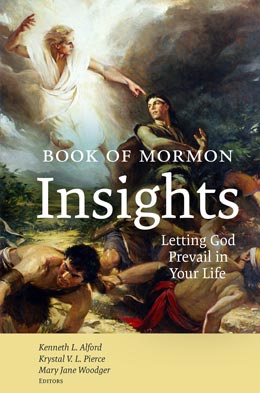
Mary Jane Woodger, "Ezra Taft Benson: Flooding the Earth with the Book of Mormon," in Book of Mormon Insights: Letting God Prevail in Your Life, ed. Kenneth L. Alford, Krystal V. L. Pierce, Mary Jane Woodger (Provo, UT: Religious Studies Center, Brigham Young University; Salt Lake City: Deseret Book), 1–12.
Mary Jane Woodger is a professor in the Department of Church History and Doctrine at Brigham Young University.
 Many of President Ezra Taft Benson's general conference addresses were dedicated to teaching Church members the importance of the Book of Mormon. Ezra Taft Benson, by Knud Edsberg. Courtesy of Intellectual Reserve, Inc.
Early in my career, I compiled a volume of President David O. McKay’s teachings categorized topically. One subject I wanted to include was his teachings on the Book of Mormon. As I read his sixty-four years of general conference talks, much to my surprise I found that President McKay never taught from the Book of Mormon; there were only three instances where he even referenced the sacred volume. As I researched other previous General Authorities’ teachings, I found that this was not an anomaly, but rather generally the pattern for usage of the Book of Mormon in general conference addresses before 1986.
The generations of Latter-day Saints following Ezra Taft Benson’s presidency may be surprised at the lack of teachings from the Book of Mormon by previous Church leadership. Many remember that President Benson spoke extensively about the Book of Mormon. Those remarks were not haphazard. Instead, his conference addresses reveal a methodology to his teachings that allowed him to achieve his goals of infusing the Book of Mormon into the lives of the Saints and lifting the Lord’s condemnation for its neglect. The Saints responded to his charge to “flood the earth” with that sacred book, and it has remained at the forefront of the Church’s attention for nearly thirty years since his death in 1994. There is a distinct methodology in each of President Benson’s Book of Mormon addresses: He would (1) cite two sources, Joseph Smith on the Book of Mormon being the keystone, and the condemnation scripture from Doctrine and Covenants 84; (2) define the importance of the Book of Mormon; (3) model how the book was to be used; and (4) promise blessings for following his counsel.
The Condemnation and the Keystone
In “The Power of the Word,” the first address President Benson gave as the newly sustained President of the Church in April 1986, a major goal of his presidency immediately became apparent. Given in a priesthood leadership meeting on April 4, his address began with an extensive discussion of Lehi’s dream, emphasizing the rod of iron as the “word of God,” and then promised that “through [the word of God] we can find power to resist temptation, the power to thwart the work of Satan and his emissaries.”[1] The rest of his talk emphasized the importance of scripture study. Then in conclusion he cited the two sources that would guide his teachings on the Book of Mormon for the rest of his presidency. The first source is from the Prophet Joseph Smith’s history: “The Book of Mormon was the most correct of any book on earth, and the key stone of our religion, and a man would get nearer to God by abiding by its precepts, than by any other book.”[2] This quote is included twelve times in his six conference addresses. The other constant source comes from Doctrine and Covenants 84:54–57, which he would include nine times in his addresses. Because other verses in this chapter are known as the Oath and Covenant of the Priesthood and naturally received much attention, verses 54–57were often overlooked. President Benson cited these verses declaring that Latter-day Saints were under condemnation for neglecting the Book of Mormon:
Your minds in times past have been darkened because of unbelief, and because you have treated lightly the things you have received—which vanity and unbelief have brought the whole church under condemnation. And this condemnation resteth upon the children of Zion, even all. And they shall remain under this condemnation until they repent and remember the new covenant, even the Book of Mormon. (Doctrine and Covenants 84:54–57)
President Benson then defined what the Book of Mormon was and how it was to be used and gave promises, thereby firmly establishing a methodology for other Church leaders to follow as they, in turn, taught the importance of reemphasizing the Book of Mormon.
The next day, in his first talk as the prophet to the entire membership of the Church, President Benson mentioned the newly published editions of Latter-day Saint scripture and asked the congregation if they were taking advantage of them. Using different passages of the Book of Mormon, he exemplified how to use the sacred volume to teach, warning the Saints of the plague of sexual immorality. He went on to cite Joseph Smith’s keystone declaration and made all aware that the whole Church was under condemnation. He then counseled, “Now we not only need to say more about the Book of Mormon, but we need to do more with it.”[3]
Another prominent strategy that President Benson included in this talk was to admonish and then promise. He told the Saints that if they would repent and adhere to his plea to make the Book of Mormon “the center of [their] personal study, family teaching, preaching, and missionary work,” great blessings would be theirs.[4] President Benson then quoted President Marion G. Romney, who had given a similar sermon twenty-six years before:
I feel certain that if, in our homes, parents will read from the Book of Mormon prayerfully and regularly, both by themselves and with their children, the spirit of that great book will come to permeate our homes and all who dwell therein. The spirit of reverence will increase; mutual respect and consideration for each other will grow. The spirit of contention will depart. Parents will counsel their children in greater love and wisdom. Children will be more responsive and submissive to that counsel. Righteousness will increase. Faith, hope, and charity—the pure love of Christ—will abound in our homes and lives, bringing in their wake peace, joy, and happiness.[5]
The remarkable thing about this quote from Marion G. Romney, given in 1960, is that it did not seem to receive the attention it deserved when Romney first said it. It was not until President Benson repeated this admonition with its promises that parents especially took notice.
During the general priesthood session of April 1986, President Benson specifically addressed the young men of the Church. For the third time in this general conference, he once again used the Joseph Smith keystone quote and then promised the young men that the Book of Mormon would change their lives, giving the following assurances:
It will fortify you against the evils of our day. It will bring a spirituality into your life that no other book will. It will be the most important book you will read in preparation for a mission and for life. A young man who knows and loves the Book of Mormon, who has read it several times, who has an abiding testimony of its truthfulness, and who applies its teachings will be able to stand against the wiles of the devil and will be a mighty tool in the hands of the Lord.[6]
In his concluding remarks in that general conference, President Benson once again cited Doctrine and Covenants 84:54–58, emphasizing the condemnation for the third time, declaring that “this message must be carried to the members of the Church throughout the world.”[7]
Six months later, it became increasingly apparent that President Benson’s focus on the Book of Mormon was not a flash in the pan; this was what his presidency was going to be about. Just as President Benson gave his attention to the young men six months earlier, in the general women’s meeting of October 1986, he focused on the young women: “Last April general conference I had a similar opportunity to speak to all the men of the Church on Saturday evening in general priesthood meeting. At that time, I spoke directly to the Aaronic Priesthood. Tonight, I would like to speak to you young women of corresponding age.”[8] Once again he cited the Joseph Smith keystone quote and then gave almost the exact same promises to the young women as he had to the young men:
Young women, the Book of Mormon will change your life. It will fortify you against the evils of our day. It will bring a spirituality into your life that no other book will. It will be the most important book you will read in preparation for life’s challenges. A young woman who knows and loves the Book of Mormon, who has read it several times, who has an abiding testimony of its truthfulness, and who applies its teachings will be able to stand against the wiles of the devil and will be a mighty tool in the hands of the Lord.[9]
Keystone of our Religion and Another Testament of Jesus Christ
In October 1986, President Benson added another point to his methodology as he defined the importance of the Book of Mormon, declaring that it was more significant “than any of the inventions that have come out of the industrial and technological revolutions[,] . . . the many wonderful advances we have seen in modern medicine[,] . . . [or] the development of flight or space travel.”[10] He then noted the importance of the timetable in the bringing forth of the Book of Mormon in the unfolding Restoration, reminding Church members that the Book of Mormon’s translation preceded the restoration of the priesthood. It was published even before the Church was organized, indicating how the Book of Mormon took precedence in the Lord’s timetable. Once again President Benson quoted the condemnation passage, followed by the question, “Has the fact that we have had the Book of Mormon with us for over a century and a half made it seem less significant to us today? Do we remember the new covenant, even the Book of Mormon?”[11] He also announced that in recent editions of the Book of Mormon the subtitle “Another Testament of Jesus Christ” had been added.
Then, for the sixth time in six months, the prophet cited Joseph Smith’s keystone quote, but this time he enlarged on the concept of the Book of Mormon being the keystone. He taught the congregation that the sacred volume was to be the keystone to their witness of Christ, to doctrine, and to testimony. He also adamantly reminded the Saints that the Book of Mormon was written for their day, promising that it would help them “feel [God’s] presence with us constantly” and that “there is a power in the book which will begin to flow into your lives the moment you begin a serious study of the book.”[12]
In his closing remarks in October 1986, he reiterated the three ways in which the Book of Mormon is the keystone of our religion, reminding Latter-day Saints that the Book of Mormon had greater power than Satan—“power to reveal false doctrine, power to help us overcome temptations, power to help us get closer to God than any other book.” He then set forth his goal again that “the Book of Mormon must be reenthroned in the minds and hearts of our people. We must honor it by reading it, by studying it, by taking its precepts into our lives and transforming them into lives required of the true followers of Christ.”[13]
A year into his presidency, it became evident that President Benson’s methodology was working. In his opening remarks in April 1987, he shared the following:
During the past six months I have been deeply touched by the response of members of the Church who have heeded counsel to read and reread the word of the Lord as set forth in the Book of Mormon. This has resulted in increased spirituality and is helping to cleanse the inner vessel. Adults, youth, and children have borne powerful testimonies as to how the Book of Mormon has changed their lives. My life, too, continues to be changed by this sacred volume of scripture.[14]
For the rest of his talk, President Benson modeled what he was asking the Latter-day Saints to do as he utilized a passage of 3 Nephi to teach the specific principle of pride.
That evening, in priesthood session, President Benson zeroed in on home teaching and demonstrated how the Book of Mormon could be used in fulfilling that stewardship. Again he modeled for Church members how to use the Book of Mormon, this time by using the sixth chapter of Moroni as an example of how home teachers could keep “faithful track of each member.”[15]
The Keystone and the Capstone
In his closing remarks of the April 1987 conference, President Benson noted the similarity of the proclamation and divine witness found on the title page of the Book of Mormon and section 1 of the Doctrine and Covenants. He remarked, “The Book of Mormon and the Doctrine and Covenants testify of each other. You cannot believe one and not the other.” He then made a doctrinal proclamation: “The Book of Mormon brings men to Christ. The Doctrine and Covenants brings men to Christ’s kingdom, even The Church of Jesus Christ of Latter-day Saints.”[16] Reminding that the Book of Mormon is the keystone, he introduced the Doctrine and Covenants as the capstone and declared, “The origin, preparation, translation, and verification of the truth of the Book of Mormon have all been retained in the hands of the Lord, and the Lord makes no mistakes. God has built in His own proof system of the Book of Mormon as found in Moroni, chapter 10.” He once again quoted Joseph Smith’s keystone phrase and then used his methodology of defining, instructing, and giving promises, this time in the form of an apostolic blessing:
Now, by virtue of the sacred priesthood in me vested, I invoke the blessings of the Lord upon the Latter-day Saints and upon good people everywhere.
I bless you with added power to endure in righteousness amidst the growing onslaught of wickedness, about which we have heard a great deal during this conference.
I promise you that as you more diligently study modern revelation on gospel subjects, your power to teach and preach will be magnified and you will so move the cause of Zion that added numbers will enter into the house of the Lord as well as the mission field.
I bless you with increased desire to flood the earth with the Book of Mormon, to gather out from the world the elect of God who are yearning for the truth but know not where to find it.
I promise you that, with increased attendance in the temples of our God, you shall receive increased personal revelation to bless your life as you bless those who have died.[17]
Christ in the Book of Mormon
In his concluding remarks in the following conference in October 1987, President Benson stated again that “the major mission of the Book of Mormon, as recorded on its title page, is ‘to the convincing of the Jew and Gentile that Jesus is the Christ, the eternal God, manifesting himself unto all nations.”’[18] After noting how the Book of Mormon helps one gain a testimony of Christ, he added that over half of its verses refer to Him and that He is given over one hundred different names in the book. President Benson went on to identify attributes of Christ found in the Book of Mormon. Then he again quoted Joseph Smith’s keystone statement and admonished, “Once one is convinced, through the Book of Mormon, that Jesus is the Christ, then he must take the next step; he must come unto Christ.”[19]
In the next conference, in April 1988, President Benson reported, “My heart has been touched as I have learned of the many children, youth, and adults of the Church whose lives are being changed by the study of the Book of Mormon. You are helping to cleanse the inner vessel. God bless you for it.”[20] Latter-day Saints had responded to their prophet’s request. President Benson asked the Saints to flood the earth with the Book of Mormon.
Flooding the Earth with the Book of Mormon
In October 1988, President Benson reported on the progress of his goals to lift the condemnation and flood the earth with the Book of Mormon: “This has been a landmark year in the history of the Church in the use of the keystone of our religion—the Book of Mormon. This sacred volume of scripture has brought more souls to Christ, both within and without the Church, than ever before.” He then discussed various ways the Book of Mormon had begun to flood the earth, including the production of a full-length film about the Book of Mormon called How Rare a Possession; he noted that tens of thousands of copies were distributed in the first weeks after its initial showing. He also commended parents on their “inspired use of the Book of Mormon in helping to rear a generation that can redeem Zion.”
Another way the volume had flooded the earth was the family-to-family Book of Mormon program, which placed photos and testimonies inside copies of the Book of Mormon and then distributed them through missionaries. He also noted that articles on the Book of Mormon were appearing more regularly in Church publications, that radio stations had broadcast excerpts from the Book of Mormon, and that there had been Book of Mormon lectures and symposiums. He then said, “Finally and most important, we commend that vast number of faithful Saints who individually and as families are changing their lives, cleansing the inner vessel, through the daily reading of the Book of Mormon.” Citing Moses 7:62, he identified the Book of Mormon as “the instrument that God designed to ‘sweep the earth as with a flood, to gather out [His] elect.’”[21] After quoting Joseph Smith’s keystone statement, he proclaimed, “The time is long overdue for a massive flooding of the earth with the Book of Mormon.”[22]
This conference talk was procedural in nature, outlining ways in which the Book of Mormon could flood the earth. Church members studying it daily in their personal and family study would be adding to the flood. In reference to the Sunday School and seminary programs, President Benson observed that even though the Book of Mormon was studied only every four years, there should be “frequent reference to the additional insights which the Book of Mormon may provide” when studying the other standard works.
Referring to how the condemnation could be lifted, President Benson issued a number of challenges. He spoke of missionaries challenging their contacts to read the Book of Mormon and pray about it. He encouraged Church writers, leaders, and teachers to tell more Book of Mormon conversion stories. He invited business and other professionals to place copies of the book in their reception rooms, cassette player owners to play Book of Mormon cassettes, and members to display quotations and scenes from the book on the walls of their homes. He asked that pulpits across the Church be aflame with the spirit of Book of Mormon messages, that local Church leaders and home and visiting teachers utilize the book in counseling people, that artists put great themes and characters from the Book of Mormon into film, literature, music, and paintings, and that missionaries memorize hundreds of passages from the Book of Mormon. And then he gave an interesting personal commentary: “Some of us may not live long enough to see the day when the Book of Mormon floods the earth and when the Lord lifts His condemnation.”[23]
The Landmark Address: Beware of Pride
In April 1989, President Benson thanked Latter-day Saints for fulfilling his strategic plans to flood the earth with the Book of Mormon, “May I commend you faithful Saints who are striving to flood the earth and your lives with the Book of Mormon. Not only must we move forward in a monumental manner more copies of the Book of Mormon, but we must move boldly forward into our own lives and throughout the earth more of its marvelous messages.” He then gave the superlative subject found in the Book of Mormon: “I strive to bring forth light on this Book of Mormon message—the sin of pride. This message has been weighing heavily on my soul for some time. I know the Lord wants this message delivered now.” He then gave his landmark talk on the subject of pride. Key teachings included that “the central feature of pride is enmity” and that “pride is essentially competitive in nature.”[24] He taught that “pride is a sin that can readily be seen in others but is rarely admitted in ourselves” and that “disobedience is essentially a prideful power struggle against someone in authority over us.” He identified selfishness and contention as faces of pride and that “pride adversely affects all our relationships.”[25] It was apparent that this talk was of the greatest importance as President Benson warned Latter-day Saints not to repeat the great sin of the Book of Mormon.
Children and the Book of Mormon
President Benson concluded the April 1989 general conference by commending the children of the Church and giving them promises:
First, may I say how thrilled I am to know how you children are learning about the Book of Mormon. This is one of the very important things Heavenly Father wants you to do.
I know you are reading the Book of Mormon, for I have received hundreds of personal letters from you telling me that you are reading this sacred book. It makes me weep for joy when I hear this.
Many of you have read the Book of Mormon all the way through. In family home evening and in Primary you have dramatized Book of Mormon stories, you have sung songs about the Book of Mormon, you have learned the names of the books in the Book of Mormon, you have played Book of Mormon games, you have learned about wonderful Book of Mormon prophets. Some of you have even earned money to send copies of the Book of Mormon around the world.
How pleased I am to hear of your love for the Book of Mormon. I love it too, and Heavenly Father wants you to continue to learn from the Book of Mormon every day. It’s Heavenly Father’s special gift to you. By following its teachings, you will learn to do the will of our Father in Heaven.[26]
This would be the last talk President Benson would be able to deliver in general conference.
Conclusion
Though he was the prophet for eight years, President Benson’s general conference addresses as President of the Church would cover only four of those years. By using his strategic methodology in those addresses given in eight general conferences, he was able to reach his objective of bringing the Book of Mormon to the forefront of the Church’s teachings and of members’ lives. These talks reflect a systematic progression that brought about the proliferation of the Book of Mormon through sales, member use, and citations in general conferences. He fulfilled his goal of flooding the Book of Mormon in the earth and in the individual lives of Latter-day Saints. In the first six years of President Benson’s presidency, more copies of the Book of Mormon were sold than in the previous 160 years since the restoration of the Church of Jesus Christ combined. Though we may not know if the Lord’s condemnation has been completely lifted, we do know that President Benson was successful in making Latter-day Saints aware of how the Book of Mormon should be used. The Book of Mormon has become more highly regarded and utilized as the keystone of our religion.
Notes
[1] Ezra Taft Benson, “The Power of the Word,” Ensign, May 1986, 80.
[2] “History, 1838–1856, volume C-1 [2 November 1838–31 July 1842],” 1255, The Joseph Smith Papers, https://
[3] Ezra Taft Benson, “Cleansing the Inner Vessel,” Ensign, May 1986, 5.
[4] Benson, “Cleansing the Inner Vessel,” 5.
[5] Marion G. Romney, in Conference Report, April 1960, 110–13; quoted in Benson, “Cleansing the Inner Vessel,” 6.
[6] Ezra Taft Benson, “To the ‘Youth of the Noble Birthright,’” Ensign, April 1986, 43.
[7] Ezra Taft Benson, “A Sacred Responsibility,” Ensign, April 1986, 78.
[8] Ezra Taft Benson, “To the Young Women of the Church,” Ensign, October 1986, 81.
[9] Benson, “To the Young Women,” 82.
[10] Ezra Taft Benson, “The Book of Mormon—Keystone of Our Religion,” Ensign, October 1986, 4.
[11] Benson, “Book of Mormon—Keystone,” 4.
[12] Benson, “Book of Mormon—Keystone,” 7.
[13] Ezra Taft Benson, “The Gift of Modern Revelation,” Ensign, October 1986, 80.
[14] Ezra Taft Benson, “The Savior’s Visit to America,” Ensign, April 1987, 4.
[15] Ezra Taft Benson, “To the Home Teachers of the Church,” Ensign, April 1987, 51.
[16] Ezra Taft Benson, “The Book of Mormon and the Doctrine and Covenants,” Ensign, May 1987, 83.
[17] Benson, “Book of Mormon and the Doctrine and Covenants,” 85.
[18] Ezra Taft Benson, “‘Come unto Christ,’” Ensign, November 1987, 83.
[19] Benson, “‘Come unto Christ,’” 84.
[20] Ezra Taft Benson, “The Great Commandment—Love the Lord,” Ensign, May 1988, 4.
[21] Ezra Taft Benson, “Flooding the Earth with the Book of Mormon,” Ensign, October 1988, 4.
[22] Benson, “Flooding the Earth,” 5.
[23] Benson, “Flooding the Earth,” 6.
[24] Ezra Taft Benson, “Beware of Pride,” Ensign, April 1989, 4.
[25] Benson, “Beware of Pride,” 6.
[26] Ezra Taft Benson, “To the Children of the Church,” Ensign, May 1989, 81–82.
